

Table of Contents
Introduction: The Transportation Gap
Getting from A to B in most cities and suburbs is not easy. Public transport options usually include buses or trains. These options are less expensive and reduce traffic on the road, but they are on a schedule set by the transport authority. If you miss the 5:15 bus, you’ll be at the bus stop for another 45 minutes. If you are going to a location a few blocks off the main bus line, you will have to wait a long time for the bus. However, you can also use a personal vehicle or a ride-hailing app like Uber or Lyft. These options are more expensive to use daily, but they make transport decisions easier. Instead, they make road traffic worse and have a higher impact on the environment, especially if you are the only person in your car.
This gap between expensive private mobility options and rigid public transport is what planners refer to as the <first-mile/last-mile>'' problem and service coverage gap.” It is also why many citizens choose not to use transit. This is the gap microtransit models aim to fill.
This concept is applicable and means that the mobility options available to shared transport users are often underutilized. In this guide, we will cover everything you need to know about microtransit.
What is microtransit,nand howdoes it work?
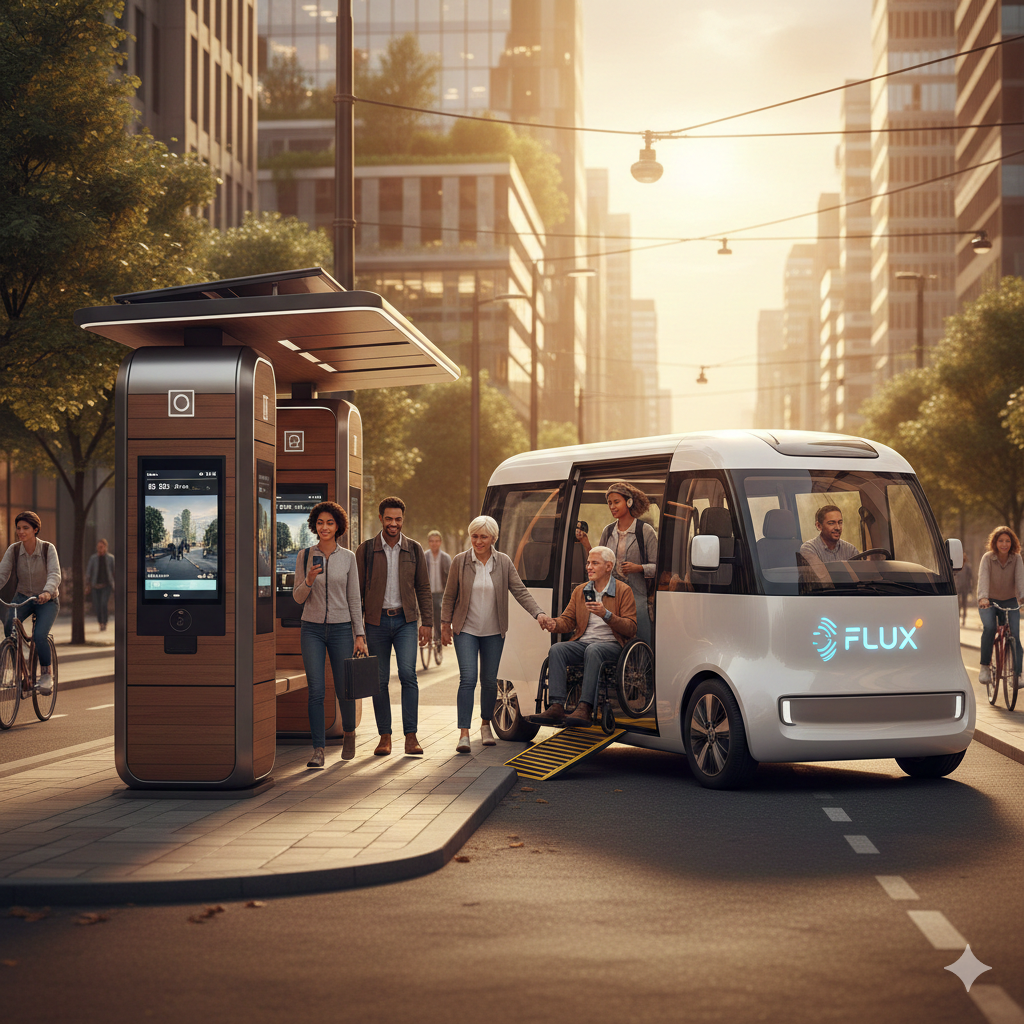
So, what is microtransit? This is the ultimate question. Microtransitt is a shared, flexible, on-demand transport solution integrated with the latest technology. It is a combination of public transport and ride-sharing, thereby being cost-effective and incorporating the advantages of both.
Instead of a large, 40-foot bus that follows the same route as all the other buses, microtransit uses small transit units, like vans or minibuses, that can adjust their routes to meet passenger demand. Using a mobile app (or sometimes a phone call), passengers can request a ride, and an algorithm will group them with other passengers to optimize vehicle capacity.
The purpose of microtransit programs is not to take over trunk-line bus or train transit systems. Microtransit systems serve as connectors, feeders, and solutions for areas that may not require a full-size bus every 15 minutes. It’s personalized public transportation.
The Main Issue: Why Fixed Routes Do Not Work
Understanding why this microtransit program is needed comes from the shortcomings of a 100-year-old fixed-route system.
Coverage Gaps: Fixed routes work to serve the busiest hub corridors. This means that entire sections of a city, as well as more rural areas, industrial areas, and newly developed regions, will have no public transport.
The Walk-Shed Scenario: People are only willing to walk up to 0.25 miles to reach a bus stop. This then covers a tiny transport service area around a route. If you are located outside this area, the transport system does not serve you.
Rigidity: Public transport systems are usually scheduled at fixed intervals. Life, human activities, and events are not planned this way; transport systems need to accommodate people with shifts who work at varying hours, run errands, and more.
The Low Number of People, High Costs Cycle: It is not reasonable to sustain a situation in which an extensive public bus system transports few people across large stretches of sparsely populated areas. Transport agencies are forced to cancel these routes, and as a result, the overall transport system standard declines, leading people to use private vehicles.
Flexible microtransit services are designed to fill this gap. They take their services to the rider rather than have the rider come to them.
How Does Microtransit Work? The Technology Behind the Services
Modern microtransit software is the real magic, not the vehicles themselves. Suppose you are a passenger. Here’s how the journey goes:
Booking. Passengers use an app to set their pickup and drop-off locations and request a ride. The app gives them an estimated pickup time and a fare.
Algorithmic Matching. A routing algorithm goes to work in the background. The app collects and organizes nearby requests headed in the same or similar directions. It is like a digital carpool system.
Dynamic Routing. In real time, the algorithm calculates the most efficient pickup and drop-off order and creates a route to minimize detours. The route is sent to the driver.
The Ride. The driver is a public transit employee or a contracted operator. They follow the route that updates dynamically. Passengers can use the app to track the vehicle.
Payment and Feedback. Passengers rate the services and provide data, while the app manages payment transactions. Modern microtransit systems use much more sophisticated implementation methods than older dispatch systems, thanks to advances in technology.
10 Major Benefits of microtransit for Cities
The microtransit phenomenon is here to stay. Cities, riders, and transit agencies all benefit from microtransit.
- Equitable Access to Transit: microtransit can serve more isolated areas, such as low-population and encampment areas, and provide vital connections for employment, health, and education.
- Increased Service Cost Effectiveness: Transportation agencies may provide service in expensive areas without having to purchase larger, more costly buses. They reduce service quality by using less fuel and only transporting large buses.
- Rider Experience Improvements: Using an ‘on demand’ service model eliminates the negative service experiences associated with prolonged wait times and allows riders to track service better.
- The microtransit system has the potential to reduce congestion and emissions: Shared microtransit can remove vehicles from the roadway, reducing demand and emissions.
- Microtransit Systems Complement Transit Systems: Microtransit serves as a valuable complement to more frequent transit systems, boosting overall system ridership rather than negatively affecting it.
- Provides Rich Data: A trip creates data on origin, destination, and time. Planners use this data to understand travel patterns and inform future infrastructure decisions.
- Offers Operational Flexibility: Services can be scaled for special events and peak commuter hours and adjusted based on real-time demand.
- Increases Public Transit Appeal: microtransit solves the start-and-end problems across the entire public transit system, expanding its usability and attractiveness to a broader population.
- Supports an Ageing Population: microtransit system can be a lifeline to independence for seniors who don’t drive and need an app-based, door-to-door (or near-door) service.
- Future-Proof Mobility: Being software-centric, microtransit platforms can seamlessly integrate with future technologies, including alternative vehicle formats, such as autonomous vehicles.
Real-World Success Microtransit Case Studies
The theory sounds great, but does it hold in practice? Here are two microtransit success stories.
Case Study 1: Via in Arlington, Texas (Via Arlington)
Arlington, Texas, was and still is the largest city in the United States without a public bus system. Starting in 2017, the city of Arlington partnered with Via to create an on-demand, citywide shared-ride service. For a flat fare of $3-5, customers can travel to any destination within the service area, which is quite large. The service receives over 10,000 rides per week. In addition to the extensive ridership, customers express high satisfaction, thereby proving that “leapfrogging” is a valid microtransit service methodology. Via Arlington is now used as a microtransit “blueprint” throughout the nation, especially in the more car-centric communities.
Case Study 2: LA Metro microtransit pilots
LA Metro is the largest transit agency in California. Within the service area covering most of LA County, LA Metro has implemented a handful of zone-based microtransit pilots in parts of Northeast LA and Watts/Compton. Microtransit customers can cross zones and ride for $1, the same fare as a bus transfer. microtransit customers can ride to and from key transit hubs, shopping centres, and community colleges. Microtransit services now support these zones. LA Metro is also the first to demonstrate that large transit technology companies can add value by integrating microtransit into their service toolkits.
The Hurdles Ahead: Challenges to Microtransit Adoption
Although microtransit has many strong points, it is not perfect. Many challenges must be addressed to successfully implement microtransit.
Economics of Scale: The per-trip cost of shared, dynamically routed vans is always higher than that of a complete bus on a busy route. Achieving financial sustainability often requires public subsidies at levels comparable to those for other forms of transit.
Trip Time Trade-Off: The share in ridesharing is a strong indicator that extra stops will be added to a customer’s trip. A customer can take a direct car trip that may take only 10 minutes. However, a microtransit trip can take up to 18 minutes. There are extra stops that take time to add, so it is essential to communicate these trade-offs.
The Digital Divide: Relying solely on app-based systems to run microtransit can be detrimental to low-income, elderly, or other less tech-savvy population groups. For a microtransit solution to be successful, it must offer app-less scheduling and mobile payment options (e.g., by phone or at a kiosk) and provide digital education.
Driver Recruitment is always a challenge across sectors. The same holds in the transport sector. It is especially applicable in the microtransit industry, which faces many challenges.
Integration with Existing Systems: For maximum effect, microtransit requires seamless fare integration and trip-planning with the rest of the city transit system. In addition to the highly bureaucratic and time-consuming complexity of each part of this integration, there is also a high level of technical integration required.
Comparing microtransit to Other Options
How does microtransit compare to other alternatives?
vs. Fixed-Route Bus: microtransit is better suited to flexible, low-demand areas, while less efficient in high-density areas. They can be used together in different places.
vs. Ride-Hailing (Uber/Lyft): microtransit is more economical, less private, and does not provide direct service. Ride-hailing is a private-car replacement, while microtransit is a public-transit solution.
vs. Traditional Paratransit: microtransit can be more cost-effective for some ambulatory passengers and provide more paratransit services for those who need them more. Paratransit services are federally mandated and are expensive, door-to-door services for some individuals with disabilities.
vs. Personal Car: microtransit offers the convenience of a private vehicle while providing cost savings, reduced stress, and environmental benefits for trips made during less critical time windows.
The Future Roadmap: Where is microtransit Heading?
The changes in microtransit are closely connected with changes in technology:
Integration with MaaS (Mobility-as-a-Service): Future apps will not only book microtransit services but also allow users to plan, pay for, and combine trips that include microtransit rides to trains, as well as scooters for the last half-mile, all in one easy payment. For these services, microtransit will be one of the most essential pieces for integrated mobility platforms.
The Autonomous Vehicle (AV) Connection: Fleet business models for microtransit, on-demand service models, and shared services are strengthened when the service provider does not have to pay drivers’ salaries. Microtransit software is the most suitable option to serve asserve as the ‘brain’ for self-driving shuttles in the near future.
More intelligent Zoning and Service Design: Improved AI, coupled with better data, will enable the service provider to plan and design service-area zones intelligently. By implementing adaptive, responsive changes to time of day and demand, microtransit networks will become even more responsive.
Policy and Funding Evolution: As microtransit demonstrates its worth, more policies will create local and federal funding frameworks that value these flexible, tech-driven services integrated into public transportation networks.
Conclusion: Is microtransit Right for Your Community?
Microtransit offers a unique and practical approach to problem-solving in urban mobility. Microtransit is not a replacement for subways or high-ridership bus services. Instead, it extends the reach and usefulness of public transit to areas that have historically been overlooked.
A microtransit project’s success is determined by the project’s goals. Is the goal to eliminate an unproductive bus service? First/last mile connections to a new rail station? Or, is the goal to offer basic mobility in a transit desert? With the right objective, thoughtful service design, and robust community engagement, microtransit can fill critical gaps in our transportation networks.
For cities with large urban areas that need to meet sprawl, equity, and climate goals, flexible microtransit solutions are increasingly critical to the toolbox. It is about making public transit work for the way people actually live their lives, not the other way around.
You may also read itbigbash.