
Stretches for Lower Back Pain: An Easy 10-Minute Daily Routine That Works
Lower back pain has a way of shrinking your world. You skip the morning walk, dread the long drive, and catch yourself bracing before you bend to tie your shoes. If that sounds familiar, here is the direct answer: gentle, targeted stretches for lower back pain are one of the simplest things you can do at home to loosen up and feel better. You do not need intense yoga, fancy equipment, or an hour of spare time. A short, consistent routine that releases tight hips, hamstrings, and spinal muscles takes real pressure off your lower back, and ten minutes a day is genuinely enough.
Below is a 10-minute daily sequence of seven stretches for lower back pain, ordered from easiest to most involved, with clear step-by-step instructions. You will also find the safety ground rules (read them first, they take one minute), a quick table matching each stretch to the kind of pain it helps most, and answers to the questions readers ask most often. One note before we start: these stretches are for everyday aches, stiffness, and tightness. If your pain is severe, shoots down your leg, or comes with numbness or weakness, check the FAQ at the end and talk to a doctor or physiotherapist first.
Why Stretches for Lower Back Pain Actually Work
Your lower back rarely hurts in isolation. Most everyday back pain comes from a chain reaction, and this is exactly why physiotherapists put simple stretches for lower back pain at the center of home rehab programs: they interrupt that chain at several points. Every one of the stretches for lower back pain in the routine below targets one of these links in the chain.
- Tight hips pull your pelvis out of line. Hours of sitting shorten your hip flexors and hamstrings, tipping your pelvis forward and forcing your lower back muscles to work overtime.
- Stiff joints make the small muscles overwork. When the spinal joints and glutes do not move well, the little lumbar muscles try to do a job they were never built for alone.
- Irritated muscles guard themselves. An unhappy muscle seizes up in a protective spasm, which feels like more pain and stiffness. Gentle movement signals it to stand down.
Stretching also sends fresh blood flow through the tissues, which eases that rusty-gate feeling of morning stiffness. The key word is gentle: the goal is to persuade tight muscles to release, not to force them into submission.
Before You Start: The Ground Rules for Safe Stretching

These five rules take sixty seconds to read and will keep every session safe:
- Warm up first. Never stretch cold muscles. March in place for two to three minutes, swing your arms gently, and do a few slow torso circles before the first stretch.
- Aim for a gentle pull, never pain. You should feel the muscle lengthening, like a comfortable tug. Sharp, shooting, or electrical pain means stop immediately.
- Breathe into every stretch. Inhale to prepare, and as you exhale, sink a fraction deeper. Holding your breath makes muscles tense up instead of releasing.
- Never bounce. Bouncing triggers the stretch reflex, which tightens the very muscle you are trying to release. Slow and steady wins.
- Stay consistent. Ten minutes daily beats an hour once a week. Your body adapts to what you do every day.
And one rule that overrules the rest: if pain travels down your leg, or you feel numbness, weakness, or any loss of bladder or bowel control, skip the stretching and see a doctor promptly. These are signs something more serious may be going on.
The 10-Minute Daily Routine: 7 Stretches for Lower Back Pain
Do these in order. These stretches for lower back pain are sequenced from a gentle spinal warm-up to the deeper hip stretches that usually hold the key to lasting relief. Hold each stretch for 20 to 30 seconds per side unless stated otherwise, and repeat each two to three times.
1. Cat-Cow (1 minute)
The perfect opener. It wakes up your spine without demanding much from it. Of all the stretches for lower back pain, cat-cow asks the least of you and returns the most mobility.
- Start on your hands and knees, wrists under shoulders and knees under hips.
- Inhale: let your belly drop toward the floor and lift your head (cow).
- Exhale: round your back toward the ceiling and tuck your chin (cat).
- Repeat slowly for six to eight rounds, moving with your breath.
Why it works: it pumps gentle movement through every spinal segment and gets blood flowing before the deeper stretches.
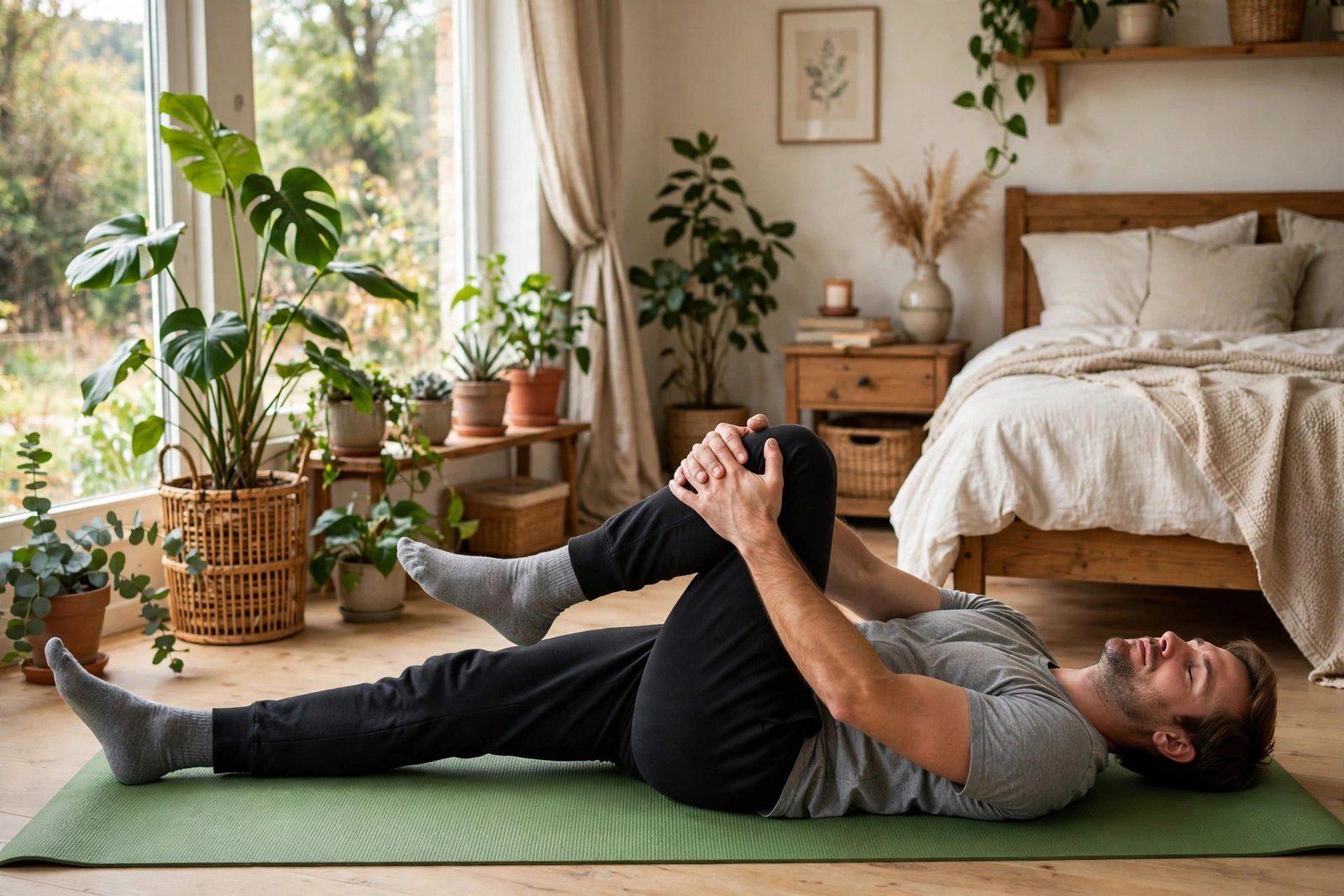
2. Knee-to-Chest (2 minutes)
A classic for a reason. It gently decompresses the lower spine. A simple pull with a big release, knee-to-chest remains one of the most recommended stretches for lower back pain for good reason.
- Lie on your back with knees bent and feet flat.
- Pull one knee toward your chest, holding behind your thigh.
- Keep the other leg extended or the foot flat, whichever is comfortable.
- Hold for 20 to 30 seconds while breathing into your lower back, then switch sides.
Why it works: creates space between the lumbar vertebrae and releases the glutes and lower back muscles.
3. Pelvic Tilts (1 minute)
A tiny movement with a big payoff. This one teaches your core to support your spine. Do not underestimate it: pelvic tilts are among the gentlest stretches for lower back pain, which makes them ideal for flare-up days.
- Stay on your back with knees bent and feet flat.
- Tighten your stomach muscles and tilt your pelvis so your lower back presses into the floor.
- Hold for five seconds, then release.
- Repeat ten times, moving slowly.
Why it works: it is a gentle mobilization that retrains the deep core muscles to do their share of the work.
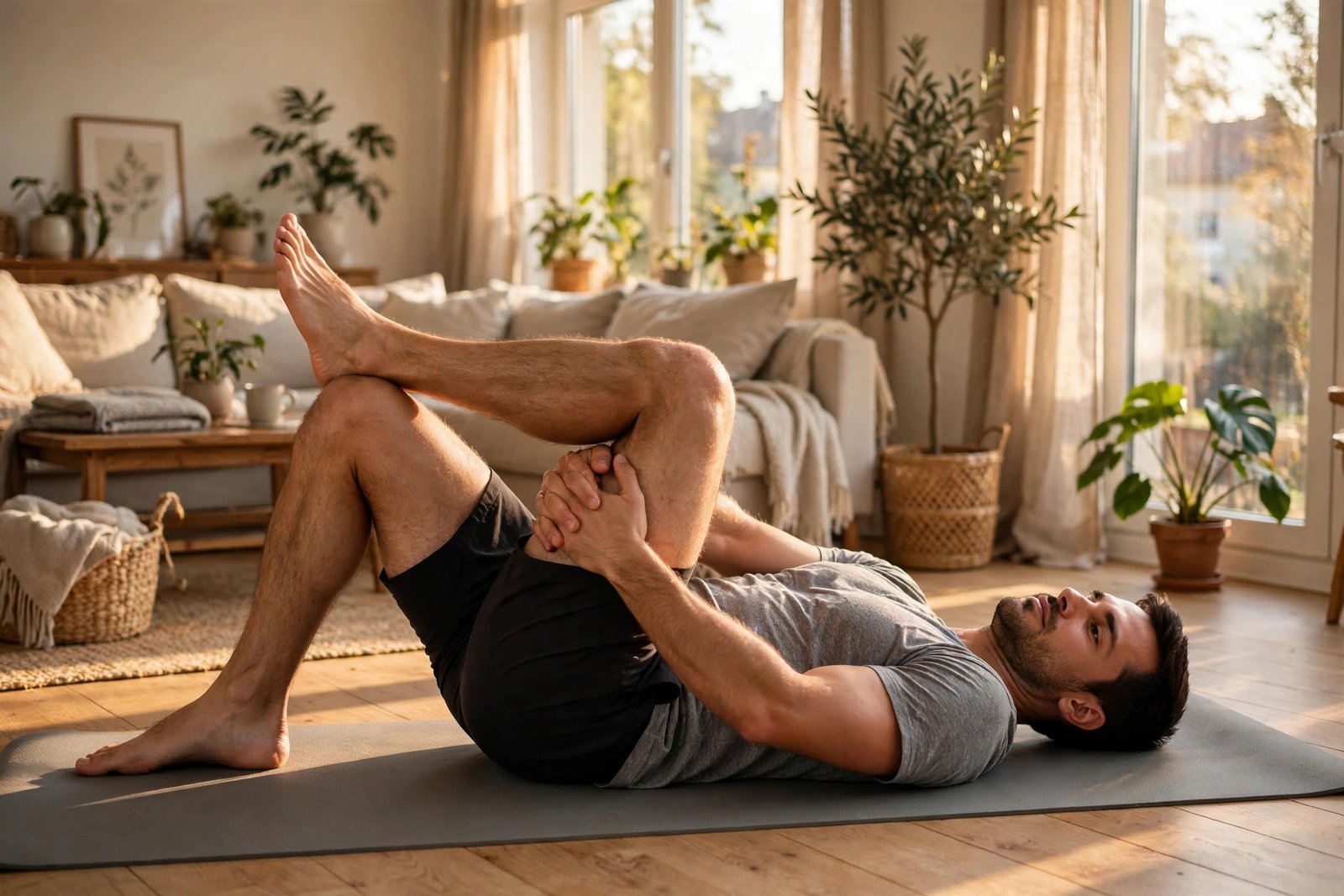
4. Figure-Four Glute Stretch (2 minutes)
Tight glutes are one of the most overlooked causes of lower back pain. The piriformis, a small muscle deep in the buttock, sits right next to the sciatic nerve, and when it tightens, your back pays the price. Hold each side a little longer here — among stretches for lower back pain, this one rewards patience the most.
- Lie on your back with both knees bent.
- Cross your right ankle over your left knee, just above it.
- Lace your hands behind your left thigh and pull it gently toward your chest.
- Hold for 30 seconds, feeling a deep stretch in the right buttock, then switch sides.
Why it works: releases the glute and piriformis tension that so often masquerades as lower back pain.
5. Half-Kneeling Hip Flexor Stretch (2 minutes)
The desk worker’s stretch. Your hip flexors shorten every hour you sit, and this undoes that. If you sit all day, this may be the most important of these stretches for lower back pain.
- Kneel on one knee with a folded towel under it for comfort.
- Place the other foot flat in front of you, knee stacked over the ankle.
- Tuck your pelvis slightly and shift your weight forward.
- Hold for 30 seconds when you feel a stretch at the front of the back leg’s hip, then switch sides.
Why it works: lengthens the hip flexors that drag your pelvis forward and strain your lumbar spine.
6. Supine Twist (1 minute)
A gentle rotational release for the small muscles running along your spine. Twists like this round out a set of stretches for lower back pain by reaching muscles the forward bends miss.
- Lie on your back with your arms out in a T shape.
- Bend your knees and slowly lower them to one side.
- Keep both shoulders on the floor and hold for 20 to 30 seconds.
- Return to center and repeat on the other side.
Why it works: mobilizes the mid and lower back in a direction most of us never move in daily life.
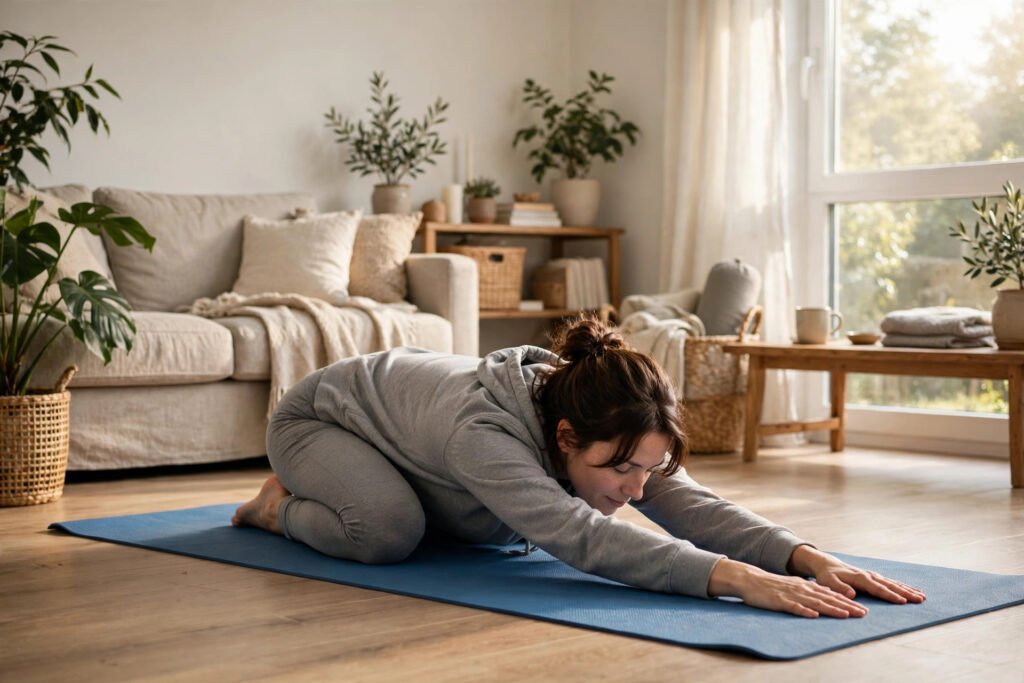
7. Child’s Pose (1 minute)
The finish line. A full-spine release that calms you down too. End here every time: child’s pose closes out these stretches for lower back pain by switching your body from effort to recovery.
- Kneel and sit back toward your heels.
- Walk your hands forward and let your forehead rest toward the floor.
- Hold for 30 seconds to a minute, breathing deeply into your back.
Why it works: it lengthens the entire back line while your nervous system gets the message that the stretching session is over and it is safe to relax.
Which Stretch Matches Your Kind of Back Pain?
Not every stretch suits every ache. Use this quick guide to lean into the stretches for lower back pain that fit your symptoms:
| Stretch | Best for | Go easy if |
|---|---|---|
| Cat-Cow | Morning stiffness, warming up | Rounding your back causes sharp pain |
| Knee-to-Chest | Dull aching tightness, general soreness | Pulling the knee in hurts your hip |
| Pelvic Tilts | Weak core, ache after standing a long time | It aggravates your pain |
| Figure-Four | Buttock tightness, ache that drifts slightly down the leg | Sharp shooting leg pain, see a doctor first |
| Hip Flexor Stretch | Ache after long sitting, desk workers | Knee problems, pad well or skip |
| Supine Twist | Stiffness through the mid and lower back | Recent spinal injury |
| Child’s Pose | Gentle all-round relief, winding down | Knee or ankle issues |
5 Daily Habits That Make the Stretches Work Twice as Well
Stretching treats the symptoms. These habits remove the causes — and they make these stretches for lower back pain work even better:
- Get up every 30 to 40 minutes. Set a timer at your desk. Stand, walk to the window, and do thirty seconds of gentle movement. Long uninterrupted sitting is the single biggest driver of tight hip flexors.
- Check your mattress. Morning stiffness that fades within an hour often points at the bed rather than the back. Your mattress could be part of the problem, so it is worth learning how to pick one that supports side sleepers properly.
- Sit better, not more. Keep your feet flat, your hips slightly above your knees, and your lower back lightly supported. A rolled-up towel works fine as lumbar support.
- Unwind the stress in your muscles. Tension genuinely settles in the back, and carrying the day’s worries to bed keeps muscles tight. Many people find a simple evening journaling habit helps release the day before sleep.
- Support overnight recovery. Gentle movement plus a calm evening routine helps muscles recover while you sleep. Some people include magnesium in their nighttime routine for muscle relaxation, and here is how glycinate compares with citrate if you are curious.
Frequently Asked Questions
How often should I do stretches for lower back pain?
Daily is the goal. Health guidance such as NHS Inform’s exercise advice recommends simple back exercises every day, and physiotherapists consistently say the same thing: it is the daily habit that keeps pain from returning, not the occasional long session.
How long should I hold each stretch?
Twenty to thirty seconds per stretch, repeated two to three times, is the widely recommended dose. When you are starting out, do not hold longer than 30 seconds. As it gets easier over a few weeks, you can work up toward a full minute.
Should I stretch if the pain shoots down my leg?
Get assessed first. Pain radiating down the leg can indicate sciatica or nerve involvement. Gentle stretching often helps once you know what you are dealing with, but a doctor or physiotherapist should confirm the cause before you push into it.
Is it normal to feel sore after stretching?
Mild muscle soreness the next day is normal, especially in the first week of a new routine. Sharp, shooting, or worsening pain is not. That is your body telling you to stop and get checked rather than push through.
Can stretching actually fix back pain, or just relieve it?
Here is the honest answer: stretching relieves symptoms and keeps you moving, which is half the battle. Lasting change also needs gentle strengthening, for the core, glutes, and legs, plus regular walking, because weak support muscles are why the pain keeps returning. Think of stretching as the daily maintenance, not the whole repair shop.
When should I see a doctor instead of stretching at home?
See a doctor promptly if pain does not improve within a few weeks, is severe, follows an injury, or comes with numbness, leg weakness, or bladder or bowel changes. And do not start stretching on your own if you have been diagnosed with something like severe spinal stenosis or advanced disc problems. A physiotherapist should tailor the program to you.
Ten minutes, seven stretches, one mat. That is the whole prescription, and it is one you can actually stick with. Start tonight or tomorrow morning, keep it gentle, and give it two weeks of daily practice before you judge the results. For reference routines from medical sources, NHS Inform’s back-pain exercise guide and Harvard Health’s guide to relieving low back pain with stretching are both worth a bookmark. And remember: this article is general information, not medical advice. If anything here does not feel right for your body, a physiotherapist’s opinion beats any article.