
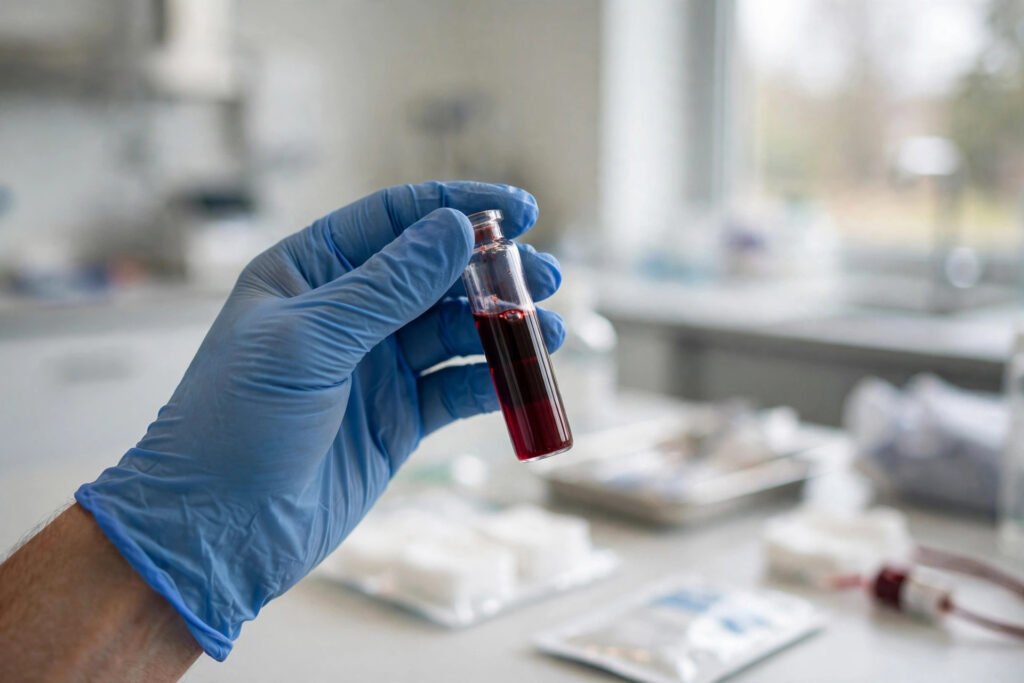
MCHC Blood Test: Normal Range, High and Low Results Explained
If you just opened your lab results and found the letters MCHC with a number beside them, here’s the quick version: an MCHC blood test tells you how densely packed hemoglobin is inside your red blood cells. Hemoglobin is the protein that carries oxygen around your body, and MCHC measures its concentration — for most adults, a normal result falls between 32 and 36 g/dL.
It sounds technical, but the idea is simple. MCHC is one small piece of your complete blood count (CBC), the routine blood panel most people get at checkups. A low number usually points toward iron deficiency, a high number is rare and often just a lab quirk, and — this part matters — the number is a clue, not a diagnosis. Below, we’ll walk through exactly what it measures, what the ranges mean, and what to actually do with the result.
What the MCHC Blood Test Actually Measures
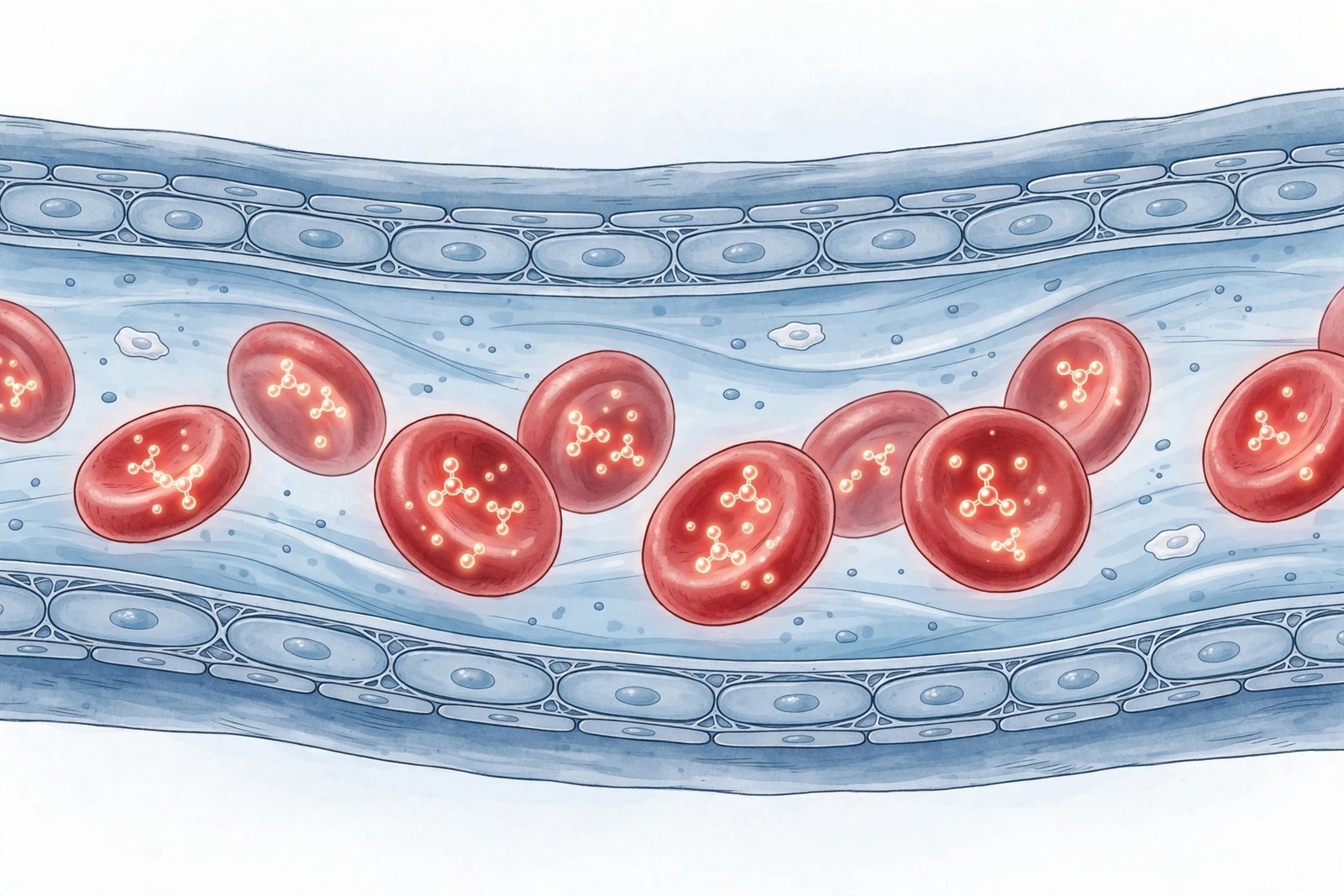
MCHC stands for mean corpuscular hemoglobin concentration. In plain terms: your red blood cells are tiny oxygen-delivery packages, and hemoglobin is what’s inside them. MCHC measures how concentrated that hemoglobin is — how full each package is, not how many packages you have or how big they are.
Unlike your hemoglobin or hematocrit, which are measured directly, MCHC is calculated. The lab takes your hemoglobin level and divides it by your hematocrit (the percentage of your blood made up of red cells). That calculation is why MCHC rarely tells a useful story on its own — if either input number is slightly off, so is the result.
MCHC vs MCV vs MCH: Don’t Mix Them Up
Three acronyms appear together on nearly every CBC, and people confuse them constantly:
- MCHC — concentration of hemoglobin in each red cell (g/dL). Think: how full each cell is.
- MCV — average size of your red blood cells (fL). Think: how big each cell is.
- MCH — average amount of hemoglobin per cell (pg). Think: how much hemoglobin each cell carries in total.
Doctors read all three together. Low MCHC alongside low MCV and low MCH, for example, paints a classic picture of iron deficiency — while a low MCHC with a normal MCV tells a different story entirely. That’s the main reason you shouldn’t panic (or celebrate) over a single flagged number.
MCHC Blood Test Normal Range

For most adults, the normal MCHC range is 32 to 36 g/dL. Some labs use a slightly different window — 31.5 to 35.7 g/dL is common — because each lab calibrates its own equipment and reference population. This is worth knowing: a value flagged “low” at one lab might sit comfortably inside the range at another.
Always compare your number against the reference range printed on your own report, not against a generic chart. Roughly speaking, the ranges break down like this:
- Adults (men and women): 32–36 g/dL. Unlike hemoglobin itself, MCHC doesn’t differ by sex.
- Newborns: often a touch higher in the first days of life, then settle into the adult range.
- Children: generally the same 32–36 g/dL band as adults.
- Pregnancy: MCHC usually stays normal even though hemoglobin and hematocrit drop, because both numbers fall together. A genuinely low MCHC during pregnancy is a particularly useful flag for iron deficiency.
Numbers sitting just below 32 — say 30 or 31 — are often labeled “mildly low” and, with normal hemoglobin and no symptoms, frequently turn out to be nothing more than normal variation. Still, any flagged result deserves a conversation with your doctor, not an internet verdict.
What Low MCHC Means
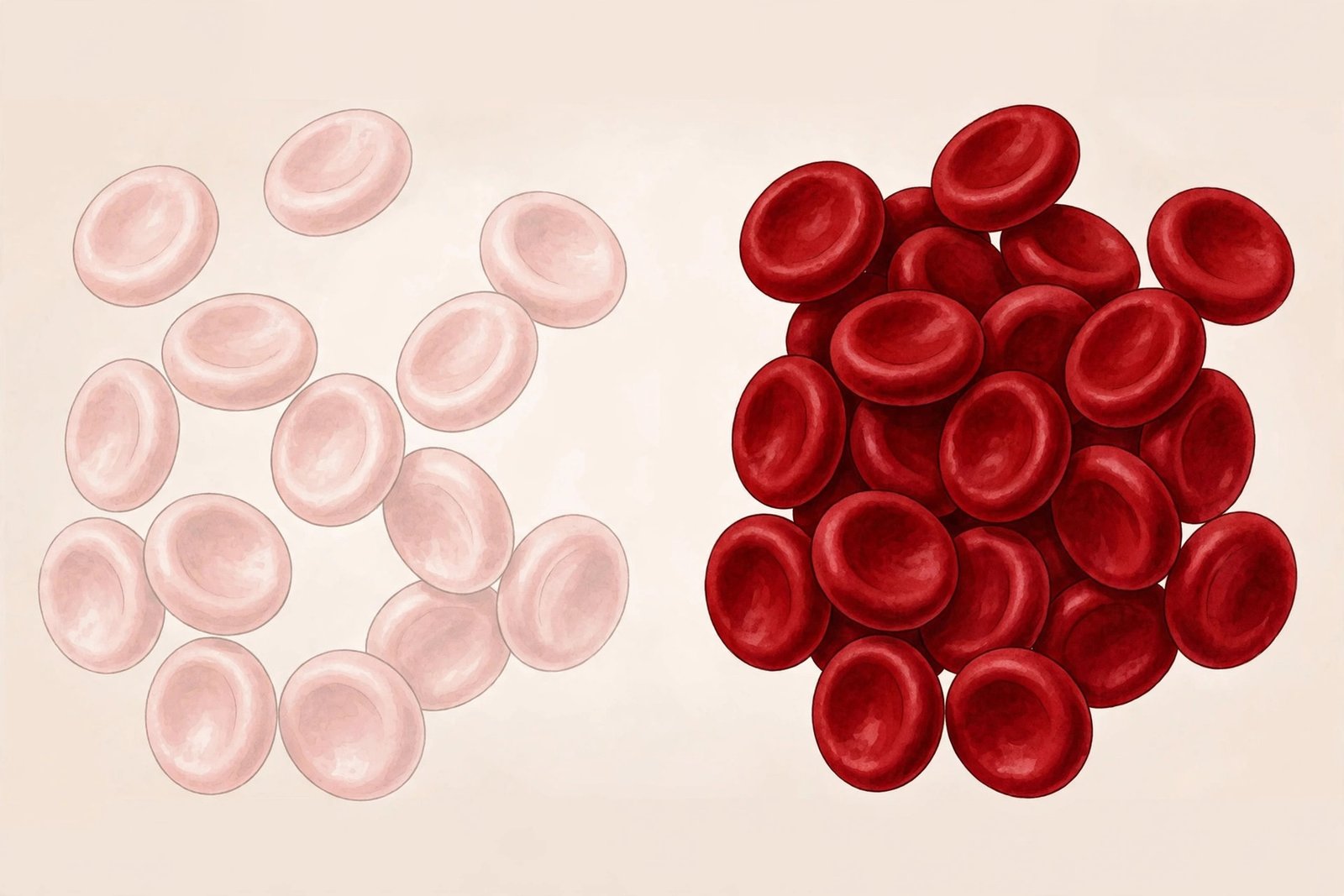
A low MCHC is called hypochromia — the cells look paler under the microscope because they contain less hemoglobin than they should. The cause matters far more than the number, and one cause dominates the list.
Iron deficiency (the most common cause)
Without enough iron, your bone marrow can’t build normally filled red blood cells, so the cells come out small and pale. Iron deficiency anemia is one of the most common conditions behind a low MCHC worldwide — driven by heavy menstrual periods, blood loss in the digestive tract, pregnancy, or simply not getting enough iron from food. When iron deficiency is the cause, you’ll usually see low MCHC paired with low MCV, low hemoglobin, and often a high RDW.
Thalassemia
This inherited blood disorder also produces low MCHC and low MCV — but with a key difference: the RDW usually stays normal. Distinguishing thalassemia from iron deficiency genuinely matters, because iron supplements don’t fix thalassemia and can cause iron overload over time. That’s a lab-workup question, not a guess-you-can-make question. (More on inherited blood conditions is covered in the Mean corpuscular hemoglobin concentration article on Wikipedia.)
Chronic disease and other causes
Long-running inflammation — from conditions like chronic kidney disease or inflammatory bowel disease — can block the body from using its stored iron properly, nudging MCHC into the low range. Chronic slow blood loss (ulcers, colon polyps, unexplained GI bleeding) is another quiet driver, which is why unexplained low MCHC in men and postmenopausal women often triggers investigation of the gut. Rare causes include lead poisoning and vitamin B6 deficiency.
Symptoms that can come with low MCHC
Low MCHC itself doesn’t cause symptoms — the underlying condition does. Fatigue and weakness, pale skin (especially inside the lower eyelids), shortness of breath on mild exertion, dizziness, cold hands and feet, and brittle nails are the usual complaints. Pica — craving ice, dirt, or starch — is a less famous but oddly specific sign of iron deficiency. These are covered in more depth in guides to anemia from the National Heart, Lung, and Blood Institute.
What High MCHC Means
A high MCHC (above roughly 36 g/dL) is uncommon in everyday practice, and more often than not it isn’t a disease at all. The most frequent explanation is a lab artifact: cold agglutinins (clumped red cells), high triglycerides, or high bilirubin can all fool the analyzer into calculating an artificially high number.
When it’s real, high MCHC usually comes from conditions where red cells are smaller and denser than normal — most notably hereditary spherocytosis, where red cells lose their normal disc shape, or hemolytic anemias where red cells are being destroyed. Either way, a high MCHC almost always gets retested or investigated rather than accepted at face value.
How the MCHC Test Is Done
There’s no separate MCHC test to book. It comes automatically with your complete blood count, which is a standard blood draw from a vein in your arm — a few minutes, a small needle, done. Most labs don’t require fasting for a CBC, unless your doctor ordered other tests at the same time that do.
The test itself is cheap and widely available at hospital labs, private labs, and many pharmacy-based health services that offer walk-in lab testing. Your doctor orders it for routine checkups, pre-surgery clearance, during pregnancy, or when symptoms like fatigue and paleness suggest anemia.
What to Do If Your MCHC Is Abnormal
Seeing an “L” or “H” flag next to a number you’ve never heard of is unsettling, so here’s a level-headed order of operations:
- Check the range on your own report first. Your lab’s reference range is the one that counts.
- Look at the neighbors. What are your hemoglobin, MCV, MCH, and RDW doing? Patterns across the indices tell the story; MCHC alone rarely does.
- Don’t start iron pills on your own. Iron deficiency is the most common cause of low MCHC, but it’s not the only one — and extra iron is genuinely harmful if you don’t need it (thalassemia is the classic cautionary example). A simple ferritin test usually settles the question.
- Eat with iron in mind, not in fear. If deficiency is suspected, your doctor may suggest iron-rich foods — red meat, lentils, spinach, beans — and pairing plant iron with vitamin C to improve absorption. If supplements are recommended, note that mineral supplements come in different forms with different absorption profiles, as our guide to magnesium glycinate vs citrate illustrates.
- Book the follow-up. A mildly abnormal MCHC usually just means a retest or a couple of follow-up tests. The fix — iron, B-vitamin support, or treating an underlying condition — is usually straightforward once the cause is identified.
This article is for information only and isn’t medical advice. Your doctor has the full picture — your symptoms, history, and the rest of your CBC — and that’s what turns a flagged number into a real plan.
Frequently Asked Questions
Is a low MCHC serious?
Usually it’s not an emergency. A mildly low MCHC is one of the most common minor findings on a CBC and often reflects early iron deficiency or normal variation. What matters is the cause, which is why a follow-up with your doctor — and often a simple ferritin test — is the right move.
Can MCHC be normal even when you have anemia?
Yes. In early iron deficiency and in B12 or folate deficiency, MCHC can sit comfortably in the normal range while other numbers (hemoglobin, MCV, RDW) are already abnormal. That’s exactly why doctors read the whole CBC, not one line of it.
What can falsely raise an MCHC result?
Lab artifacts are the leading cause of a high reading: cold agglutinins, high triglyceride levels, or high bilirubin can all inflate the calculation. Dehydration and sample-handling issues play a role too. An unexpected high MCHC is typically retested before anyone draws conclusions.
Do I need to fast before an MCHC blood test?
Not for the MCHC/CBC itself. Fasting only comes into play if your doctor bundled it with tests that require it, like glucose or cholesterol panels. Drink water beforehand — hydration makes the blood draw easier.
The Bottom Line
The MCHC blood test is a small but telling calculation inside your CBC: it measures how concentrated hemoglobin is in your red blood cells, with 32–36 g/dL as the normal adult range. Low results most often trace back to iron deficiency; high results are rare and frequently just a lab artifact. Read the number alongside the rest of your CBC and your lab’s own reference range, and let your doctor — not a single flagged value — decide what happens next.