Tragus Piercing: Pain, Healing, Aftercare, and Jewelry Guide
A tragus piercing is one of the most popular ear cartilage piercings right now — a small stud or hoop worn through the little flap of cartilage that sits in front of your ear canal. It is subtle from the side, catches the eye from the front, and fits into almost any curated ear setup. If you are thinking about getting one, here is the short version: expect moderate pain (most people rate it 4 to 6 out of 10), plan on 6 to 12 months for full healing, and keep the aftercare routine simple and consistent.
The details matter more than the basics, though. A tragus sits in one of the busiest spots on your ear — right where your phone, earbuds, glasses arms, and pillow all make contact — so healing takes patience. This guide covers everything worth knowing before you book: what the piercing actually is, how much it hurts, a realistic healing timeline, the daily aftercare routine, jewelry options, the earbud question everyone asks, and what it costs.
What Is a Tragus Piercing?
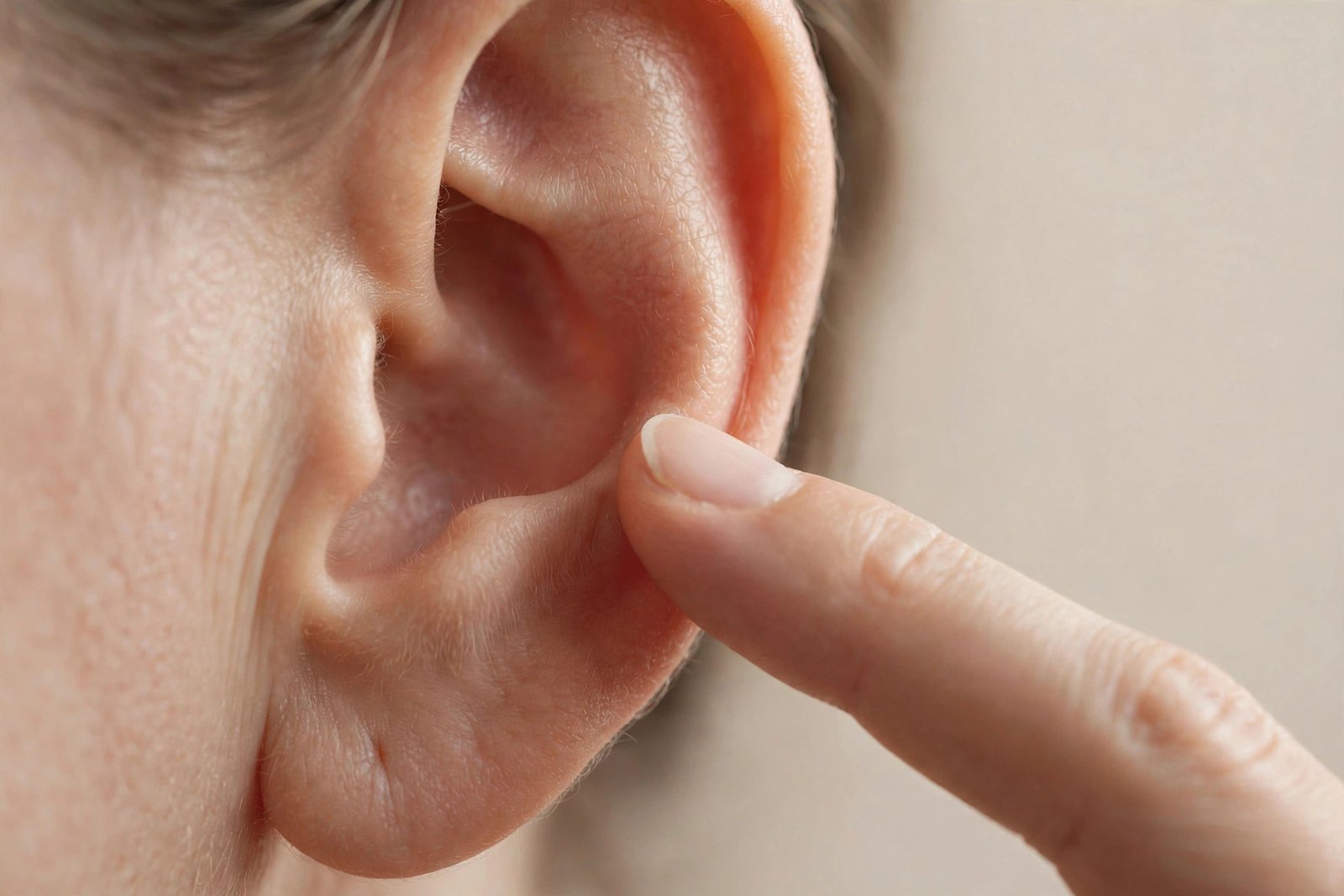
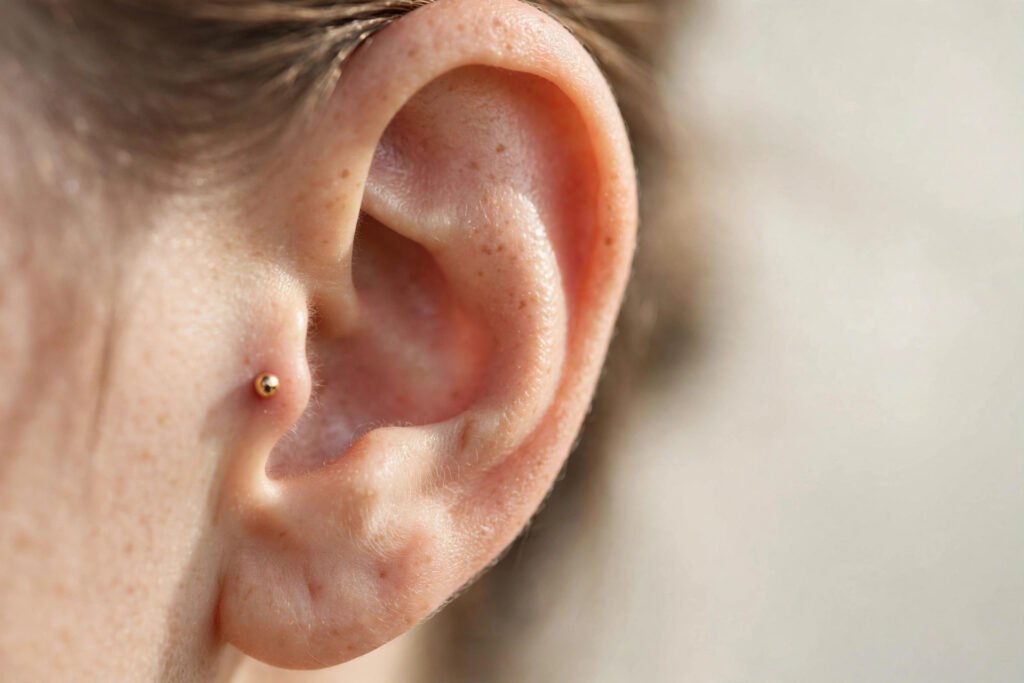
The tragus is the small, pointed flap of cartilage that sticks out in front of your ear canal — press your finger against it and you can partly muffle the sound reaching that ear. A tragus piercing passes straight through this flap: the needle enters on the outer face and exits on the inner side near the canal, and the jewelry (almost always a flat-back stud at first) is fitted through the new channel. Placement is usually through the center of the flap, angled slightly outward so the decorative end faces forward and stays visible from the front. Exact positioning depends on your ear, which is why a good piercer studies the shape before marking anything.
One thing to settle before you book: not everyone can get one. The tragus needs enough thickness and projection to hold a labret stud comfortably. A very small, thin, or flat tragus may not support the jewelry, and a reputable piercer will tell you honestly if your anatomy is not suited to it — forcing a piercing into cartilage that cannot hold it leads to rejection, crooked angles, or embedded jewelry. And do not confuse it with the anti-tragus: that is the small ridge of cartilage directly opposite, just above the earlobe, and it is a separate piercing with its own healing quirks.
How Much Does a Tragus Piercing Hurt?
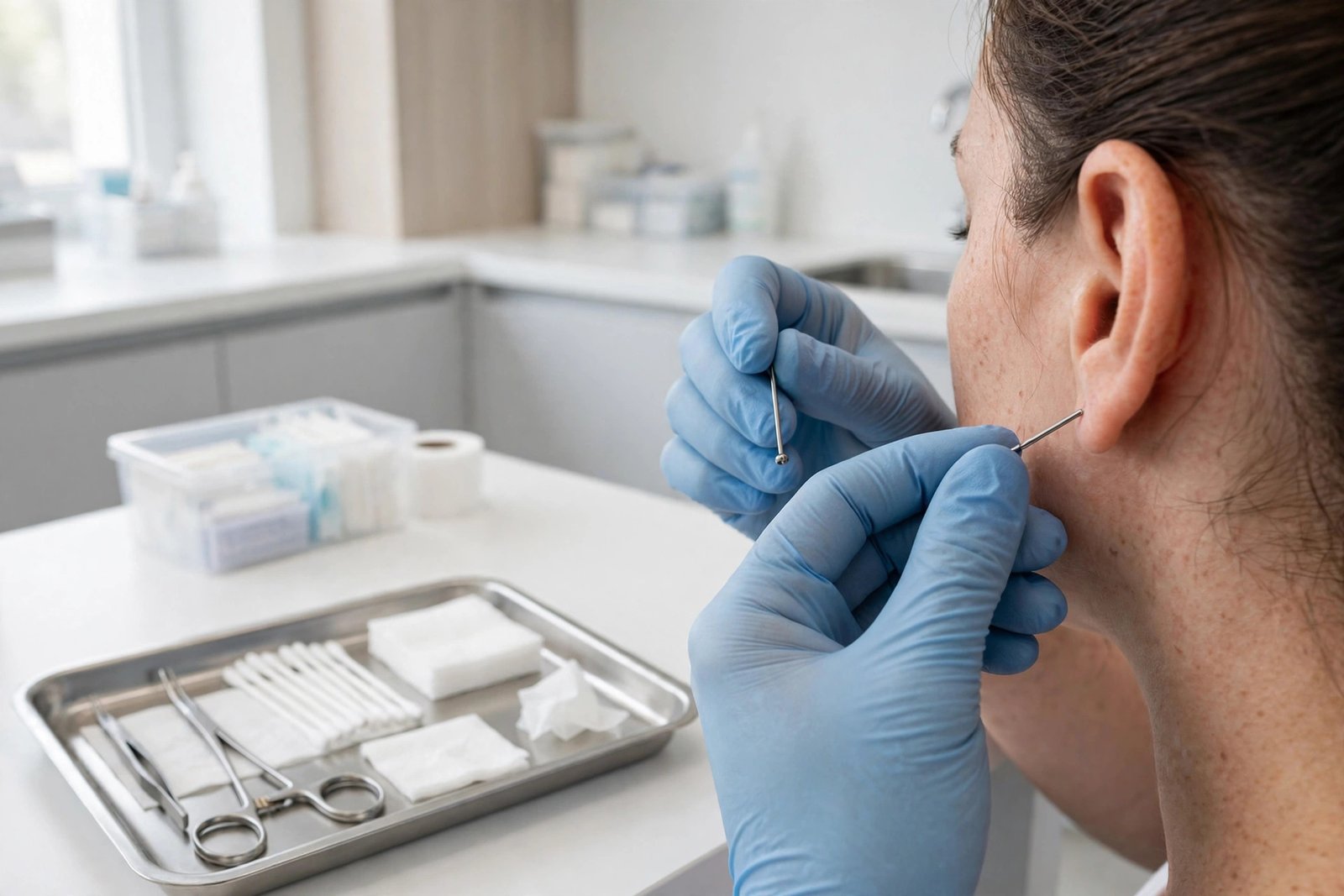
Most people rate it 4 to 6 out of 10. The tragus is thick cartilage with nerve endings, so it stings more than an earlobe — but it lands in the same range as most other cartilage piercings. The needle pass itself takes one to two seconds: a sharp pressure, then a distinct crunch as the needle works through the dense cartilage. That crunch travels through the bones of your skull, and many people find the sound more unsettling than the actual pain.
Tension makes it worse. If you clench your jaw or hunch your shoulders, you will feel more of it, so staying relaxed genuinely helps. Afterwards, expect throbbing and warmth for a few hours, visible swelling through the first week, and a dull ache when you yawn or chew — all normal in the early days.
For comparison with other common piercings:
- Earlobe: 2–3 out of 10
- Helix: 4–6 out of 10
- Tragus: 4–6 out of 10
- Conch: 5–7 out of 10
- Daith: 5–7 out of 10
- Rook: 6–8 out of 10
Everyone experiences pain differently, so treat these as rough guides rather than promises. If you are worried about discomfort, talk to your piercer beforehand — many are fine with you applying a lidocaine-based numbing cream about 30 to 60 minutes before the appointment.
Tragus Piercing Healing Time: What to Expect
A tragus piercing needs 6 to 12 months to heal fully. The outside will look settled long before the inside is done — this is the single biggest trap with cartilage piercings. People see a calm, normal-looking piercing at month three, change the jewelry or drop the aftercare, and stall the healing for weeks.
Here is a realistic timeline:
- Days 1–14: the most dramatic phase — tenderness, swelling, warmth, and possibly light bleeding or clear fluid. This is normal.
- Weeks 3–8: pain eases, but light crusting forms around the jewelry. Do not pick at it — soften it with saline and wipe gently.
- Months 3–6: the piercing looks healed from the outside, but the internal channel is still fragile. Keep the routine going and do not change jewelry yet.
- Months 6–12: full healing. When the piercing feels completely settled — no soreness, swelling, or discharge, even after pressure or a bump — it is done.
One milestone deserves its own mention: the downsize. Your initial stud is fitted with a longer post (usually 8mm) to leave room for swelling. Around 4 to 6 weeks in, your piercer should swap it for a shorter post. A long post left in too long catches on everything and can cause irritation bumps, so do not skip this appointment.
Healing is not only about the piercing. Smoking, ongoing stress, poor sleep, and constantly sleeping on the pierced side all slow things down. Cartilage is slow and unforgiving — the routine matters more here than it does on a lobe.
Aftercare: How to Take Care of Your Tragus Piercing
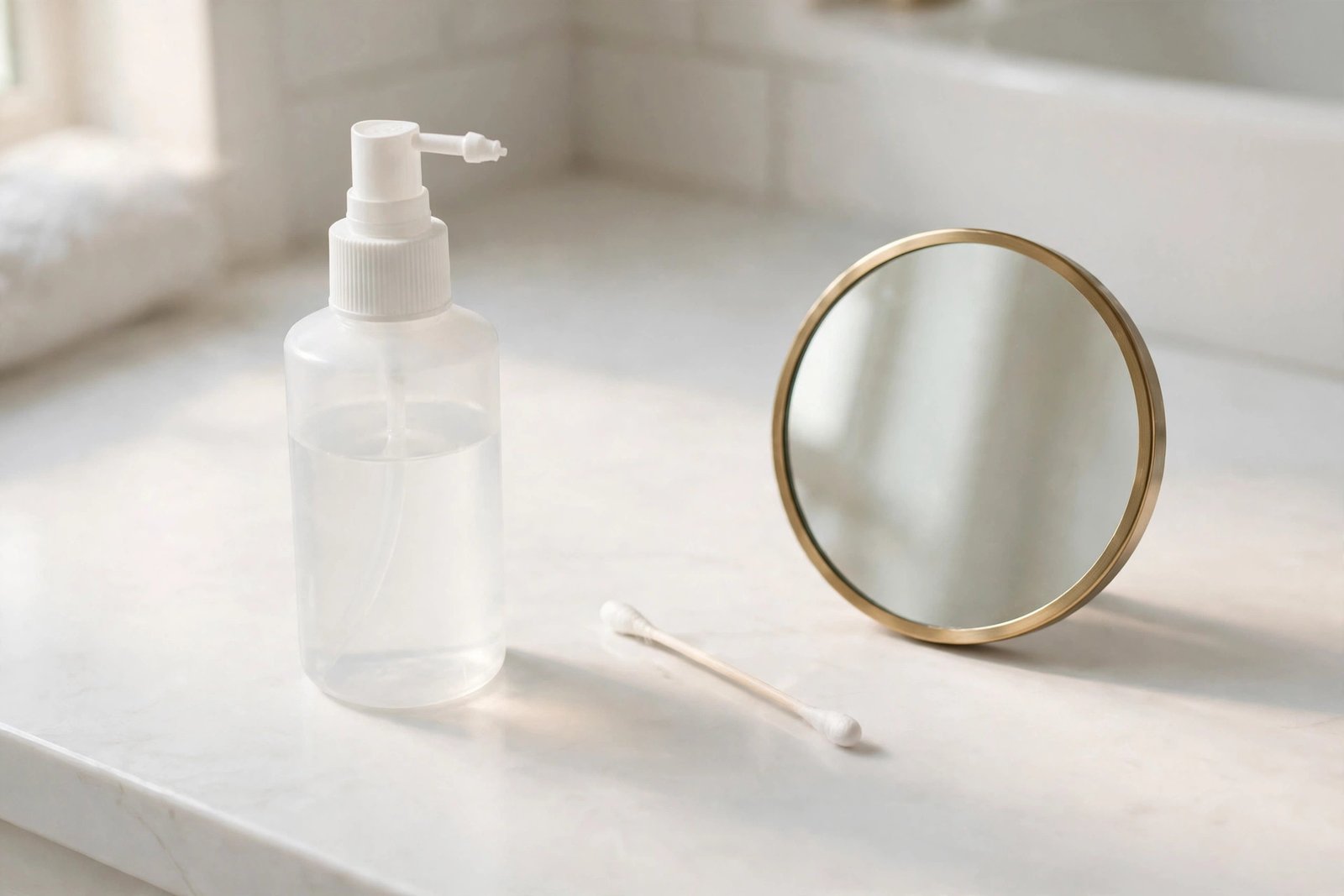
Aftercare for a tragus piercing is the same sterile-saline routine professional piercers recommend for any cartilage piercing: keep it clean, leave it alone, and let it heal on its own schedule.
Your daily routine:
- Wash your hands before touching anywhere near the piercing.
- Spray sterile saline (0.9% sodium chloride wound wash) on the front and back, twice a day.
- Soften any crust with saline first, then gently wipe it away with clean gauze — never pick dry crust off.
- Pat completely dry with a paper towel or clean gauze. Moisture left sitting against the piercing invites irritation.
What to avoid:
- Twisting, spinning, or playing with the jewelry — this drags irritation back into the channel.
- Alcohol, hydrogen peroxide, tea tree oil, and DIY salt mixes — they dry out or burn the healing tissue.
- Submerging the piercing: no pools, hot tubs, lakes, or ocean swimming until it is healed.
- Sleeping directly on the pierced side for the first few months.
- Changing the jewelry before full healing.
Tragus-specific habits: because the tragus sits right where daily life happens, a few extra precautions go a long way. Clean your phone screen regularly — it presses directly against the area during calls. Keep hair and styling products off the piercing, and be mindful of glasses arms and mask straps snagging it. Change your pillowcase every few days while it heals, since it collects oils and bacteria. If you are a side sleeper, a travel pillow with the ear resting in the opening takes the pressure off. And as with any wound, keeping the surrounding skin clean helps prevent secondary irritation.
Jewelry Options for a Tragus Piercing
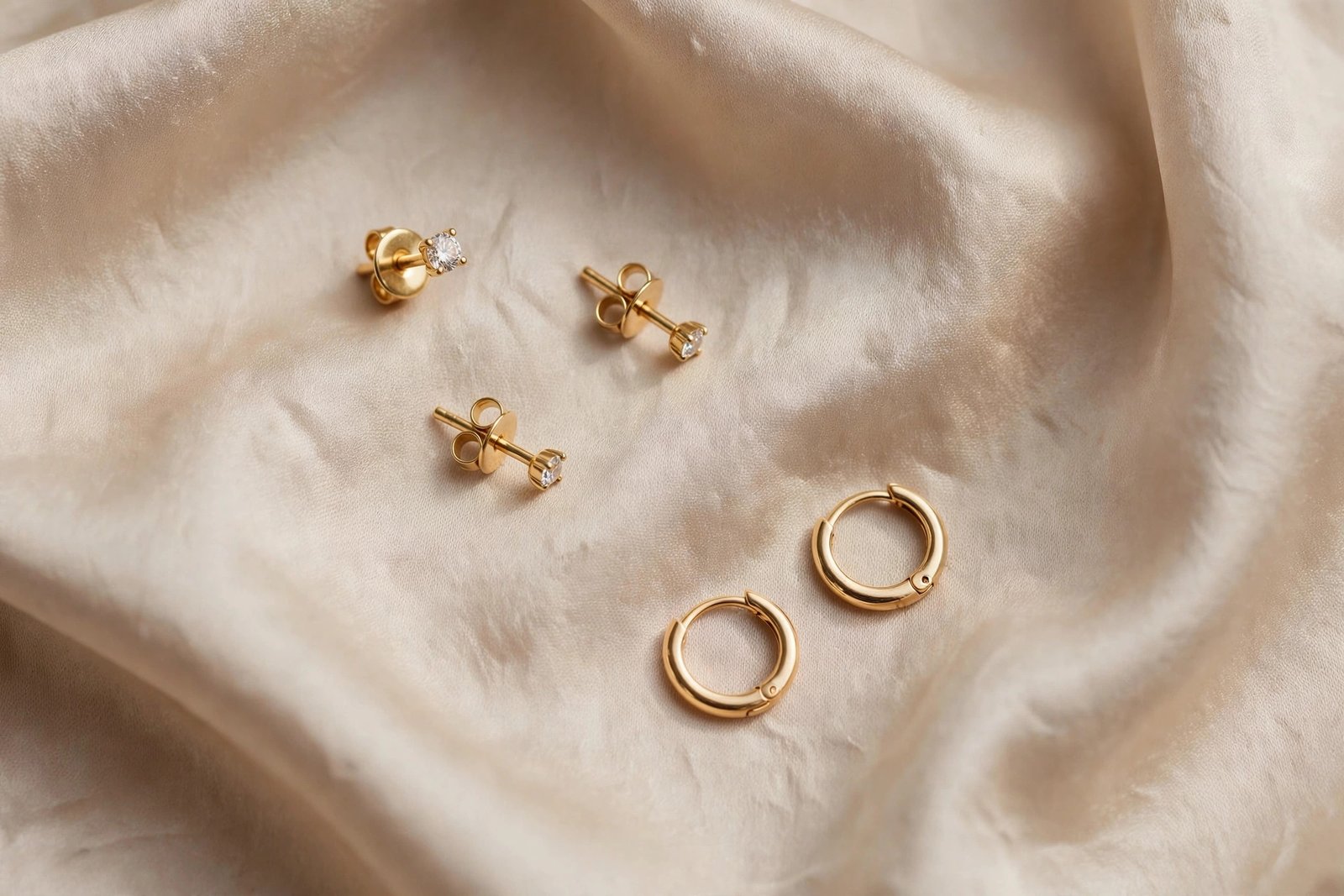
Always start with a flat-back labret stud. It is the only sensible choice for a fresh tragus piercing: the flat disc sits comfortably on the inner side near the ear canal, and a stud catches on far less than a ring does. Most piercings are done at 16 gauge (1.2mm), sometimes 18 gauge (1.0mm), with an 8mm post to accommodate swelling. Keep the decorative end small at first — a 2–3mm gem or disc.
Once fully healed, your options open up:
- Labret studs: gems, shapes, and clusters — the most versatile option.
- Small hoops: 6–8mm seamless rings or clickers, but only after healing is complete. A hoop’s movement can disturb a piercing that has not settled.
- Small barbells: less common, but they work for some ears.
Material matters more than style. Stick with implant-grade titanium (ASTM F136) or solid 14k-and-up gold that is nickel-free, for both the initial piercing and long-term wear. Cheap alloys and plated jewelry are a leading cause of irritation bumps. Picking the right piece is personal — crafting your personal jewelry story takes the same care as buying quality fine jewelry: choose a reputable source, not the cheapest listing.
When the day comes to change your jewelry, have your piercer handle the first swap — the flat back sits deep and close to the canal, and you cannot see it well in a mirror. Internally threaded or threadless ends make later changes smoother. If the jewelry resists or the piercing feels tender, treat it as not fully healed and wait.
Can You Wear Earbuds With a Tragus Piercing?
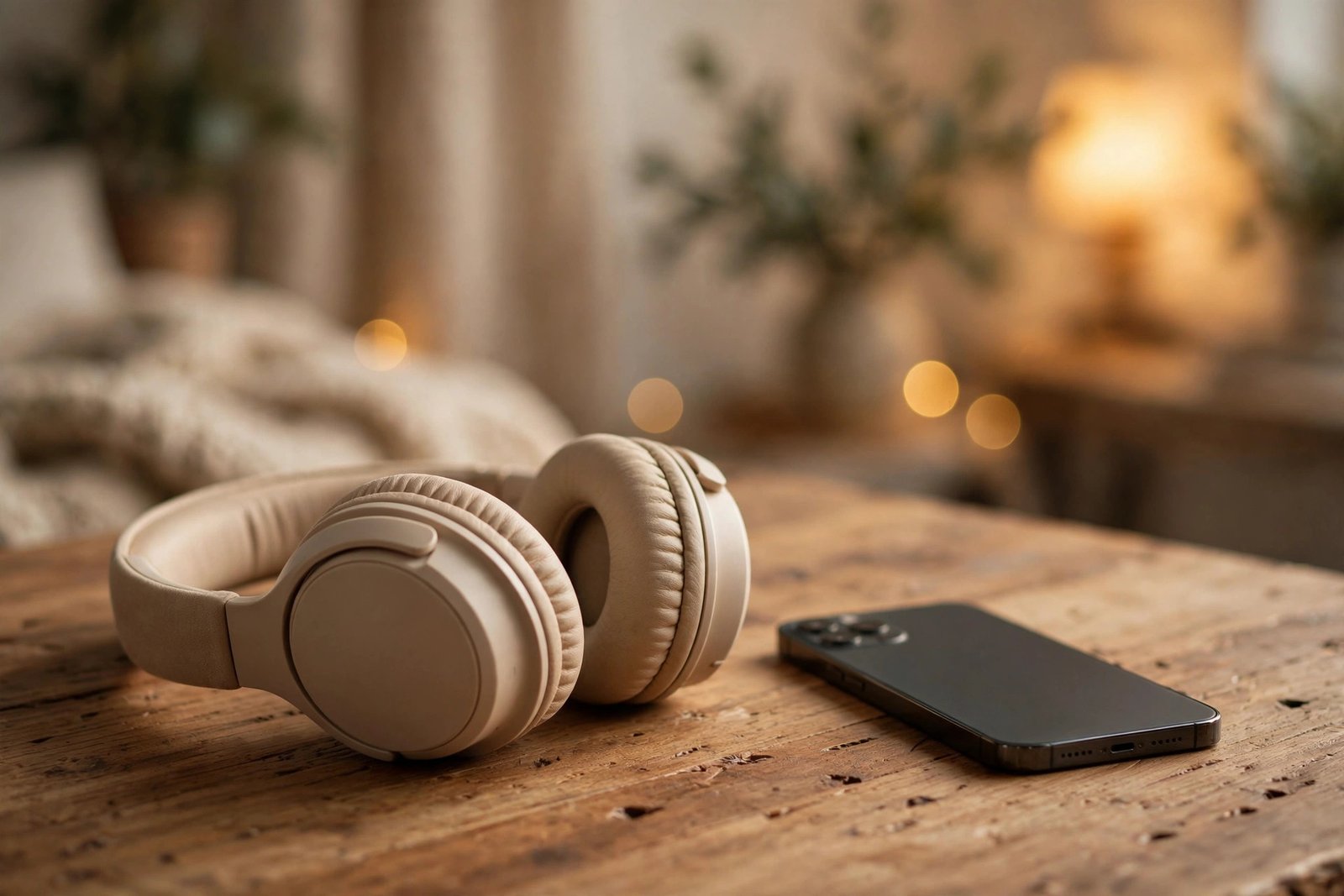
This is the question that catches people off guard — and the answer is no, not while it heals. The tragus sits exactly where an in-ear earbud seats. Wearing one causes two problems: pressure directly on the healing channel, and bacteria from an earbud that lives in pockets and cases. Both slow healing and invite irritation bumps.
That does not mean months of silence. As a rule, the less an option touches your ear, the safer it is:
- Bone conduction headphones: sit on the cheekbone, fully outside the ear.
- Over-ear headphones: cup the ear without pressing the tragus, if positioned well.
- One earbud in the other ear: keeps the healing side free.
- A speaker: no contact at all.
Once the piercing is fully healed — six months at the earliest, often longer — most people go back to earbuds without a second thought. A few find that pressure-fit tips still catch on the jewelry; a smaller tip or a different earbud shape usually fixes that.
How Much Does a Tragus Piercing Cost?
Expect to pay roughly $30 to $80 for the piercing service itself, with jewelry priced on top — good implant-grade titanium typically adds $20 to $50. Prices vary by city and studio, and high-end gold pieces can run much higher.
Shopping on price alone is tempting, but a cheap studio and cheap metal tend to cost more later in healing problems. Put the money toward a reputable piercer and implant-grade jewelry; it is the cheapest insurance for a smooth heal.
Common Myths About Tragus Piercings
“A tragus piercing helps you lose weight.” There is a long-running rumor that the piercing activates a pressure point controlling appetite. No research backs this up — it is a myth, full stop.
“It can damage your hearing.” The piercing sits outside the ear canal, on the flap in front of it, so it does not affect hearing when done properly. As with any body piercing, the safety comes from a professional doing it with sterile equipment — never a piercing gun on cartilage, and never a DIY job.
“Cartilage piercings never fully heal.” They do — they just take longer than lobes. Most tragus piercings settle completely within a year when aftercare is consistent and jewelry is not changed too early.
Frequently Asked Questions
Can everyone get a tragus piercing?
No. Your tragus needs enough thickness and projection to hold a labret stud. If it is very small, thin, or flat, a professional piercer will recommend a different placement.
When can I change my tragus jewelry?
Wait until it is fully healed — usually 6 to 12 months. The exception is the professional downsize at 4 to 6 weeks, when the initial long post is swapped for a shorter one.
Should I get a tragus or a daith piercing?
Both sit near the ear canal, but the daith runs through the inner fold and is built for small rings, while the tragus is front-facing and better suited to studs. The tragus also blocks earbud use during healing; the daith does not. Pick based on the look you want and how much earbud downtime you can tolerate.
Does a tragus piercing hurt more than a helix?
They are in the same range — both typically rated 4 to 6 out of 10. The tragus can feel more noticeable because it sits right at the ear canal, so you are more aware of everyday contact in that spot.
A tragus piercing is a small piercing with a long but straightforward road to healing. Choose a professional piercer, start with a flat-back stud in implant-grade metal, keep the saline routine boring and consistent, and give it the full 6 to 12 months before you call it healed. Do that, and you will end up with a subtle, versatile piercing that works with everything from a plain titanium stud to a tiny gold hoop.