Introduction
A couple of years ago, I watched a friend stand in front of the bathroom mirror for almost 10 minutes, buzzing his electric trimmer in short bursts. He was not shaving everything off — far from it. Instead, he precisely sculpted the hair along his chin and upper lip into an intentional shape. By the time he stepped back, the change was evident. A basic goatee had elevated an easygoing appearance into something edgier, more self-assured, even intentional.
Facial hair has long been a form of personal expression, but few styles are as iconic — or as contested — as the goatee. Some envision artists or rebels; others think of tech entrepreneurs, actors, and even philosophers. The reality is less one-dimensional than the stereotype: for decades, now, the goatee has proven to be a survivor because it’s versatile and expressive and surprisingly compatible, in terms of face shape and disposition, with several different types of facial hair.
In this article, we’re going to take a look at what makes the goatee such an enduring style of facial hair. You’ll discover how it has changed over time, which variations are most flattering for different face shapes, how to grow and maintain it correctly, and the usual pitfalls that can turn a stylish look into a grooming nightmare.
What Exactly Is a Goatee?
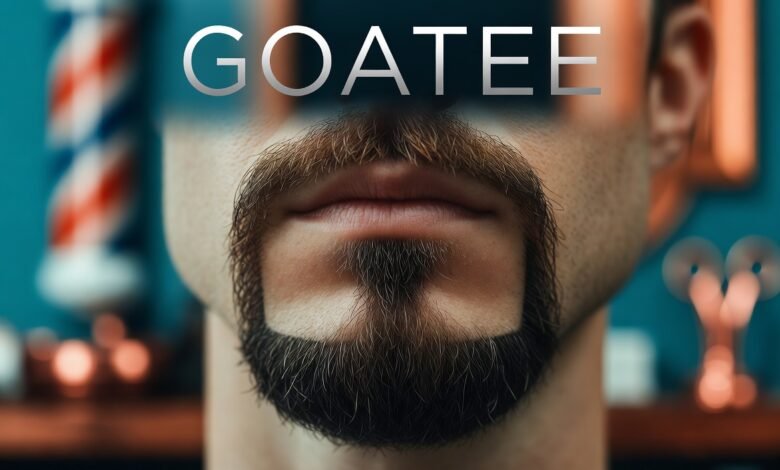
Essentially, a goatee is the hair that grows around the chin and traditionally includes the mustache, with clean-shaven cheeks. The name derives from its likeness to the tuft of hair that hangs off a goat’s chin.
But the contemporary understanding is much broader than that straightforward definition might imply.
These days, however, the goatee comes in a handful of iterations.
Classic Goatee
Hair exclusively on the chin, no mustache.
Full Goatee
Mustache that runs into the beard on your chin.
Circle Beard
Mustache and hair on the chin that form a circle around the mouth.
Van Dyke
A disconnected mustache and pointed chin beard.
Anchor Beard
A stylized take on a ship’s anchor.
All versions focus on the chin area, leaving the cheeks relatively clean and thus achieving a sharp, defined facial profile.
The Unexpected History of the Goatee
While the goatee is often considered a modern craze, it has been around for centuries.
The god Pan in ancient Greece is often depicted with a goatee. Later, during the Renaissance, artists and intellectuals sported similar facial hair styles. By the 19th century, the goatee had become popular among artists, philosophers, and musicians.
Fast-forward to the late 20th century, and the goatee had another pop-culture resurgence. Actors, rock musicians, and tech leaders brought the look back to life.
Consider how many public figures have put one on.
Robert Downey Jr.
Johnny Depp
Brad Pitt (in various phases)
Steve Jobs in the early days
Numerous athletes and musicians
Each wore the goatee a bit differently, showing just how versatile the style can be.
Why the Goatee Suits So Many Men
Certain beard styles require a specific facial hair thickness or face shape. Why, the goatee is so much more forgiving.
Here’s why it succeeds so brilliantly for many men.
It Creates Definition
For those with a softer jawline or a round face, a goatee can add structure. This emphasizes the chin, visually elongating the face.
Barbers frequently suggest this look to clients seeking a more pronounced facial structure without committing to a full beard.
It Requires Less Coverage
Not everyone has dense cheek hair to grow. It is very common in young men to have a patchy beard.
A goatee sidesteps that dilemma altogether by concentrating on the parts of the face where hair typically grows most robustly: the chin and upper lip.
It Balances Professional and Casual
A full beard can look rugged. Clean-shaven looks can sometimes feel too stuffy.
The goatee falls somewhere in between. When cut to the proper length, it adds intentionality and polish without rigidity.
The Goatee Guide: How to Choose One for Your Face Shape
One common mistake people make is copying a celebrity’s facial hair without considering their face shape.
Various goatee styles produce different visual effects.
Round Faces
A longer shape that extends down slightly should be selected for round faces.
This lengthens the face without adding width.
Avoid wide circle beards and thick side connections.
Square Faces
Square faces have strong jawlines anyway, so the rounded goatee smooths the corners.
Best options include the circle beard and a softly rounded chin beard.
Oval Faces
This face shape is naturally balanced—almost any goatee variation works.
You can experiment with the anchor beard, the Van Dyke, or the classic goatee.
Triangular Faces
On narrower chins, a short and full goatee will have more success than a long-pointed version.
This gives the lower half of the face a sense of equilibrium.
Instructions for Growing a Goatee (Step-by-Step)
The secret to a great goatee isn’t just abandoning your razor routine. There’s a small amount of strategy at play.
Step 1: Allow All to Grow First
Don’t be tempted to mold it right away. Let your facial hair grow for 7–14 days to see which areas of your beard are full and encourage growth.
Step 2
I could convince you of step 2, which will lead to real sustainable growth.
Take a long, hard look at where hair grows the thickest: the chin, under the lower lip, and the mustache area.
These will be the heart of your goatee.
Step 3: Shave the Cheeks
A razor or trimmer can be used to trim hair from the cheeks, sideburn extensions, and neck.
Just keep the mustache area of hair intact.
Step 4: Define the Edges
Use a precision trimmer to carve clean lines around the mouth and chin.
This step is the difference between a nonchalant-looking goatee and one that was an accident.
Maintaining a Clean, Sharp Goatee
The biggest myth about the goatee is that it’s “low maintenance.” In fact, it’s the other way around.
Because the style is small and contained, every detail is on naked display.
Essential Grooming Tools
If you think you’ll keep a goatee around on the reg, this makes all the difference.
Precision beard trimmer, small grooming scissors, fine-tooth beard comb, quality razor, and beard oil.
Weekly Maintenance Routine
A simple regimen keeps the style sharp.
Shorten it every few days. Clean the edges with a razor. Wash facial hair regularly. Soften texture with beard oil.
Beard oil may seem like an indulgence for such a small style, but it keeps hair healthy and prevents the dry look many goatees develop.
Goatee Mistakes (and How to Prevent Them)
After speaking to several barbers over the years, I’ve noticed some red flags that keep coming up.
Making It Too Wide
A goatee that reaches too widely across the chin loses its identifying shape.
Focus it on the mouth.
Ignoring the Neckline
The goatee may be all about the chin, but that neck area is still a factor.
And a messy neckline ruins its clean look straight away.
Letting It Grow Wild
The goatee works precisely because of its specificity.
If it gets uneven or overgrown, it instantly looks sloppy.
Choosing the Wrong Thickness
Too thin and it disappears.
Too thick, and it looks like a mini beard.
Balance is key.
The Psychology of Facial Hair (It Matters)
Intriguingly, studies in grooming psychology indicate that facial hair influences perceptions of personality traits.
Stereotypes aren’t universal truths, but research often connects goatees with traits such as creativity, individuality, confidence, and assertiveness.
This may explain why the style is so prevalent among entrepreneurs, artists, and performers. It quietly expresses personality without the assertiveness of a full beard.
Is the Goatee Still in Style?
There are fleeting trends in the realm of grooming, but the goatee never goes out of style. Instead, it runs through various iterations.
The look has resurfaced more discreetly in recent years through shorter, minimalist goatees, faded transitions into stubble, and hybrid beard styles.
However, modern barbers are pairing the goatee with light jawline stubble for a subtler, trendier look.
In other words, the goatee is not out of style — it’s been re-fashioned.
Final Thoughts
The goatee is one of the smallest beard styles around, but it packs a surprising punch in terms of personality. It can transform facial proportions, emphasizing individuality and creating a polished yet relaxed message — all with the barest hint of hair on the chin and upper lip.
As with any grooming decision, intention is paramount. An appropriately-shaped goatee demonstrates attention to detail and self-awareness. A lack of mindful upkeeping does the opposite.
If you’re thinking of experimenting with this style, treat it like a craft rather than just a brief shave. So let it grow right, mold it correctly, and maintain it.
A goatee done well isn’t just facial hair—it’s an unofficial signature.
You may also read itbigbash.