
Hors d’Oeuvres: What They Are, Examples & How to Serve Them
Quick Answer: Hors d’oeuvres are small, bite-sized dishes served before a meal — usually at cocktail parties and receptions while guests mingle. They can be served hot or cold, are designed to be eaten by hand in one or two bites, and are meant to stimulate the appetite before the main course.
If you have ever been handed a tiny toast topped with something delicious at a party and wondered what to call it, the answer is hors d’oeuvres. These elegant little bites show up at weddings, holiday gatherings, and cocktail receptions — but the term confuses plenty of people, from how to pronounce it to how it differs from an appetizer.
In this guide, you will learn exactly what they are, how to say the word correctly, how they differ from appetizers and canapés, the most popular examples, and how to serve them properly at your own event.
Table of Contents
What Are Hors d’Oeuvres?
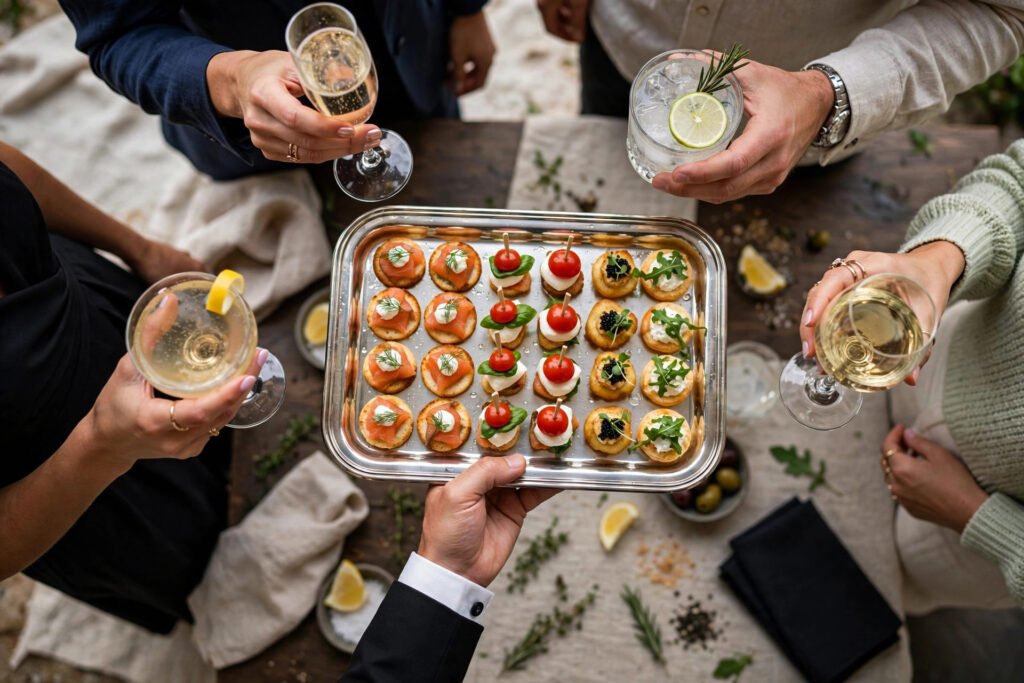
Hors d’oeuvres are small dishes served before a meal in European culinary tradition. The term comes from French, where hors-d’œuvre literally means “outside the work” — in other words, something served outside the main courses of the meal. They are typically bite-sized, designed to be eaten by hand, and served while guests are still arriving and socializing rather than seated at the table.
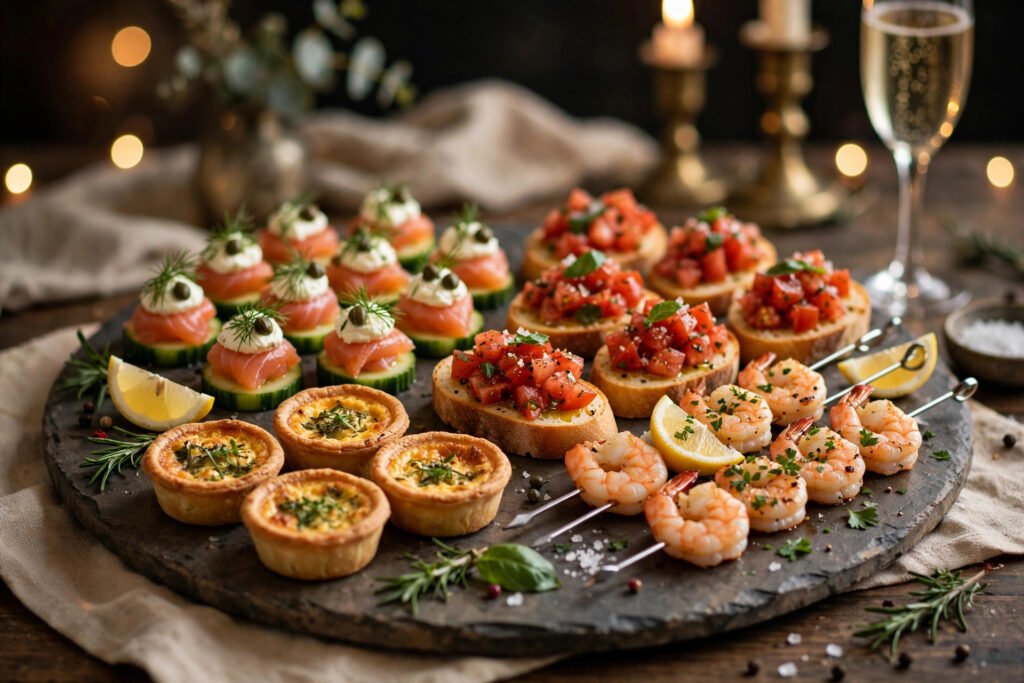
Some are served cold, like smoked salmon blinis or bruschetta, while others are served hot, like mini quiches or bacon-wrapped dates. What unites them is their purpose: to whet the appetite, keep guests happy while the main meal is being finished, and set an inviting tone for the event.
You will most often encounter them at cocktail parties, wedding receptions, gallery openings, and holiday gatherings — anywhere people are standing, mingling, and holding a drink in one hand. That is precisely why they are built to be eaten in one or two bites with no knife and fork required.
How to Pronounce Hors d’Oeuvres
The pronunciation trips up almost everyone the first time. In English, hors d’oeuvres is pronounced “or-DERVZ” — the “h” is silent, just as in French. The singular and plural are spelled the same way in French (hors-d’œuvre), though in English you will commonly see the plural written as “hors d’oeuvres.”
Saying it confidently is half the battle when ordering catering or discussing a menu. Remember: silent H, stress on the second syllable — or-DERVZ.
Hors d’Oeuvres vs Appetizers vs Amuse-Bouche
These terms get used interchangeably, but they describe different moments in a meal. Here is the distinction that matters:
| Hors d’Oeuvres | Appetizers | Amuse-Bouche | |
|---|---|---|---|
| When served | Before guests are seated, during cocktail hour | First course, served at the table | A single complimentary bite from the chef, before the appetizer |
| How eaten | By hand, standing and mingling | With utensils, seated | Usually in one bite |
| Portion | Many small bites, passed around | One plated starter per person | One tiny taste |
| Chosen by | Host or caterer | The diner orders it | The chef decides |
| Example | Mini crab cakes on a tray | A bowl of French onion soup | A spoonful of chilled pea velouté |
The simplest way to remember it: hors d’oeuvres belong to the party, appetizers belong to the seated meal, and an amuse-bouche is the chef’s personal greeting. Canapés — small decorated toasts or crackers with toppings — are one popular type of hors d’oeuvre, not a separate category.
Popular Hors d’Oeuvres Examples
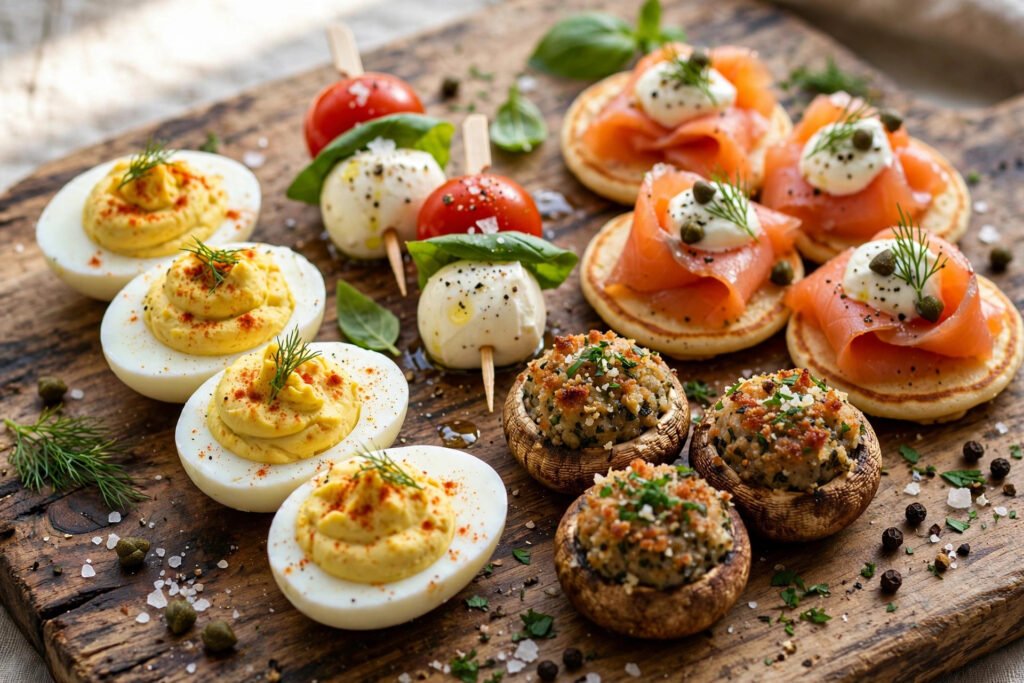
There are no strict rules about what qualifies, which is why hors d’oeuvres vary so much by cuisine and occasion. These classics appear again and again because they work:
Cold hors d’oeuvres
- Bruschetta — toasted bread topped with tomatoes, basil, and garlic.
- Smoked salmon blinis — small pancakes with salmon, crème fraîche, and dill.
- Caprese skewers — cherry tomatoes, mozzarella, and basil on a toothpick.
- Shrimp cocktail — chilled shrimp with cocktail sauce, served in small cups.
- Deviled eggs — halved eggs with a seasoned yolk filling.
- Cheese and charcuterie bites — cubes or rolls of cheese with cured meats.
Hot hors d’oeuvres
- Mini quiches — bite-sized savory tarts with endless filling options.
- Bacon-wrapped dates — sweet dates stuffed and wrapped in crispy bacon.
- Stuffed mushrooms — mushroom caps filled with cheese, herbs, or sausage.
- Spring rolls — crisp rolls with vegetable or shrimp fillings.
- Meatballs — cocktail-sized, served with a dipping sauce and toothpicks.
- Spanakopita triangles — flaky phyllo pastry filled with spinach and feta.
A good spread mixes hot and cold, rich and fresh, and always includes at least one or two vegetarian options so every guest finds something.
How to Serve Hors d’Oeuvres at a Party
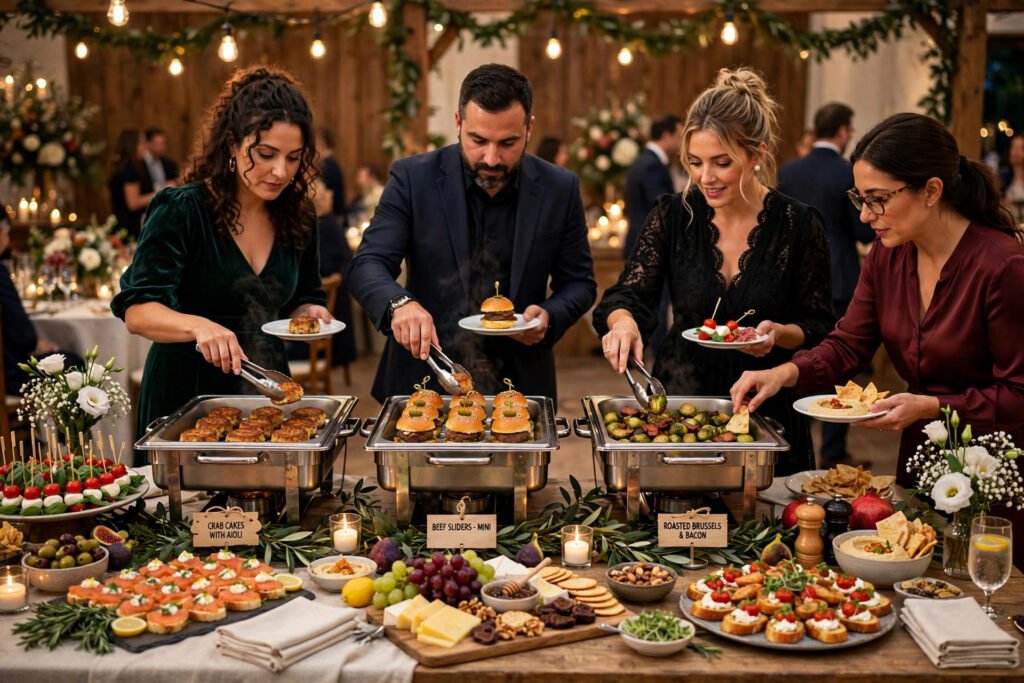
Serving them well is less about fancy recipes and more about planning. Follow these guidelines and your spread will feel effortless.
Plan the right quantity
The golden rule: plan 6–8 pieces per guest per hour for a cocktail-style event. For a one-hour reception before dinner, 6 pieces per person is plenty. For a two-hour cocktail party standing in for dinner, aim for 12–15 pieces per person. It is always better to slightly over-cater than to run out.
Time them with the event
Put the first trays out as guests arrive — hungry early arrivals are your toughest critics. Replenish in waves rather than putting everything out at once, so latecomers get fresh bites and the table never looks picked over.
Offer variety, not volume of one thing
Choose 4–6 different types rather than a mountain of a single item. Mix temperatures (some hot, some cold), textures (crisp, creamy, fresh), and dietary needs (include vegetarian and, ideally, one gluten-free option).
Make them truly finger-friendly
Every piece should be manageable in one or two bites while holding a drink. Provide cocktail napkins and small plates, use toothpicks or skewers where helpful, and avoid anything drippy, crumbly, or requiring two hands.
Keep hot foods hot and cold foods cold
Use chafing dishes or warming trays for hot items, and nest cold platters over ice. Food that sits at room temperature too long is both unappetizing and unsafe — refresh platters rather than letting them linger.
Mistakes to Avoid
- Serving only one type — a single option bores guests and excludes dietary needs.
- Underestimating quantities — running out mid-party is the most common catering failure.
- Choosing messy bites — anything that drips on clothes will be remembered for the wrong reason.
- Putting everything out at once — the spread looks tired within an hour; replenish in waves.
- Forgetting drinks pairings — salty bites cry out for something to sip; keep beverages flowing alongside.
- Serving them too late — they belong to the arrival and mingling period, not after everyone is seated.
Frequently Asked Questions
What does hors d’oeuvres literally mean?
In French, hors-d’œuvre literally means “outside the work” — referring to dishes served outside the main courses of a meal.
What is the difference between hors d’oeuvres and appetizers?
They are small finger foods served before guests are seated, usually during cocktail hour at events. Appetizers are the first course of a seated meal, ordered by the diner and eaten with utensils at the table.
How do you pronounce hors d’oeuvres?
It is pronounced “or-DERVZ” in English — the H is silent and the stress falls on the second syllable.
Are hors d’oeuvres served hot or cold?
Both. Many spreads include a mix — for example, cold bruschetta and shrimp cocktail alongside hot mini quiches and meatballs.
How many hors d’oeuvres per person for a party?
Plan 6–8 pieces per guest per hour. For a one-hour pre-dinner reception, 6 pieces each is enough; for a two-hour cocktail party replacing dinner, plan 12–15 pieces per person.
What are some easy hors d’oeuvres to make at home?
Caprese skewers, bruschetta, deviled eggs, and cheese-and-cracker bites are all simple, require no special equipment, and can largely be prepared ahead of time.
Is a canapé the same as an hors d’oeuvre?
A canapé is a type of hors d’oeuvre — specifically, a small piece of bread, toast, or cracker topped with a savory garnish. All canapés are hors d’oeuvres, but not all hors d’oeuvres are canapés.
Conclusion
Hors d’oeuvres are the opening act of a great gathering — small bites with one big job: making guests feel welcome while the main event comes together. Now you know what they are, how to say the word, how they differ from appetizers, and how to serve them with confidence.
Whether you are planning a wedding reception or a casual holiday get-together, remember the essentials: bite-sized, finger-friendly, plenty of variety, and 6–8 pieces per guest per hour. Get that right, and your hors d’oeuvres will be the part of the party people talk about.