

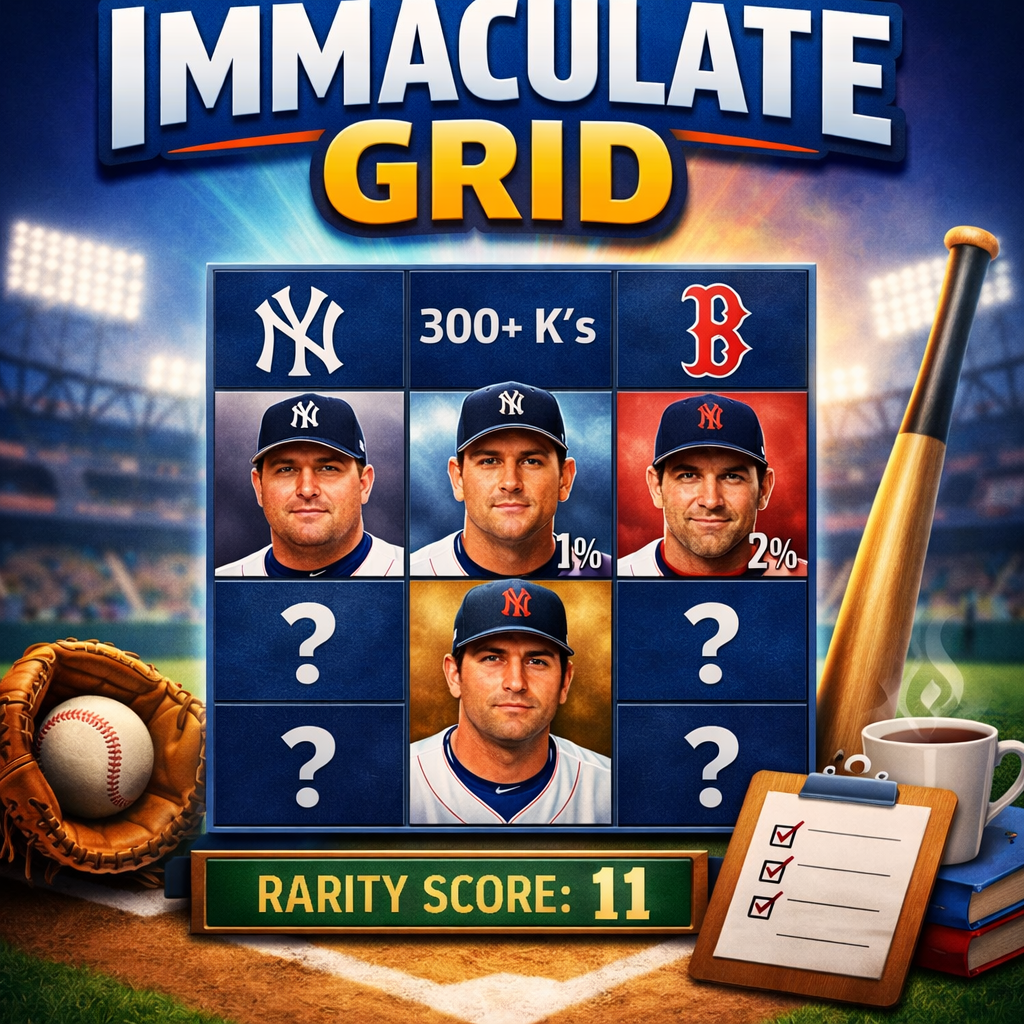
Picture this: It’s barely 7 a.m., your coffee is still steaming, and instead of doom-scrolling the news, you’re staring at a blank 3×3 grid trying to recall whether a long-forgotten utility man ever wore both a Yankees cap and a Red Sox one. Sound familiar? That’s the quiet magic of the immaculate grid—the daily sports trivia puzzle that quietly hooked millions of baseball fans (and later fans of other leagues) in 2023 and shows no signs of slowing down in 2026.
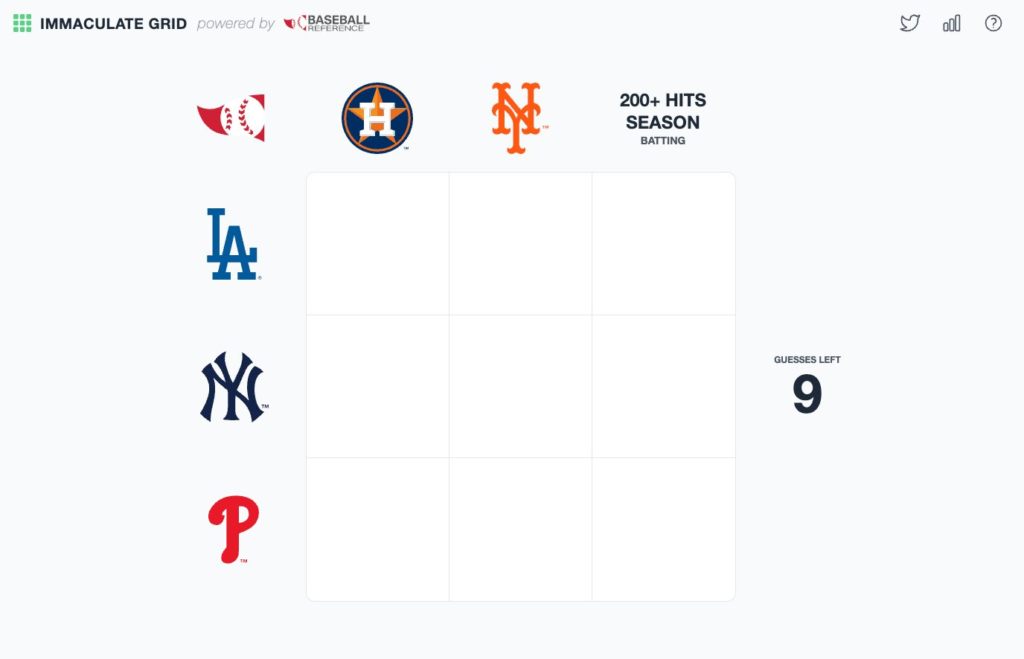
The immaculate grid isn’t just another online game. It’s a perfect storm of nostalgia, deep-cut knowledge, and friendly competition. In this guide, I’ll walk you through everything: what the immaculate grid actually is, how the scoring works, battle-tested strategies to drop your rarity score into the single digits, the most common traps that trip up even die-hard fans, and practical tips you can apply to today’s grid. By the end, you’ll go from guessing randomly to hunting those deliciously obscure answers that make your friends message you “HOW??”
What Exactly Is the Immaculate Grid?
At its core, the immaculate grid is a browser-based 3×3 puzzle powered by Sports Reference data. Each day, a fresh grid drops with row and column categories—most often MLB team logos, but sometimes statistical feats (200+ hits in a season), awards (All-Star appearances), or even historical markers like “Played in the Major Negro Leagues.”
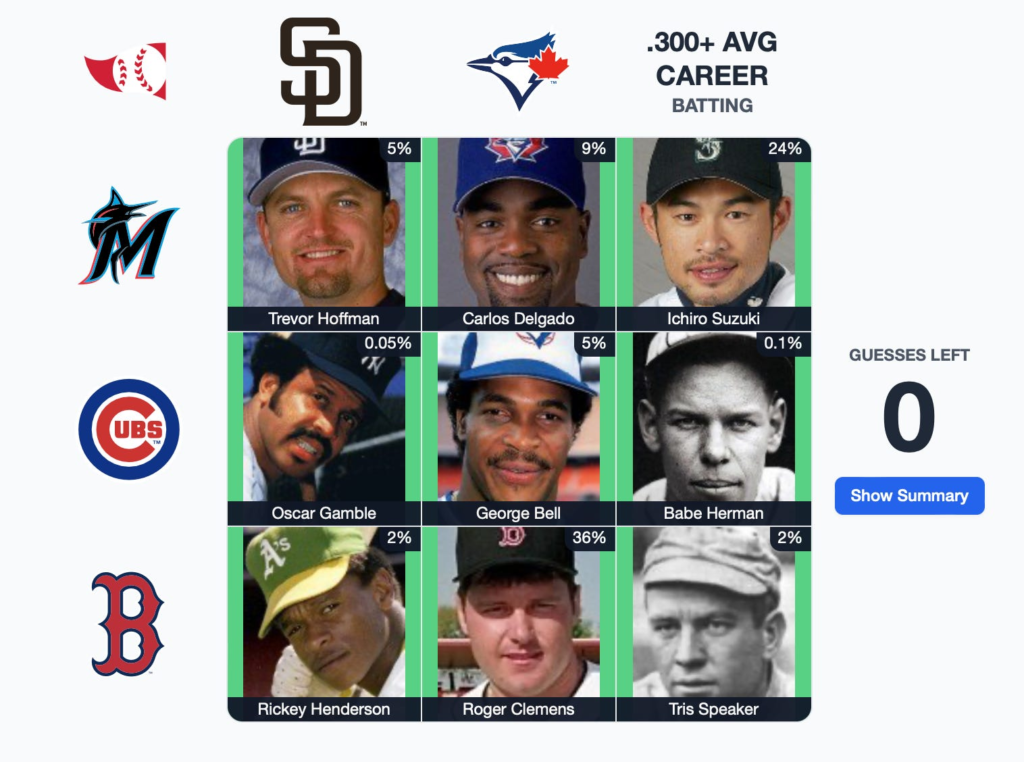
Your job? Name nine different players (no repeats allowed across the entire grid) who fit both the row and column criteria for each intersecting square. You get exactly nine guesses total—right or wrong, every entry burns one. Finish the grid and you unlock your rarity score, which tells you how unique your answers were compared to everyone else playing that day.
It’s deceptively simple on the surface and brutally humbling once you start digging. The name? A nod to the “immaculate inning”—three strikeouts on nine pitches. Perfect execution, zero waste. The immaculate grid aims for the same elegant precision with your baseball memory.
The Viral Origins of the Immaculate Grid
The immaculate grid launched quietly in April 2023, created by Atlanta software developer Brian Minter as a personal side project. He named it after that flawless pitching feat and built the first few grids himself to avoid repetitive categories. Within weeks it exploded on Reddit and X (formerly Twitter), racking up 200,000 daily players by midsummer. Sports Reference acquired it in July 2023, added player photos, direct links to Baseball-Reference pages, and rapidly rolled out versions for NFL, NBA, NHL, and even soccer (Immaculate Footy).
What made it stick? The immaculate grid rewards exactly what serious sports fans love: obscure journeyman careers, weird trade-deadline stints, and “wait, he played there?” moments. It turned casual water-cooler talk into a daily ritual shared across ballparks, fantasy leagues, and group chats.
How to Play the Immaculate Grid: Step-by-Step
Playing the immaculate grid couldn’t be simpler, but small habits make a huge difference:
- Scan the whole grid first — Don’t jump straight into the easiest square. Identify the two or three intersections that look impossible. Those are your priority.
- Enter a player’s name — Click any empty cell and type. The game auto-suggests from valid options, but you can type freehand too.
- Remember the no-repeat rule — Once a player is used, he’s gone for the entire grid. This is where most people burn guesses.
- Watch your guess counter — Every attempt (correct or not) counts. Nine wrong guesses and you’re locked out until tomorrow.
- Submit and see the rarity — Finish all nine and the immaculate grid instantly calculates your score.
Pro move: Play on desktop if you can. The larger view helps you mentally cross-reference players across rows and columns without losing track.
Decoding the Rarity Score (and Why It Matters)
Here’s where the immaculate grid separates the casuals from the obsessives. After you complete the grid, each answer gets a percentage based on how many other players chose the exact same name for that square. Your total rarity score is the sum of those nine percentages. Lower is dramatically better—like golf.
A score under 100 is solid. Under 50 is excellent. Single digits? You’re a grid wizard.
Why does it matter? Because chasing rarity forces you to think beyond the obvious Hall of Famers. Everyone picks Derek Jeter for Yankees + hits. The player who remembers the 1980s utility guy who had a 20-game cup of coffee in pinstripes? That’s the one dropping the score into the teens.
Proven Strategies to Crush the Immaculate Grid
After hundreds of grids, here are the tactics that actually move the needle:
- Start with the hardest cells — Knock out the intersections with the fewest possible answers first. This preserves your mental energy (and guesses) for the easier ones later.
- Hunt the journeymen — Players who bounced around the league are gold. Think of guys like Mark DeRosa, Octavio Dotel, or Mike Morse—short stints on half a dozen teams. They fit multiple intersections without repeating.
- Use “cheat code” categories — When a grid features Negro Leagues, international players, or one-game wonders, lean into those deep cuts. They’re almost always lower-percentage answers.
- Cross-reference mentally — If Row 1 is “Yankees” and Column 2 is “Astros,” ask yourself who got traded between those two organizations in the last 20 years. Trade-deadline rentals often fly under the radar.
- Avoid the superstar trap on obvious cells — Sure, Aaron Judge works for Yankees + home runs, but half the player base will pick him. Look one tier down for a comparable but rarer name.
One personal example: On a recent grid pairing “Red Sox” with “300+ strikeouts in a season,” most people defaulted to Pedro Martinez. I went with Roger Clemens’ brief Boston stint instead and watched my square rarity drop to 4%. Small choices, big score impact.
Common Mistakes That Kill Your Score
Even experienced players stumble on the same pitfalls:
- Repeating a player across the grid (the #1 sin).
- Filling easy cells first and painting yourself into a corner with no options left for tough intersections.
- Relying solely on recent players—pre-2000 baseball is loaded with low-rarity answers that younger fans overlook.
- Ignoring the “played at least one game” rule nuance. A single September call-up still counts.
Fix these and you’ll instantly see your average score improve.
Insider Tips You Won’t Find on the Official Rules Page
- Bookmark Baseball-Reference — Not for cheating during the game (that’s no fun), but for post-game study. Look up why certain answers were rarer than others.
- Track your personal stats — Keep a simple note of your best and worst scores by category type. You’ll quickly learn where your knowledge gaps are.
- Play the variants — Once you’ve mastered baseball, try the NFL or NBA immaculate grid. The mechanics are identical, but the player pools feel fresh again.
- Join the conversation — Share your grid on X or Reddit. The community loves explaining wild answers you missed.
Why the Immaculate Grid Still Feels Fresh in 2026
Three years in, the immaculate grid hasn’t lost its spark because the categories keep evolving and the player pool is effectively infinite. New retirees, rule changes, and deep historical data mean every grid still surprises. It’s also become a low-stakes social connector—my group chat lights up every morning with screenshots and “no way you got that guy” reactions.
More than anything, it reminds us why we fell in love with baseball in the first place: the stories, the weird careers, the endless rabbit holes of stats and history.
Ready to Drop Your Next Rarity Score?
The immaculate grid rewards curiosity, memory, and a willingness to look past the obvious. Start applying these strategies today and you’ll notice your scores trending downward almost immediately. More importantly, you’ll rediscover players and stories you’d completely forgotten.
So go ahead—open today’s grid, pour another cup of coffee, and hunt those rare answers. The immaculate grid is waiting. Your next personal best is only nine guesses away.
FAQs
Q: How many guesses do you get in the immaculate grid?
A: Exactly nine—one per cell. Every guess counts whether correct or incorrect.
Q: What does a good rarity score look like?
A: Under 100 is good, under 50 is excellent, and single digits put you in elite company. Lower is always better.
Q: Can you play old immaculate grid puzzles?
A: Yes—Sports Reference archives every past grid so you can practice anytime.
Q: Does the immaculate grid work for other sports?
A: Absolutely. Versions now exist for NFL, NBA, NHL, and soccer.
Q: Is there only one correct answer per square?
A: No—many players usually qualify, but the goal is choosing the rarest one to improve your score.
You may also read itbigbash.