Corn Starch: What It Is and How to Use It
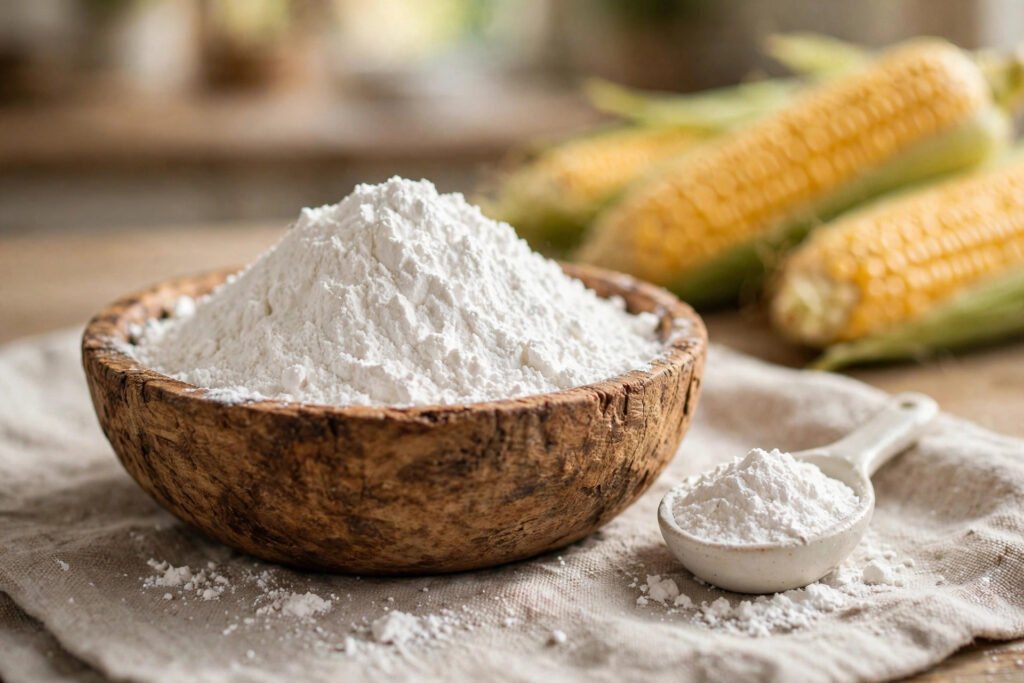
Most of us know corn starch as the little box in the baking aisle, but that fine white powder does far more than most people give it credit for. Corn starch is simply the purified starch from the inner part of the corn kernel, and its main talent is thickening: stirred into hot liquids the right way, it turns thin sauces, soups, and fillings into smooth, glossy versions of themselves, without adding any flavor of its own.
In this guide you’ll learn exactly what corn starch is, the slurry technique that keeps it lump-free every time, how to use it in cooking and baking, and the household and beauty tricks that make it worth keeping around even if you rarely cook.
What Is It Made Of, Actually?
Corn starch is the starch extracted from the endosperm, the starchy center of the corn kernel. Commercially it’s made by wet milling: corn is steeped in water, ground, and the starch is washed out, separated, dried, and milled into the silky powder you buy. The process is naturally gluten-free, which is why it’s a go-to thickener for anyone avoiding wheat.
One naming quirk is worth knowing: in the UK, Ireland, and much of the Commonwealth, this same powder is called cornflour. In the US, corn flour is something different, very finely ground whole cornmeal. So if you’re following a British recipe, “cornflour” almost certainly means what you call corn starch. Wikipedia’s overview of it has a good summary of the naming history if you’re curious.
Corn starch has been a kitchen staple since the mid-1800s, when John Polson of Brown & Polson patented a method for producing pure culinary starch from maize in 1854. Before that, it was mostly used for starching laundry.
How Corn Starch Thickens: The Slurry Method That Prevents Lumps
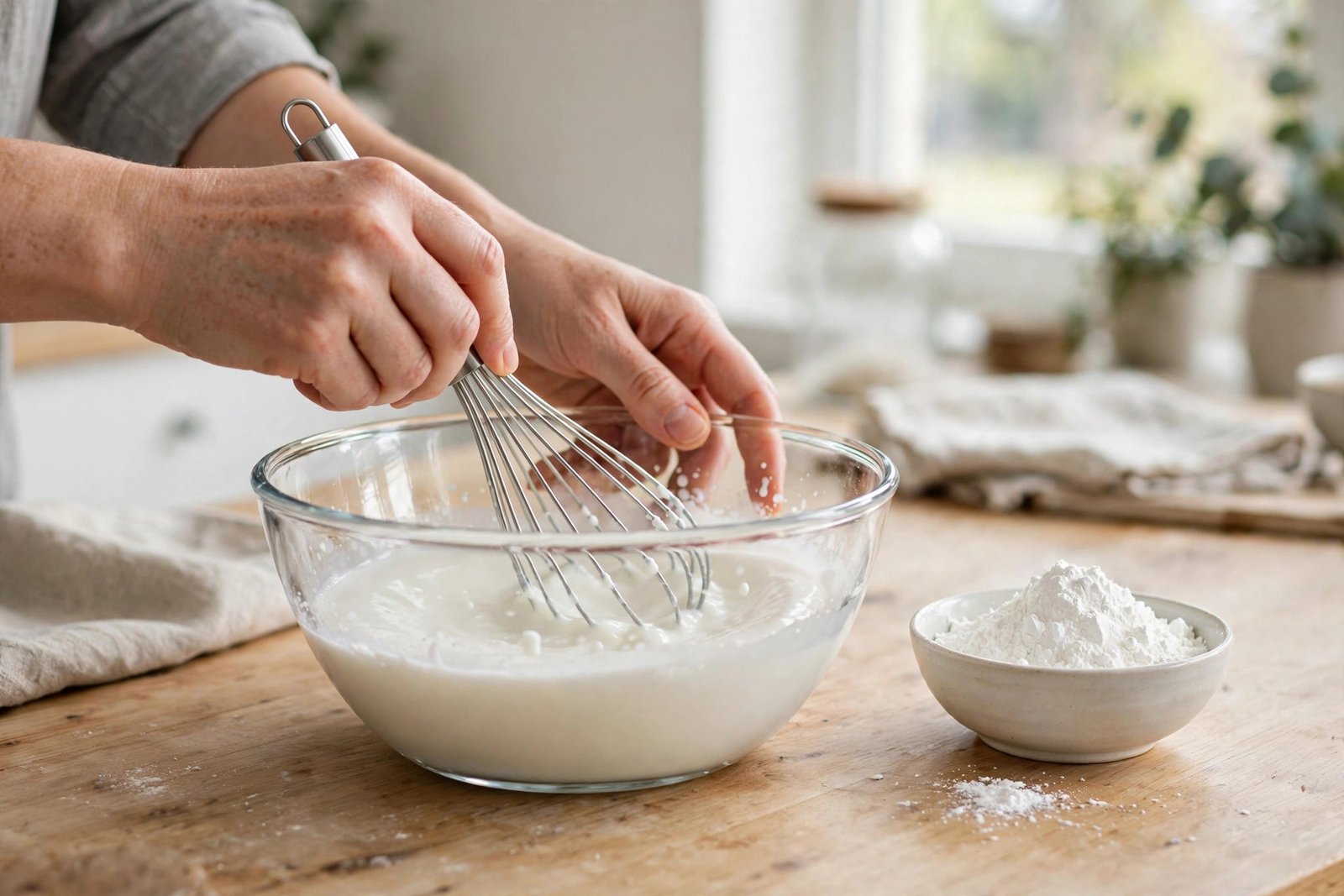
The magic of corn starch is starch gelatinization, a fancy word for a simple thing. When the powder is heated in liquid above about 203°F (95°C), its starch granules swell and tangle into a mesh that traps liquid, which is what thickens the sauce. That mesh is also why corn starch gives a clear, glossy finish where flour gives an opaque, matte one. If your thermometer reads in a different scale, these Fahrenheit-to-Celsius shortcuts help.
Three rules separate perfect results from lumpy disasters:
- Always make a slurry first. Stir the powder into a small amount of cold liquid, water, stock, or milk, until completely smooth, then pour it into the hot dish. Adding the powder straight to hot liquid guarantees clumps.
- Add it near the end of cooking. Bring the dish to a gentle simmer after adding the slurry so the starch activates fully. A raw, chalky taste means it needed a bit more heat.
- Don’t boil it hard for long. Prolonged vigorous boiling breaks the starch mesh back down and thins the sauce again.
A good starting ratio is about 1 tablespoon of corn starch per cup or two of liquid. Start low, since you can always whisk in a little more slurry, but you can’t easily thin an over-thickened sauce without diluting its flavor.
Corn Starch in the Kitchen: Sauces, Soups, and Stir-Fries
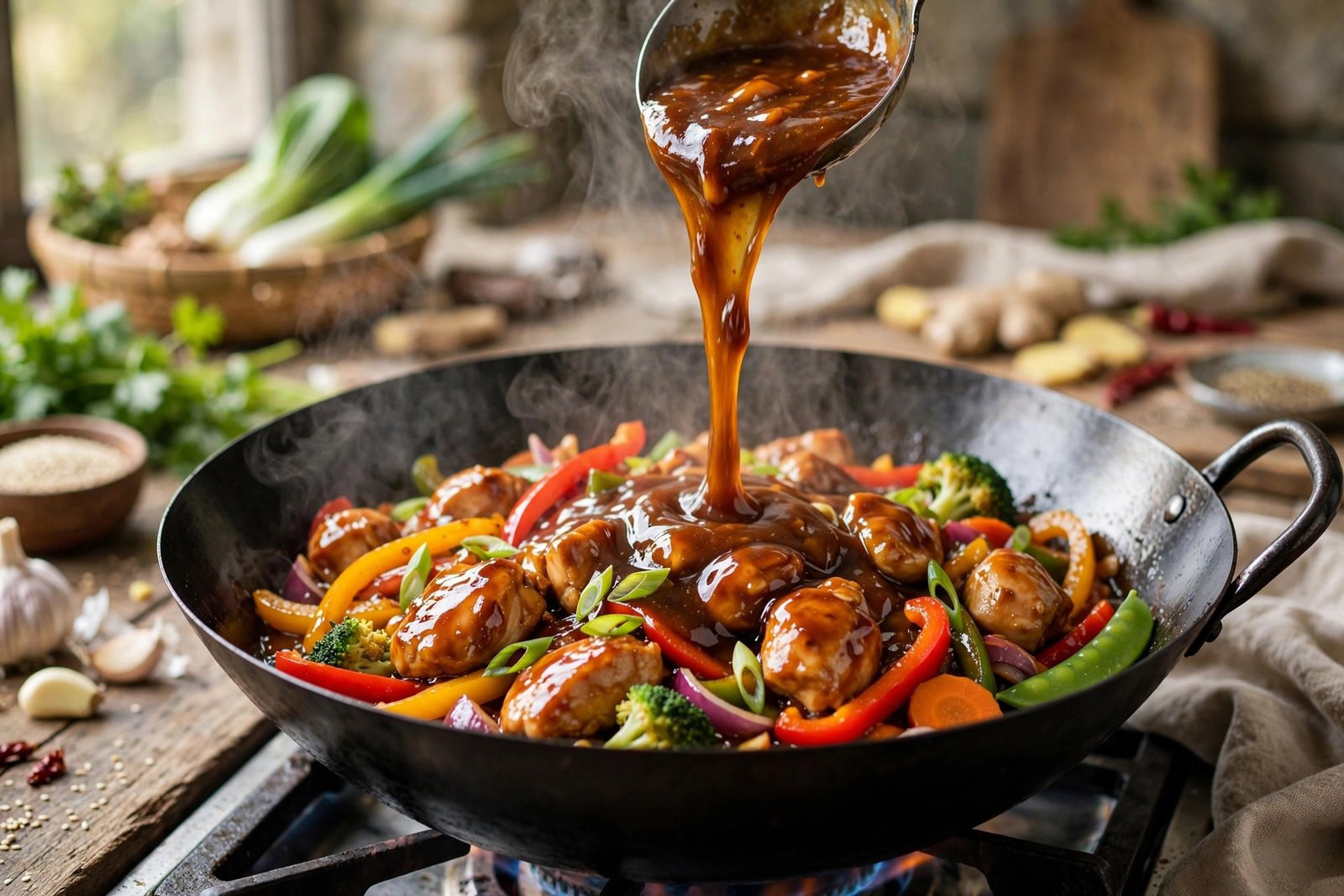
Where corn starch really shines is anywhere you want body without cloudiness. Stir a slurry into gravies and pan sauces in the last few minutes of cooking and they turn silky, with that restaurant-style shine on a stir-fry sauce that is almost always corn starch at work.
Chinese cooking gave us another signature use: velveting. Thin slices of chicken, beef, or shrimp get tossed in a light coating of the starch, often with egg white, before a quick trip through hot oil or water. The coating seals in moisture and leaves the meat remarkably tender. It’s the difference between chewy homemade stir-fry and the silky kind you get at a good restaurant.
That same coating logic also makes it a crisp-maker. A light dusting on wings, tofu, or vegetables before frying fries up shatteringly crisp, because the starch layer browns fast and drinks up less oil than a flour coating. The crisp-coating principle is handy for all kinds of fried food, and if you’re more of a grill person, this cowboy steak guide covers how to handle thick cuts over high heat.
It’s also the backbone of many restaurant-style soups. Egg drop soup and hot and sour soup get their signature body from a slurry whisked in at the very end. Pour it in slowly while the soup simmers and you’ll watch it thicken within a minute.
In Baking: Tender Crumbs and Set Fillings
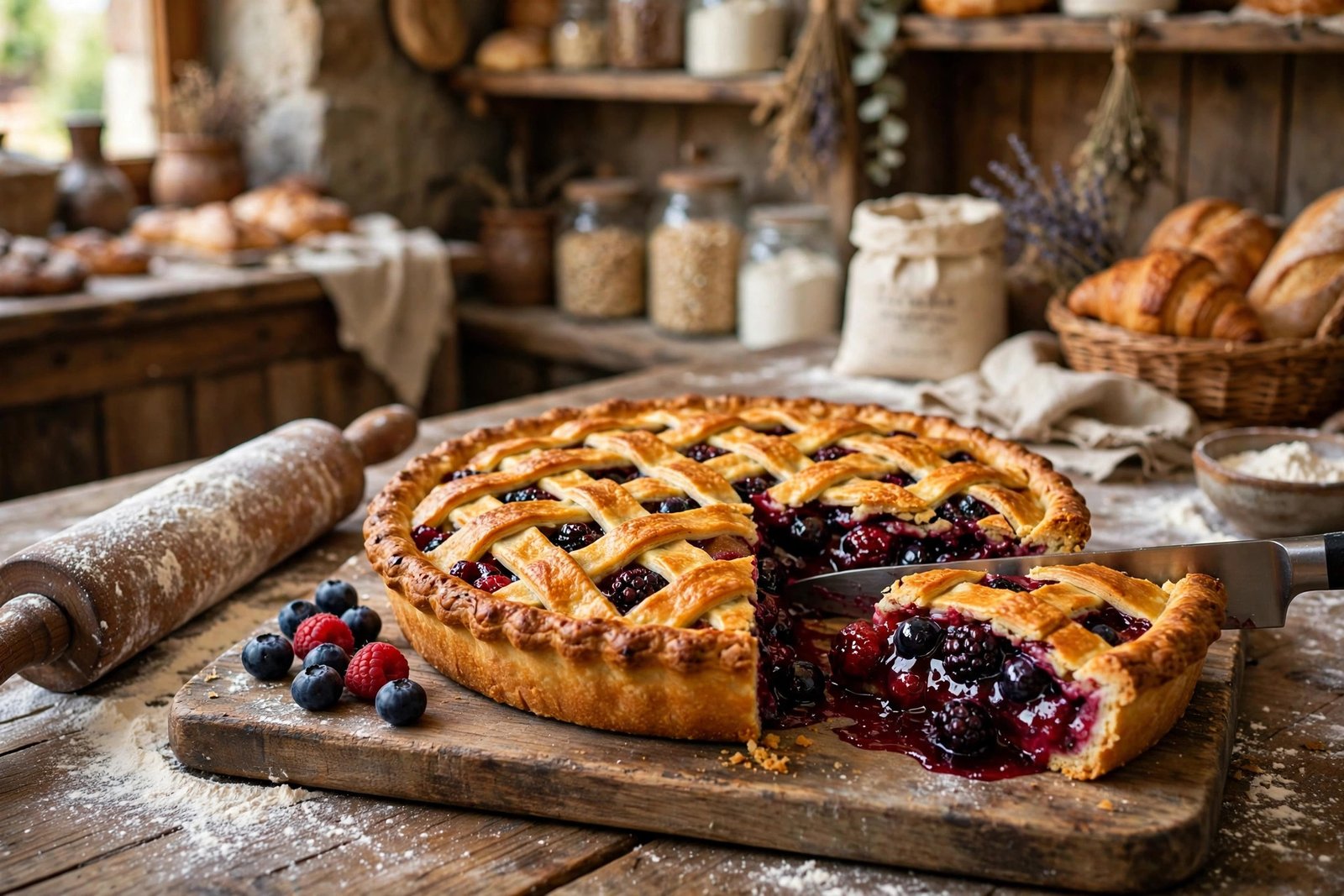
A few tablespoons of corn starch swapped into your flour mixture inhibits gluten development, which is exactly what you want in shortbread, sugar cookies, and pie crust: tenderness instead of chew. It’s one reason commercial confectioners’ sugar stays so fine, since a little is added as an anti-caking agent.
For fruit pies, it’s the quiet hero of the filling. Tossed with the fruit before baking, it absorbs the juices the fruit releases and sets them into a clear, glossy gel, so no more soggy bottom crust or watery slice. It does the same job in puddings and custards, giving that silky, spoon-coating set without eggs, and in homemade ice cream it helps prevent large ice crystals, keeping the texture smooth and scoopable.
In gluten-free baking, corn starch earns its keep as part of the flour blend, adding structure and lightness that a single gluten-free flour often can’t provide alone. A kitchen scale helps here, especially when recipes give weights rather than cups, so keep this ounces-to-pounds refresher handy while you bake.
Around the House: Practical Non-Food Uses
Corn starch’s talent for absorbing moisture and oil makes it useful far beyond the stove:
- Carpet and upholstery deodorizer: sprinkle generously, let it sit 15 to 30 minutes, then vacuum thoroughly. It absorbs odors without adding fragrance.
- Dry shampoo: a small amount worked into the roots absorbs excess oil between washes; brush out completely. It can show on dark hair, so use sparingly or mix with a little cocoa powder.
- Streak-free glass cleaner: about a teaspoon in a spray bottle of warm water, spray and buff dry with a lint-free cloth.
- Silver polish: a paste of corn starch and water, rubbed gently, lifts tarnish without scratching.
- Grease stain first aid: cover a fresh grease spot on fabric with a thick layer of the powder, leave it overnight, then brush off before washing.
- Ironing spray: a teaspoon dissolved in water in a spray bottle gives shirt collars and cuffs a crisp finish.
- Pet freshening: a light dusting brushed through a dog’s coat absorbs odor and moisture between baths. Avoid the face, and skip it if your pet has a corn sensitivity, check with your vet first.
Beauty Uses Worth Knowing
Because it’s so fine and gentle, corn starch works as a simple DIY face powder. Blended with a little cocoa powder or cinnamon for tint, it gives a soft matte finish without talc. Added to a warm bath, it softens the water and can soothe itchy, dry skin, and a dusting inside socks or shoes keeps feet drier through the day.
Beyond the Kitchen: Crafts, Science, and Industry
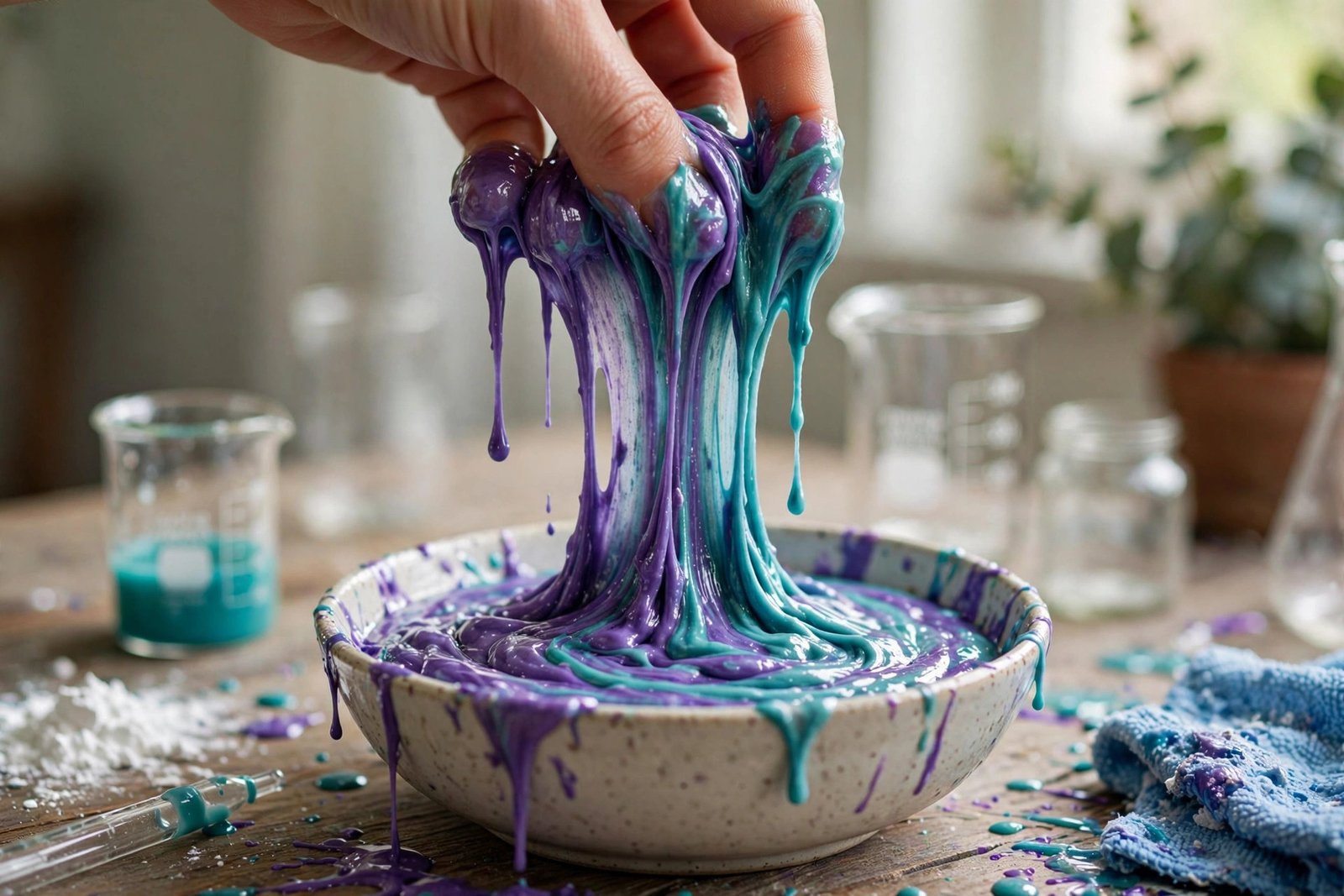
Mix corn starch with just enough water and you get oobleck, a non-Newtonian fluid that flows like a liquid until you punch it, then firms up like a solid. It’s one of the best five-minute science demos for kids. Mixed with salt and water, it also makes a simple modeling dough that hardens when baked.
Industry uses it at a completely different scale: it’s a feedstock for PLA bioplastics used in compostable packaging and 3D printing, a traditional adhesive in paper conservation, and an anti-stick coating on latex medical gloves. If you’re rethinking disposables at home, our practical zero-waste guide pairs well with this topic.
One caution worth knowing: like most fine powders, its dust is flammable in large airborne quantities, which is why commercial kitchens keep bulk starch away from open flames. In normal home amounts this is a non-issue, but don’t go tossing handfuls of it near a gas burner.
Nutrition and Health: The Honest Picture
Nutritionally, corn starch is almost pure carbohydrate: about 381 calories and 91 grams of carbs per 100 grams, with barely any protein, fat, fiber, or micronutrients. It’s naturally gluten-free, which makes it valuable for people with celiac disease or gluten sensitivity, but it will spike blood sugar quickly, so anyone watching glucose should use it in modest amounts and pair it with protein or fiber. Think of it as a tool, not a food: a tablespoon here and there is harmless, but it’s empty calories if it becomes a dietary staple.
Which Thickener to Use: Starch, Flour, or Arrowroot
Which thickener should you reach for? As a rule of thumb, corn starch has roughly double the thickening power of flour, spoon for spoon, so where a recipe calls for 2 tablespoons of flour to thicken, about 1 tablespoon of corn starch does similar work.
- Corn starch: glossy, translucent finish; neutral flavor; best for stir-fries, glossy sauces, and pie fillings; gluten-free. Weakness: breaks down with prolonged boiling and doesn’t love long-cooked or highly acidic dishes.
- Flour: opaque, matte finish; needs to be cooked in fat as a roux to avoid a raw taste; best for gravies, stews, and anything that simmers a long time.
- Arrowroot: very similar to it and interchangeable spoon-for-spoon in most cases; slightly better with acidic ingredients and freezing, but pricier, and it can turn slimy if overcooked.
Frequently Asked Questions
Is corn starch the same as corn flour?
In the US and Canada, no. It’s the purified white starch, while corn flour is finely ground whole cornmeal. In the UK and Ireland, “cornflour” is the same thing as American corn starch. Always check which country your recipe comes from.
Does corn starch expire?
Kept dry in a sealed container, it stays usable for years. It won’t spoil, though very old starch can lose a little thickening power. If it smells off or has absorbed moisture, replace it.
Can you eat corn starch raw?
A spoonful won’t hurt you, but it tastes chalky and unpleasant, and it’s meant to be cooked into food. There’s no nutritional reason to eat it straight.
Why did my sauce go lumpy?
Almost always one of two things: the starch went straight into hot liquid without a slurry, or the slurry sat long enough for the starch to settle before you poured it in. Stir the slurry right before adding, and whisk the sauce as you pour.
Corn starch earns its shelf space: one inexpensive box thickens sauces to a gloss, tenderizes bakes, sets pie fillings, and handles a dozen small jobs around the house. Learn the slurry, add it late, and keep the heat gentle. That’s really all there is to it.