Zellige Tiles: What They Are, Where to Use Them & What They Cost
Quick Answer: Zellige tiles are handmade, glazed terracotta tiles from Morocco, known for their glossy finish, rich color variation, and slightly irregular surfaces. Each tile is shaped, glazed, and fired by hand, so no two are exactly alike. They cost roughly £25–£90 per square metre, and work best as kitchen backsplashes, bathroom walls, and fireplace surrounds.
You’ve probably seen them without knowing the name: those shimmering, slightly uneven tiles glowing on a kitchen backsplash or a boutique hotel bathroom wall, catching the light differently from every angle. They’re called zellige tiles — handmade Moroccan tiles that have gone from ancient craft to one of the most sought-after surfaces in modern interior design.
In this guide, you’ll learn exactly what zellige tiles are, how they’re made, where they work best in a home, what they cost, and the practical things to know before you buy — including the mistakes that catch first-time buyers off guard.
Table of Contents
What Are Zellige Tiles?
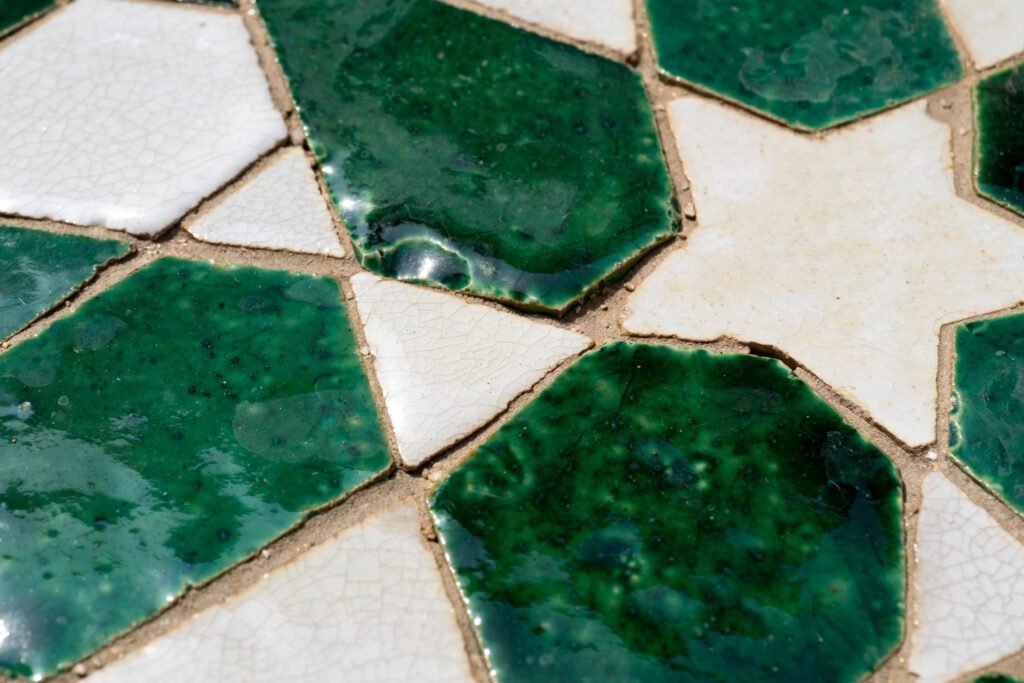
Zellige tiles (pronounced “zell-ij”) are handmade glazed terracotta tiles originating from Morocco, with a craft tradition stretching back to the 10th century. They’re made from natural clay that is hand-shaped, sun-dried, kiln-fired, and coated in an enamel glaze — entirely by hand, without machinery.
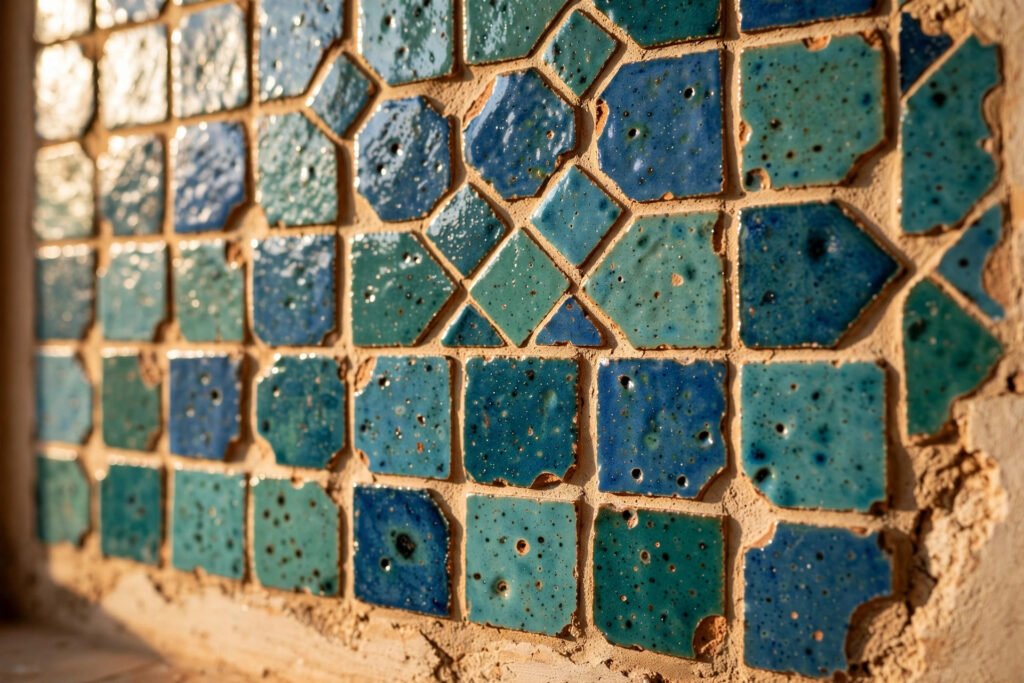
What makes them instantly recognizable is their imperfection. Because each tile is cut and glazed by an artisan, the surfaces are slightly uneven, the glaze pools in places, and the color shifts subtly from tile to tile. Installed together, they create a living surface that shimmers and changes as light moves across it — something flat, factory-made tiles simply can’t replicate.
Historically, zellige decorated Moroccan palaces, mosques, fountains, and courtyards in intricate geometric mosaics rooted in Islamic art. Today, the same handmade character has made them a favorite of interior designers looking to add warmth, texture, and soul to minimalist kitchens and bathrooms.
How Zellige Tiles Are Made
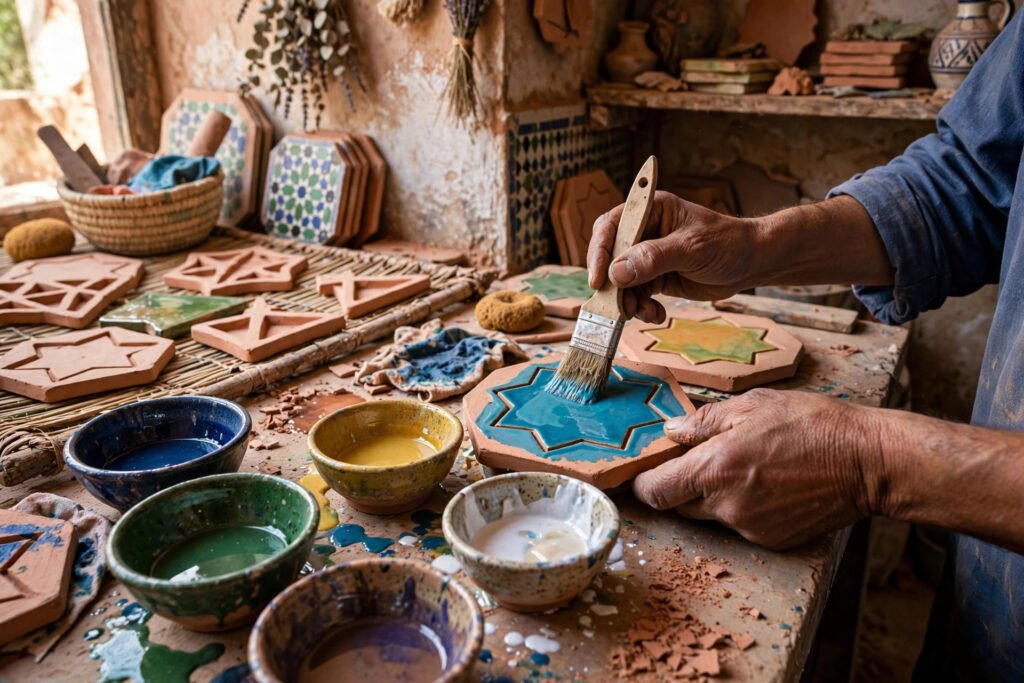
Understanding the process explains both the beauty and the price of zellige tiles. Every step is manual:
1. Clay shaping
Artisans work with natural clay, traditionally sourced near Fez, forming it into small squares or rectangles by hand. The pieces are cut and shaped while the clay is still workable.
2. Drying and firing
The shaped tiles are left to dry naturally in the sun, then fired in traditional kilns. This first firing hardens the terracotta body of the tile.
3. Hand glazing
Each tile is coated in glaze by hand — this is where the magic happens. The glaze is applied unevenly by nature, which creates the pooled, translucent finish and tonal variation zellige is famous for. Mineral pigments produce the classic palette: deep blues, greens, whites, saffron yellows, and earthy terracotta tones.
4. Second firing and cutting
After glazing, the tiles are fired again to set the glossy finish. For mosaic work, individual pieces are then hand-chiseled to fit complex geometric patterns — a skill passed down through generations of craftsmen known as maallems.
This labor-intensive process is why no two zellige tiles are identical — and why they cost more than mass-produced ceramic tiles.
Where to Use Zellige Tiles in Your Home
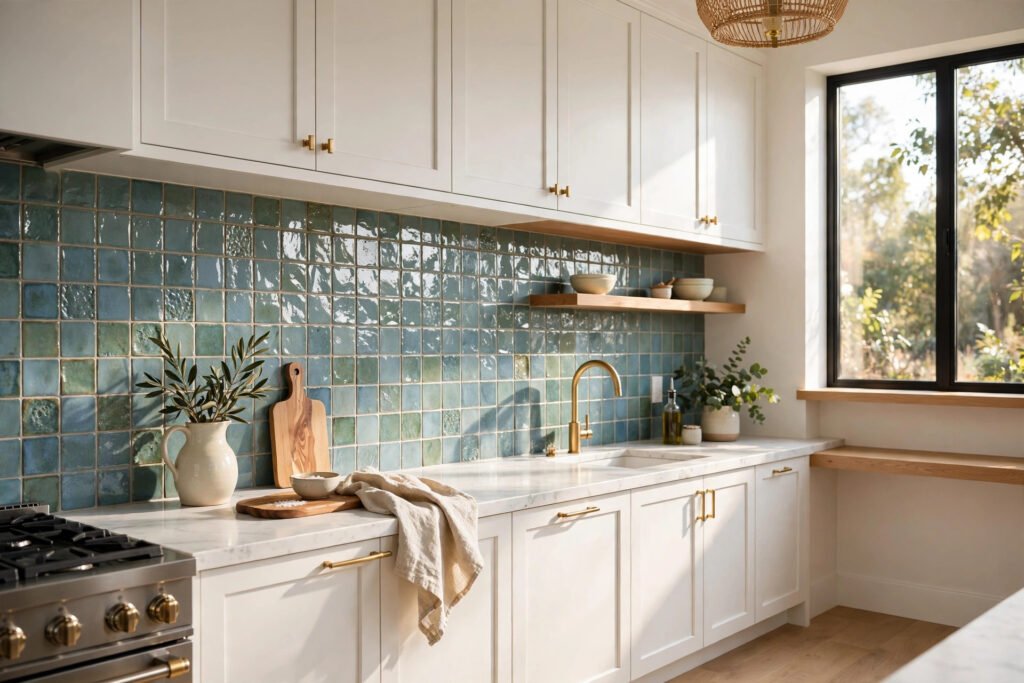
Zellige tiles are versatile, but they shine brightest in specific spots. Here are the most popular applications:
Kitchen backsplash
The number one use. A zellige backsplash turns an ordinary kitchen into a focal point — the glaze reflects under-cabinet lighting beautifully, and the handmade texture adds warmth to sleek cabinetry. Glossy white or soft blue-green are the most popular choices.
Bathroom walls
Zellige’s water-resistant glazed surface makes it ideal for shower walls and bathroom feature walls. Deep emerald or cobalt blue creates a boutique-hotel feel, while whites and neutrals keep small bathrooms feeling open.
Fireplace surround
A zellige-clad fireplace becomes the centerpiece of a living room. The tiles handle heat well, and their shimmer looks striking in firelight. Earthy tones and geometric patterns work especially well here.
Floors and entryways
Traditional Moroccan zellige was often used for floors and courtyards. In modern homes, a zellige entryway floor or a small powder-room floor makes a bold statement — just confirm the specific tile is rated for floor use, as some handmade pieces are softer than porcelain.
Outdoor spaces
In mild climates, zellige works for fountains, patio walls, and outdoor kitchens. In regions with hard frosts, check frost resistance first — authentic terracotta-based zellige can be vulnerable to freeze-thaw damage.
Zellige Tile Colors and Shapes
Zellige comes in a rich palette drawn from natural mineral pigments. The most popular colors include crisp white, soft neutral beiges, Mediterranean blues and greens, deep emerald, saffron and mustard yellows, terracotta, blush pink, and dramatic black.
The classic shape is the small square — traditionally around 10×10 cm (4×4 inches) — but modern offerings include rectangles, hexagons, arabesque (lantern) shapes, and fish-scale patterns. Square tiles can be laid in straight grid, staggered brick, or herringbone patterns; mixing two tones in a checkerboard is another timeless option.
One practical note: because color varies from tile to tile by design, always order samples and view them in your own lighting before committing. The showroom sample never tells the full story.
How Much Do Zellige Tiles Cost?
Zellige tiles are a premium product, and pricing reflects the handmade process. Typical UK price ranges:
| Type | Typical Price (per m²) | Notes |
|---|---|---|
| Authentic handmade Moroccan zellige | £60–£90+ | Imported, greatest variation and character |
| Handmade-look zellige (machine-assisted) | £25–£50 | More uniform, easier to install |
| Zellige-effect ceramic tiles | £20–£35 | Printed variation, lowest maintenance |
Beyond the tile price, budget for installation: zellige’s uneven edges demand an experienced tiler, and labor typically costs more than for flat ceramic tiles. Order 10–15% extra for cuts and breakage — handmade tiles have a higher wastage rate, and dye lots vary between batches, so reordering later risks a visible mismatch.
Pros and Cons of Zellige Tiles
Advantages
- Unmatched character: the handmade variation creates depth and shimmer no factory tile can copy.
- Timeless appeal: a thousand-year-old craft that suits both traditional and contemporary interiors.
- Durable glaze: the fired enamel surface resists stains and moisture well.
- Design flexibility: huge color range and multiple shapes and laying patterns.
Disadvantages
- Higher cost: both materials and specialist installation run above standard tiles.
- Variation surprises: the delivered batch can differ noticeably from the sample — embrace it or avoid zellige.
- Tricky installation: uneven tiles need an experienced tiler; DIY is risky for beginners.
- Grout considerations: narrow grout lines show off the tiles best but demand precision.
Installation and Maintenance Tips
- Hire a tiler with zellige experience. Ask to see previous handmade-tile work — the uneven surface requires different techniques than flat ceramics.
- Blend tiles from multiple boxes during installation to distribute color variation evenly instead of creating patchy zones.
- Seal before grouting if your supplier recommends it; some handmade tiles benefit from a pre-grout seal to prevent grout haze in the textured glaze.
- Use unsanded grout for the narrow joints zellige looks best with, and clean grout haze promptly.
- Clean with pH-neutral cleaners. Avoid harsh acids or abrasives that can dull the glaze over time — warm water and mild detergent is enough for routine cleaning.
- Keep spare tiles. Store a box of leftovers; matching a dye lot years later is difficult.
Mistakes to Avoid
- Expecting perfect uniformity — if variation bothers you, choose a zellige-look ceramic instead of authentic handmade.
- Skipping samples — colors shift dramatically under different lighting; always test at home first.
- Under-ordering — running short mid-project risks a mismatched batch; order 10–15% extra.
- Hiring a general tiler with no handmade-tile experience — the most expensive mistake on this list.
- Using them on floors without checking suitability — confirm the tile is rated for floor traffic and frost, where relevant.
- Choosing wide grout lines — thick grout joints fight the handmade aesthetic; keep joints narrow.
Frequently Asked Questions
What are zellige tiles made of?
Natural terracotta clay, hand-shaped, kiln-fired, and coated with an enamel glaze. Authentic zellige is made entirely by hand in Morocco, traditionally around Fez.
How do you pronounce zellige?
It’s pronounced “zell-ij” — rhymes with “bell” plus “ij”. The word comes from Arabic, referring to the smooth, polished surface of the tiles.
Are zellige tiles expensive?
They’re a premium product: authentic handmade Moroccan zellige typically costs £60–£90+ per square metre in the UK, plus higher-than-average installation costs. Handmade-look alternatives run £25–£50 per m².
Can zellige tiles be used in showers?
Yes — the fired glaze makes them water-resistant and well suited to shower walls. Use proper waterproof tanking behind them, as with any tile installation.
Do zellige tiles need sealing?
The glazed face doesn’t need sealing, but some installers recommend sealing before grouting to prevent grout haze settling into the textured glaze. Check your supplier’s guidance.
Why do zellige tiles look uneven?
That’s the point — each tile is handmade, so edges, thickness, and glaze vary slightly. Installed together, this creates the shimmering, light-catching surface they’re prized for.
What’s the difference between zellige and bejmat tiles?
Bejmat are also handmade Moroccan terracotta tiles, but they’re typically smaller, thinner, unglazed or lightly finished, and traditionally used for floors. Zellige refers to the glazed tiles used decoratively on walls and in mosaics.
Conclusion
Zellige tiles offer something few surfaces can: a thousand years of craft, visible in every slightly uneven edge and pool of glaze. They’re not the cheapest or the simplest option — but for a kitchen backsplash, bathroom wall, or fireplace that needs soul, they’re hard to beat.
If you decide to take the plunge, remember the essentials: order samples, embrace the variation, budget for an experienced tiler, and buy 10–15% more than you need. Do that, and you’ll get a surface that looks more beautiful every year you live with it.