Porcelain Floor Tiles: What They Are, Types, Costs & Pro Installation Tips
Quick Answer: A porcelain floor tile is a dense, hard-wearing tile made from refined clay fired at very high temperatures, making it stronger and less porous than standard ceramic. Expect to pay roughly £15–£100+ per square metre in the UK depending on quality and finish, plus £40–£80 per m² for professional installation. They suit kitchens, bathrooms, hallways and even patios thanks to their water and frost resistance.
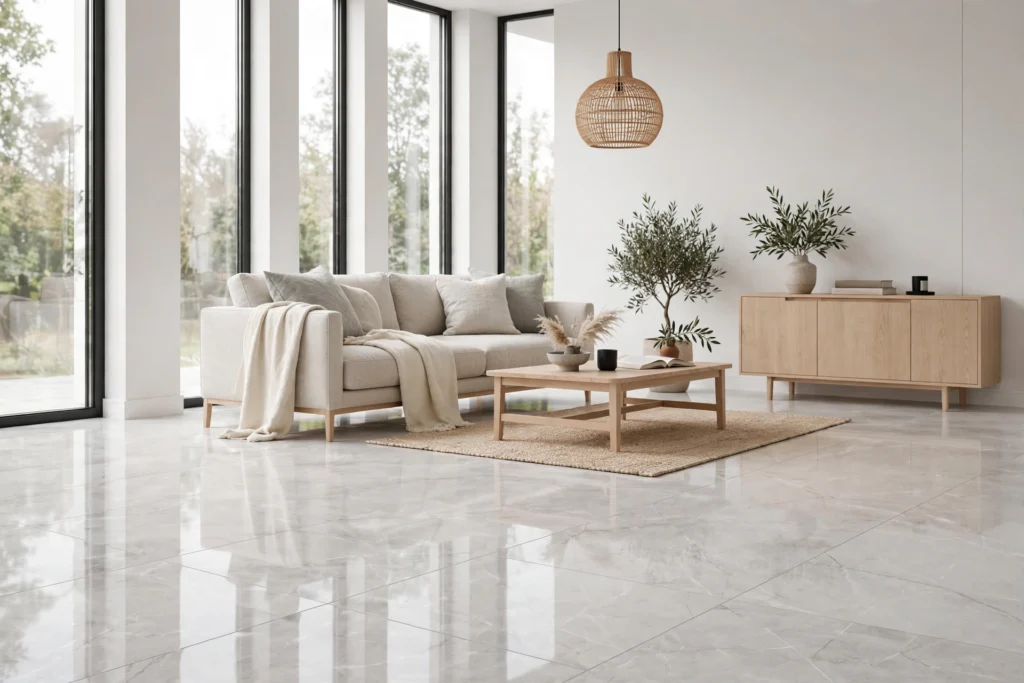
Walk into any modern kitchen or bathroom showroom and you will see them everywhere: large, seamless-looking floor tiles with the veining of marble or the warmth of oak, yet cool and solid underfoot. Most of them are porcelain floor tiles — the hardest-working surface in contemporary interiors. But what actually makes a porcelain tile different from an ordinary ceramic one, how much should you budget, and are they right for your home? This guide answers all of it.
Table of Contents
What Is a Porcelain Floor Tile?
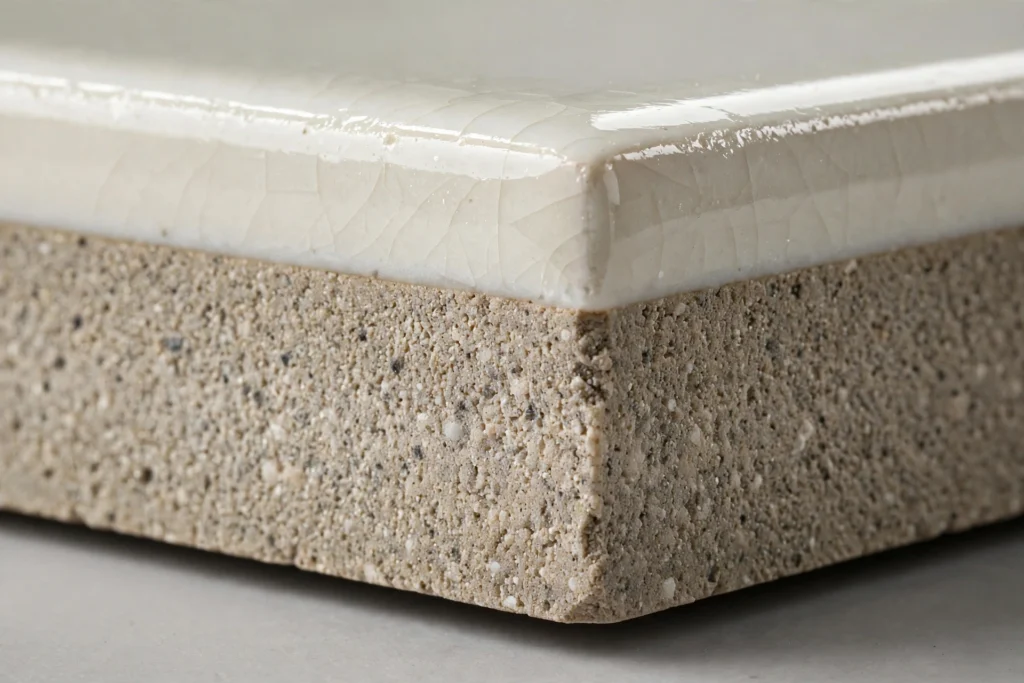
A porcelain floor tile is made from a finer, denser clay than standard ceramic tile, pressed under greater pressure and fired at temperatures above 1,200°C. That extreme heat vitrifies the clay, fusing it into an exceptionally hard, dense body with a water absorption rate of 0.5% or less — the defining technical threshold of true porcelain.
In practical terms, this means three things for your floors:
- Strength: porcelain resists chips, cracks and heavy foot traffic far better than ceramic.
- Water resistance: it barely absorbs moisture, so it works in bathrooms, wet rooms and even outdoors.
- Low maintenance: most porcelain needs no sealing and cleans with a simple mop.
Because the colour and pattern can run through the full body of the tile (not just sit on the surface), many porcelain tiles convincingly mimic marble, limestone, slate, concrete and even timber — at a fraction of the price and upkeep of the real materials.
Types of Porcelain Floor Tile
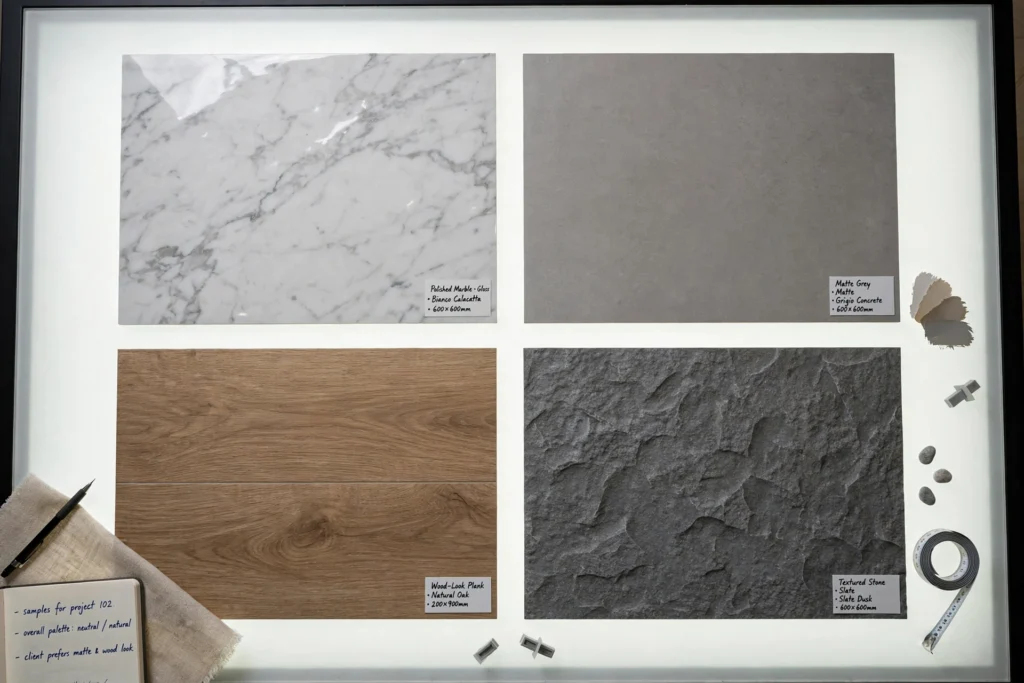
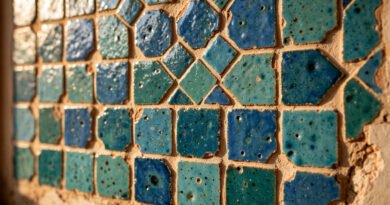
Not every floor tile porcelain tile is the same. The finish and manufacturing method change both the look and the price. If you prefer a handmade look instead, our guide to zellige tiles is worth a read.
Glazed porcelain
The most common type. A glass-like glaze is fused onto the surface, offering endless colours, patterns and textures — including realistic stone and wood effects. Durable enough for most homes and the easiest to clean.
Unglazed / through-body porcelain
Colour runs through the entire tile body, so chips and scratches are far less visible. A favourite for commercial spaces, hallways and rustic or industrial interiors.
Polished porcelain
Mechanically polished to a mirror-like shine. Stunning in living areas and showpiece bathrooms, but it can be slippery when wet — check the slip rating before using it in bathrooms.
Matte porcelain
A soft, non-reflective finish that hides dust and footprints well. One of the most popular choices for family kitchens and hallways.
Textured / anti-slip porcelain
Raised or structured surfaces rated R10 and above for grip. Essential for wet rooms, shower floors, pool surrounds and outdoor patios.
Rectified porcelain
Edges are precisely machine-cut after firing, allowing ultra-narrow grout joints (as little as 2mm) for a seamless, contemporary look. Slightly pricier but visually transformative.
Large-format porcelain
Tiles of 60×120cm and larger. Fewer grout lines make small rooms feel bigger, but they demand a perfectly flat subfloor and usually professional installation.
Wood-look porcelain planks
Long planks printed with convincing timber grain. All the warmth of a wooden floor with none of the warping, scratching or water worries — ideal for kitchens and bathrooms where real wood would suffer.
Porcelain vs Ceramic Floor Tiles
The two are often confused, but the differences matter:
| Feature | Porcelain | Ceramic |
|---|---|---|
| Water absorption | 0.5% or less | 3–7% |
| Hardness / durability | Very high (PEI 4–5) | Moderate (PEI 1–3) |
| Outdoor / frost use | Yes | No |
| Typical UK price per m² | £15–£100+ | £10–£40 |
| Cutting | Needs a diamond blade | Standard tile cutter |
| Best for | Floors everywhere, wet areas, outdoors | Walls, low-traffic floors |
Rule of thumb: for walls, ceramic is fine and cheaper. For floors — especially busy ones — porcelain is worth the premium.
Where to Use Porcelain Floor Tiles
A floor tile porcelain tile’s toughness makes it one of the most versatile flooring materials available:
- Kitchens: shrugs off spills, dropped pans and constant foot traffic. Matte or textured finishes are safest.
- Bathrooms and wet rooms: near-zero water absorption plus anti-slip options make it ideal.
- Hallways and entrances: through-body porcelain hides the wear of muddy boots and pet claws.
- Living areas: large-format tiles with underfloor heating feel luxurious and are easy to keep clean.
- Patios and balconies: frost-resistant 20mm outdoor porcelain handles UK winters without cracking.
How Much Do Porcelain Floor Tiles Cost?
UK prices for floor tile porcelain tile vary widely by quality, size and finish. As a rough guide for the tiles alone:
| Tile tier | Price per m² | What you get |
|---|---|---|
| Budget | £15–£25 | Basic glazed porcelain, standard sizes |
| Mid-range | £25–£50 | Better designs, rectified edges, wood/stone effects |
| Premium / designer | £50–£100+ | Large formats, Italian/Spanish brands, specialist finishes |
Then add installation. Professional tilers in the UK typically charge £40–£80 per m² for labour, plus adhesive, grout and trims (roughly £8–£15 per m² in materials). A 20m² kitchen with mid-range tiles therefore lands around £1,800–£3,000 all-in.
Money-saving tip: standard 60×60cm matte tiles in a mid-range line hit the sweet spot of looks, durability and price for most homes.
Pros and Cons of Porcelain Floor Tiles
Pros:
- Extremely hard-wearing — lasts decades in busy homes
- Waterproof and stain-resistant; no sealing required
- Suitable for underfloor heating and outdoor use
- Huge design range, including convincing stone and wood looks
- Hypoallergenic — no dust mites or fibres trapped
Cons:
- Harder and colder underfoot than wood or vinyl (rugs and heating solve this)
- Polished finishes can be slippery when wet
- Cutting needs a diamond blade — DIY is harder than with ceramic
- Higher upfront cost than ceramic, vinyl or laminate
- Cracked tiles are difficult to replace seamlessly
Porcelain Floor Tile Installation Tips
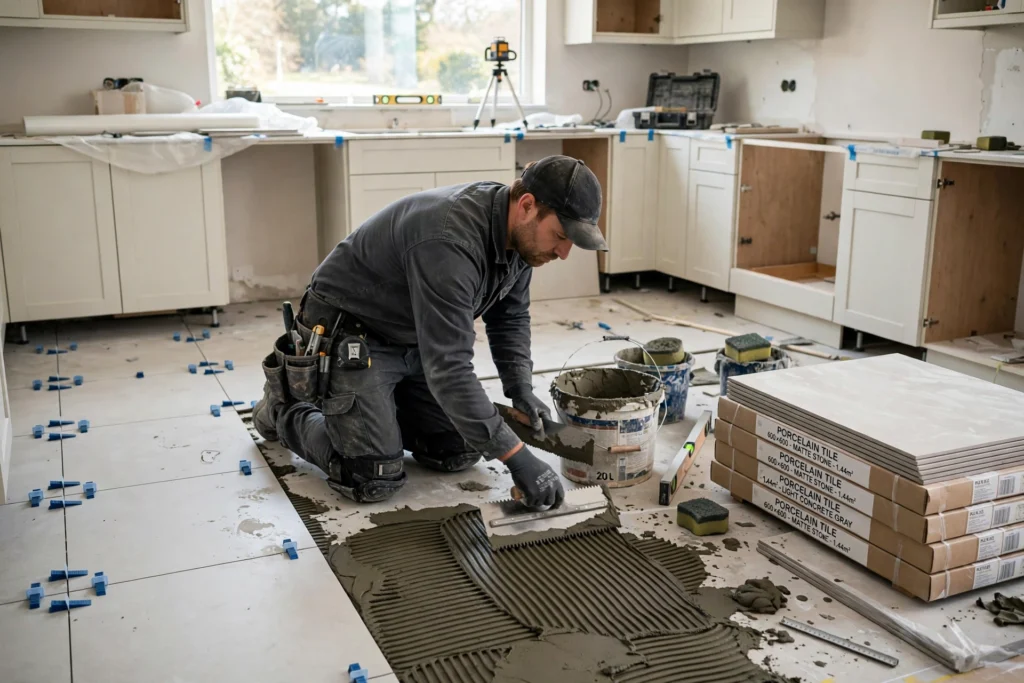
- Prepare the subfloor: it must be clean, dry, level and rigid. Any flex or bounce will crack tiles later.
- Use the right adhesive: a polymer-modified cement adhesive rated for porcelain — standard tile adhesive may not bond.
- Back-butter large tiles: spread adhesive on the tile back as well as the floor to avoid hollow spots.
- Plan your layout: dry-lay the first rows to balance cuts at the edges of the room.
- Mind the grout: rectified tiles allow 2–3mm joints; standard tiles need 3–5mm. Use a grout suited to the joint width.
- Let it cure: keep foot traffic off for at least 24 hours (48 for heavy loads).
How to Maintain Porcelain Floor Tiles
Maintaining a floor tile porcelain tile is refreshingly simple. Sweep or vacuum regularly to remove grit (which can dull any floor over time), then mop with warm water and a pH-neutral cleaner. Avoid harsh acids, bleach-heavy products and wax-based polishes — they can damage grout or leave residue. Reseal grout lines every couple of years in wet areas, and place felt pads under heavy furniture.
Mistakes to Avoid
- Choosing polished tiles for a wet bathroom — always check the slip rating (R10 minimum for bathrooms).
- Skipping subfloor prep — the number one cause of cracked porcelain.
- Under-ordering tiles — order 10–15% extra for cuts, breakages and future repairs. Dye lots vary, so buy it all at once.
- Wrong adhesive — porcelain’s low porosity needs a high-grab adhesive, not basic wall-tile adhesive.
- Ignoring grout colour — light grout in a hallway will look grubby fast; mid-grey is the forgiving classic.
Frequently Asked Questions
Are porcelain floor tiles slippery?
Polished porcelain can be slippery when wet, but matte and textured finishes — especially those rated R10 or higher — offer excellent grip and are safe for bathrooms and kitchens.
Can porcelain floor tiles be used outside?
Yes. Porcelain’s water absorption of 0.5% or less makes it frost-resistant, so it will not crack in freezing weather like ceramic does. Use 20mm-thick outdoor-rated slabs for patios.
Do porcelain tiles need sealing?
Glazed porcelain never needs sealing. Unglazed or polished porcelain may benefit from a penetrating sealer in stain-prone areas, but most modern tiles are fine without.
How long do porcelain floor tiles last?
Decades. In residential use, a quality porcelain floor easily lasts 30–50 years — far longer than vinyl, laminate or carpet.
Can you lay porcelain tiles over existing tiles?
Often yes, provided the old tiles are sound, level and well-bonded, and you use a suitable primer and adhesive. It raises the floor height, so check door clearances.
What’s the best grout for porcelain floor tiles?
A cement-based grout matched to your joint width works for most floors; epoxy grout costs more but resists stains and chemicals — worth it in kitchens.
Are porcelain floor tiles cold?
Like all hard floors, they feel cool — which is pleasant in summer. They conduct heat brilliantly, making them the ideal partner for underfloor heating.
Final Thoughts
A floor tile porcelain tile is one of the smartest long-term choices you can make for hard-working floors. It costs more upfront than ceramic or vinyl, but its durability, water resistance and design versatility pay that back over decades of nearly maintenance-free service. Choose the right finish for the room, prep the subfloor properly, order a little extra — and enjoy a floor you will likely never need to replace.