
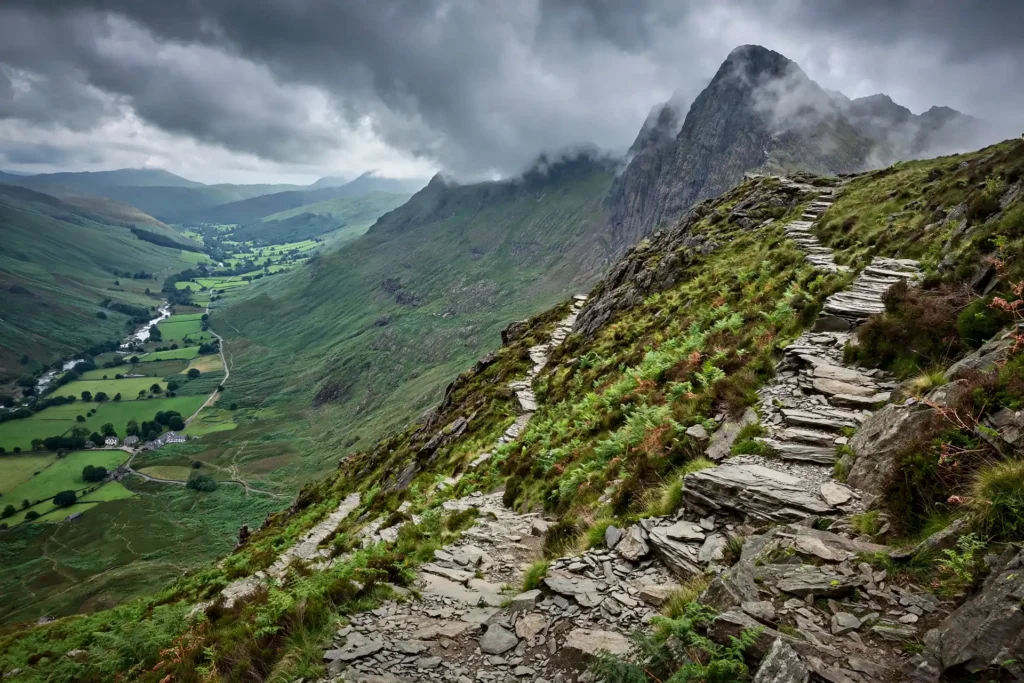
Pyg Track Snowdon: Route Guide, Distance, Difficulty & Essential Tips
Quick Answer: The Pyg Track Snowdon route is the shortest walking route to the summit of Snowdon (Yr Wyddfa), Wales’ highest mountain. It covers about 3.5 miles (5.5 km) one way with roughly 730m of ascent, taking 2–3 hours up and 5–7 hours round trip. Starting at the Pen y Pass car park, it is rugged and steep in places — best for reasonably fit walkers, not complete beginners.
Of the six main paths up Snowdon, one name comes up again and again in walkers’ conversations: the Pyg Track Snowdon route. It is the shortest way to the summit of Wales’ highest mountain, it starts higher than any other path, and it serves up some of the most dramatic mountain scenery in Britain. But short does not mean easy — this is a rugged, rocky mountain path that demands respect. Here is everything you need to know before you lace up your boots.
Table of Contents
What Is the Pyg Track?
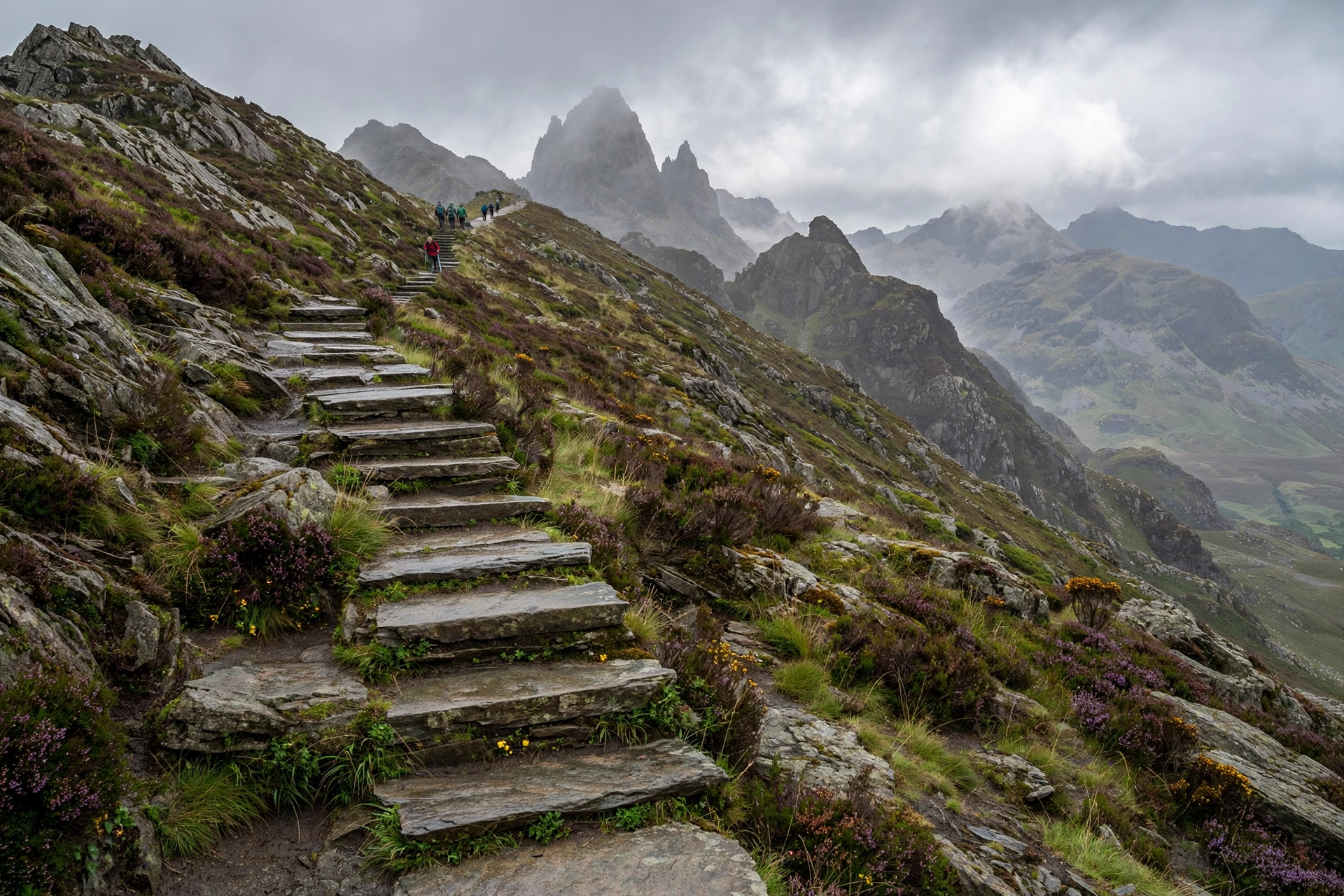
The Pyg Track (Llwybr Pyg in Welsh, pronounced ‘pig’) is one of the six recognised walking routes to the summit of Snowdon (Yr Wyddfa, 1,085m), the highest peak in Wales. It begins at the Pen y Pass car park — itself at 359m above sea level — which is why the total climb is less than on most other routes.
The name’s origin is a favourite pub debate. Many assume ‘Pyg’ is short for Pen y Gwryd, the famous climbers’ hotel nearby, but old maps show the path marked as ‘Pig’ — because it crosses Bwlch y Moch, Welsh for ‘the Pass of the Pigs’. The Pen y Gwryd connection came later, when walkers noticed the convenient abbreviation.
Pyg Track Snowdon: Key Facts at a Glance
| Detail | Pyg Track |
|---|---|
| Distance (one way) | 3.5 miles / 5.5 km |
| Distance (round trip) | 7 miles / 11 km |
| Total ascent | ~723m / 2,372 ft |
| Time (one way) | 1¾ – 3 hours |
| Time (round trip) | 5 – 7 hours |
| Difficulty | Moderate to hard |
| Start point | Pen y Pass car park (LL55 4NU) |
| Terrain | Engineered path, steep steps, rocky sections, short scrambles |
Getting to Pen y Pass
The trailhead sits on the A4086, about 5 miles up the Llanberis Pass from the village of Llanberis. The car park is small — roughly 60 spaces — and from around Easter to early November you must pre-book a parking slot online before arriving, as it routinely sells out on fair-weather weekends.
If you miss out, the backup plan works well: park at Nant Peris or Llanberis and ride the Sherpa bus up to Pen y Pass. Facilities at the trailhead include 24-hour toilets, a seasonal shop and information hub, and a drinking-water tap for bottles.
Walking the Pyg Track: Step by Step
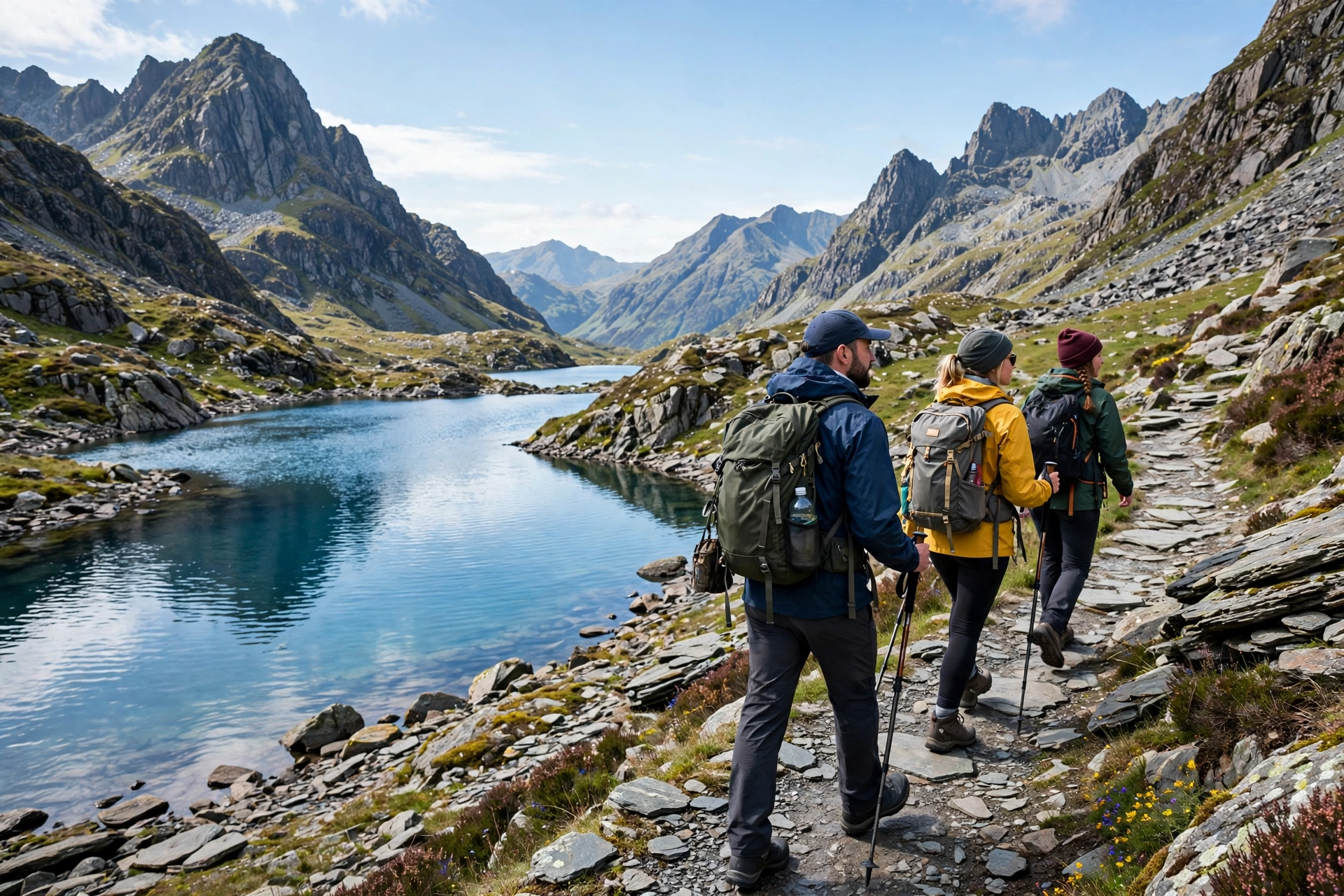
Walking the Pyg Track Snowdon route from Pen y Pass to the summit naturally breaks into three stages, plus the descent.
Stage 1: Pen y Pass to the first mile
The path sets its tone early with steep, stepped sections right from the car park. The steps are tall in places — walkers with shorter legs will feel it — but the views open up almost immediately across the Llanberis Pass.
Stage 2: The middle traverse
The gradient eases as the track contours across the mountainside with sweeping views of Crib Goch’s famous knife-edge ridge and the glacial cwm of Cwm Dyli below. This is the most scenic — and most photographed — part of the walk.
Stage 3: The final climb
The last mile steepens again over rugged, rocky ground. In a couple of short sections you will want your hands as well as your feet, though there is nothing here that counts as true scrambling. The path eventually joins the Llanberis Path at the Finger Stone, and from there it is a straightforward pull up to the summit and its café.
The descent
Many walkers return the same way, but the classic circular option is to descend via the Miners Track, which runs roughly parallel but lower down, passing the beautiful mountain lakes of Llyn Llydaw and Llyn Teyrn. The two paths together make one of the finest day walks in Britain.
How Difficult Is the Pyg Track?
Despite being the shortest route up Snowdon, the Pyg Track Snowdon walk is not the easiest. Its ruggedness, steep steps and rocky upper sections make it more demanding than the longer but gentler Llanberis Path. A reasonable level of fitness is essential, and you should be comfortable on uneven, sometimes slippery ground.
It is well within the reach of a fit beginner who has done some hill walking — but if you have never climbed a mountain before, the Llanberis Path is the kinder first choice. In winter conditions (roughly November to March, and often well into spring), the Pyg Track becomes a serious winter mountaineering route requiring ice axe, crampons and navigation skills.
What to Pack for the Pyg Track
- Footwear: sturdy, broken-in walking boots with ankle support — not trainers
- Clothing: layered system plus a waterproof jacket and trousers, whatever the forecast
- Navigation: OS map OL17 and compass (phone batteries die in the cold)
- Food and water: at least 1.5 litres of water and high-energy snacks
- Extras: headtorch, first-aid kit, sun protection, and a fully charged phone
Best Time to Walk the Pyg Track
Late spring to early autumn (May to September) offers the kindest conditions and longest daylight. Summer weekends are the busiest — start before 8am to beat both the crowds and the car-park rush. Winter brings short days, ice and potentially deep snow: beautiful, but only for those with winter skills and equipment. Always check the Met Office mountain forecast the night before and again in the morning.
Pyg Track Safety Tips
- Check the mountain weather forecast — valley sunshine means nothing at 1,085m
- Tell someone your route and expected return time
- Stay on the path; shortcuts erode the mountainside and get people lost
- Do not be tempted onto Crib Goch unless you are an experienced scrambler — it is a grade 1 scramble with serious exposure
- Turn back if conditions deteriorate — the mountain will still be there another day
- Carry more water than you think you need; there is none on the hill
Mistakes to Avoid on the Pyg Track
- Not booking parking: arriving at Pen y Pass without a pre-booked slot in season usually means a long walk just to reach the start
- Underestimating the terrain: ‘shortest’ gets mistaken for ‘easiest’ — the rocky sections surprise many first-timers
- Wearing new boots: break them in on smaller hills first or expect blisters
- Skipping the map: in mist, the upper mountain is featureless and disorienting
- Chasing the sunset: descending rocky steps in fading light is how ankles get broken — plan to be down well before dark
Frequently Asked Questions
How long does the Pyg Track take?
Allow 1¾ to 3 hours to reach the summit and 5 to 7 hours for the round trip, depending on fitness, weather and how often you stop for the views.
Is the Pyg Track suitable for beginners?
Fit beginners with some hill-walking experience can manage it in good summer conditions, but it is rugged and steep in places. Complete novices are better starting with the gentler Llanberis Path.
Do I need to book parking for the Pyg Track?
Yes — from around Easter to early November, parking at Pen y Pass must be pre-booked online. Outside that period it is first-come, first-served, so arrive early.
Can you do the Pyg Track and Miners Track in one day?
Absolutely — ascending via the Pyg Track and descending via the Miners Track is the classic Snowdon horseshoe day walk, passing mountain lakes on the way down.
What does Pyg mean?
Pyg is pronounced ‘pig’. It most likely comes from Bwlch y Moch — ‘the Pass of the Pigs’ — which the path crosses, rather than from Pen y Gwryd as many assume.
Is Snowdon called Yr Wyddfa?
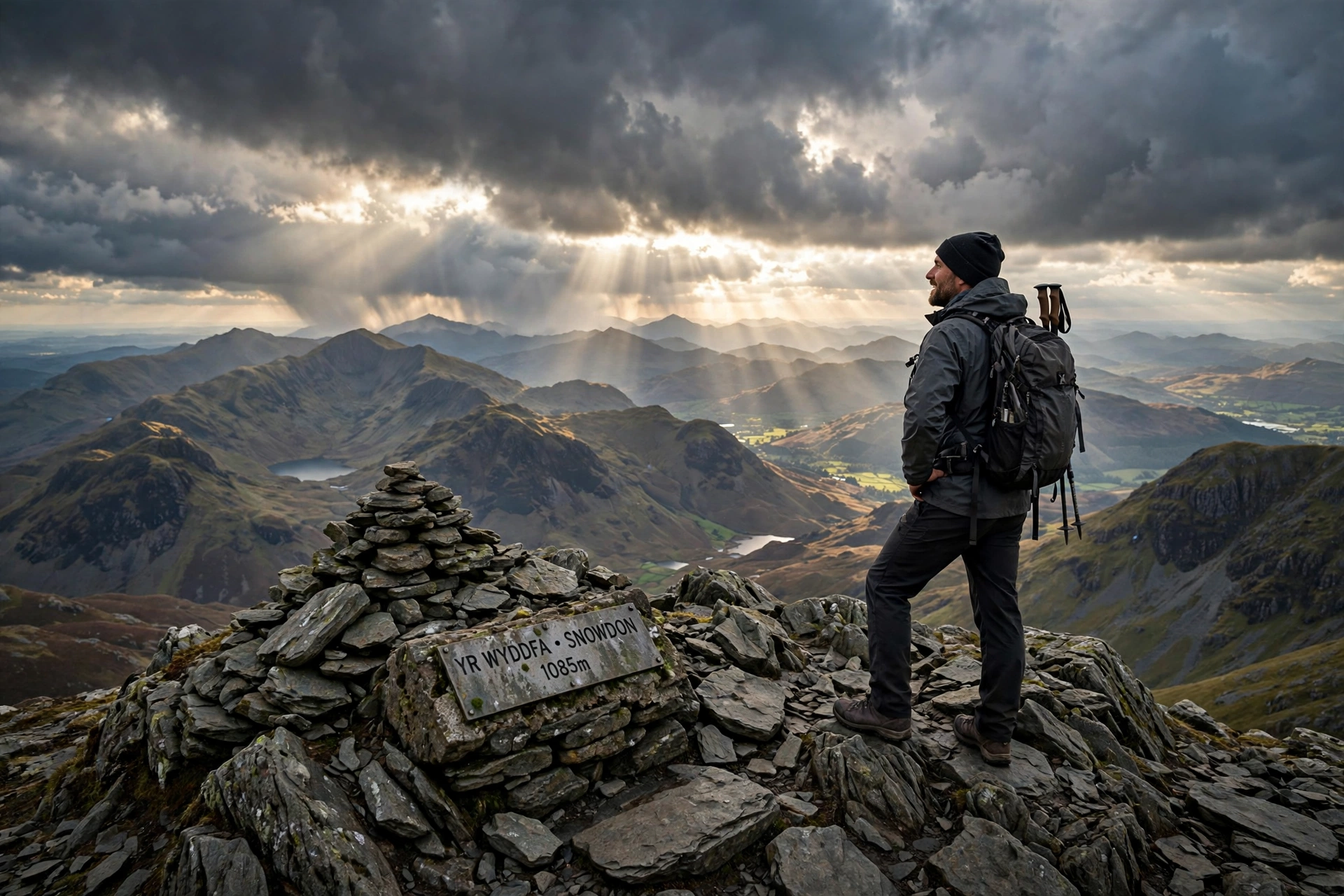
Yes. Yr Wyddfa is the Welsh name for Snowdon, officially adopted by the national park authority. You will see it on all modern signage and maps, including the summit marker where the Pyg Track Snowdon walk ends.
Can dogs walk the Pyg Track?
Fit, experienced dogs can manage it in good weather, but the steep steps and rocky sections are tough on paws and joints. Keep dogs on a lead near drops and livestock.
Final Thoughts
The Pyg Track Snowdon route packs the full drama of Wales’ highest mountain into the shortest possible walk: big views, genuine mountain terrain and that unbeatable feeling of standing on the summit. Treat it with respect — book your parking, pack for all weathers, and know your limits — and it will give you one of the great day walks in Britain.