
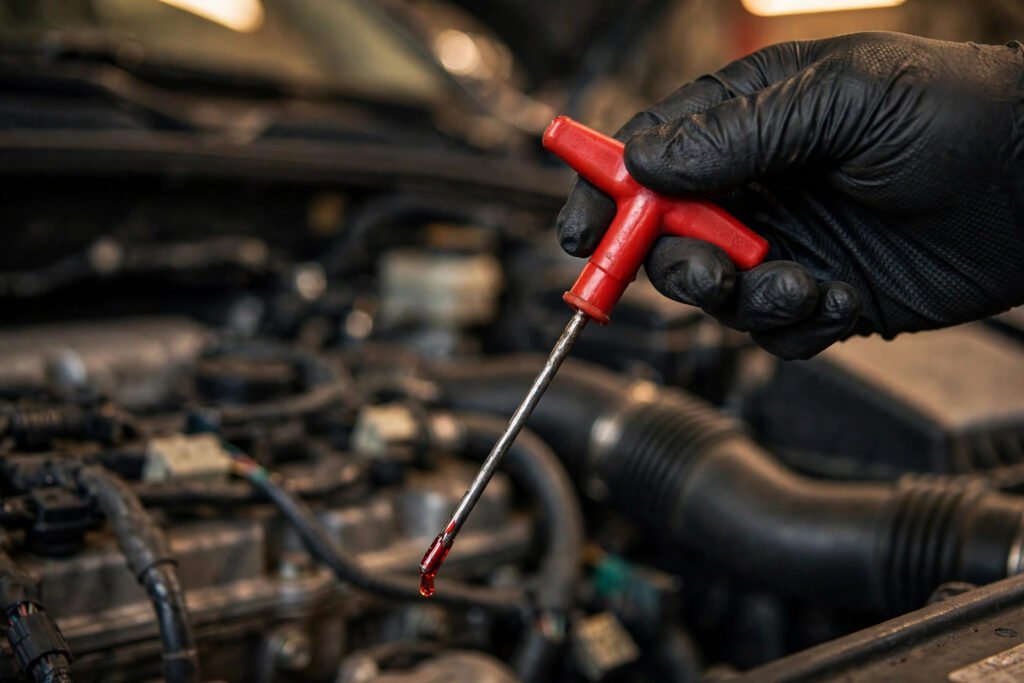
How to Check Transmission Fluid: A Simple Step-by-Step Guide
Learning how to check transmission fluid is one of the simplest things you can do for your car — and one of the most skipped. It takes about five minutes, needs no tools beyond a clean rag, and the quick version is this: warm up the engine, park on a level surface, pull the transmission dipstick, wipe it, reinsert it, pull it again, and check that the fluid sits between the marks, looks reddish-pink, and doesn’t smell burnt.
That’s the whole job in a sentence. The rest of this guide covers the details that actually matter: finding the dipstick on your car, reading level, color, and smell correctly, knowing how often to check, and recognizing when the fluid is telling you to get to a mechanic instead of topping up and moving on.
Why Transmission Fluid Deserves Your Attention
Transmission fluid does four jobs at once. It lubricates hundreds of moving parts inside the gearbox, carries heat away to keep the transmission cool, suspends contaminants so they don’t settle into sensitive components, and — in automatic transmissions — provides the hydraulic pressure that engages the gear clutches. Engine oil gets all the attention, but transmission fluid quietly handles just as much.
When the fluid runs low or breaks down, every one of those jobs suffers, often without obvious symptoms at first. Rough or delayed shifts, overheating, and accelerated wear all follow. A full transmission rebuild typically costs $2,000 to $3,500 or more — the kind of surprise bill that sends people searching for smarter ways to borrow — while a five-minute check costs you nothing. That’s the real math behind this habit.
How to Check Transmission Fluid: The Step-by-Step Process
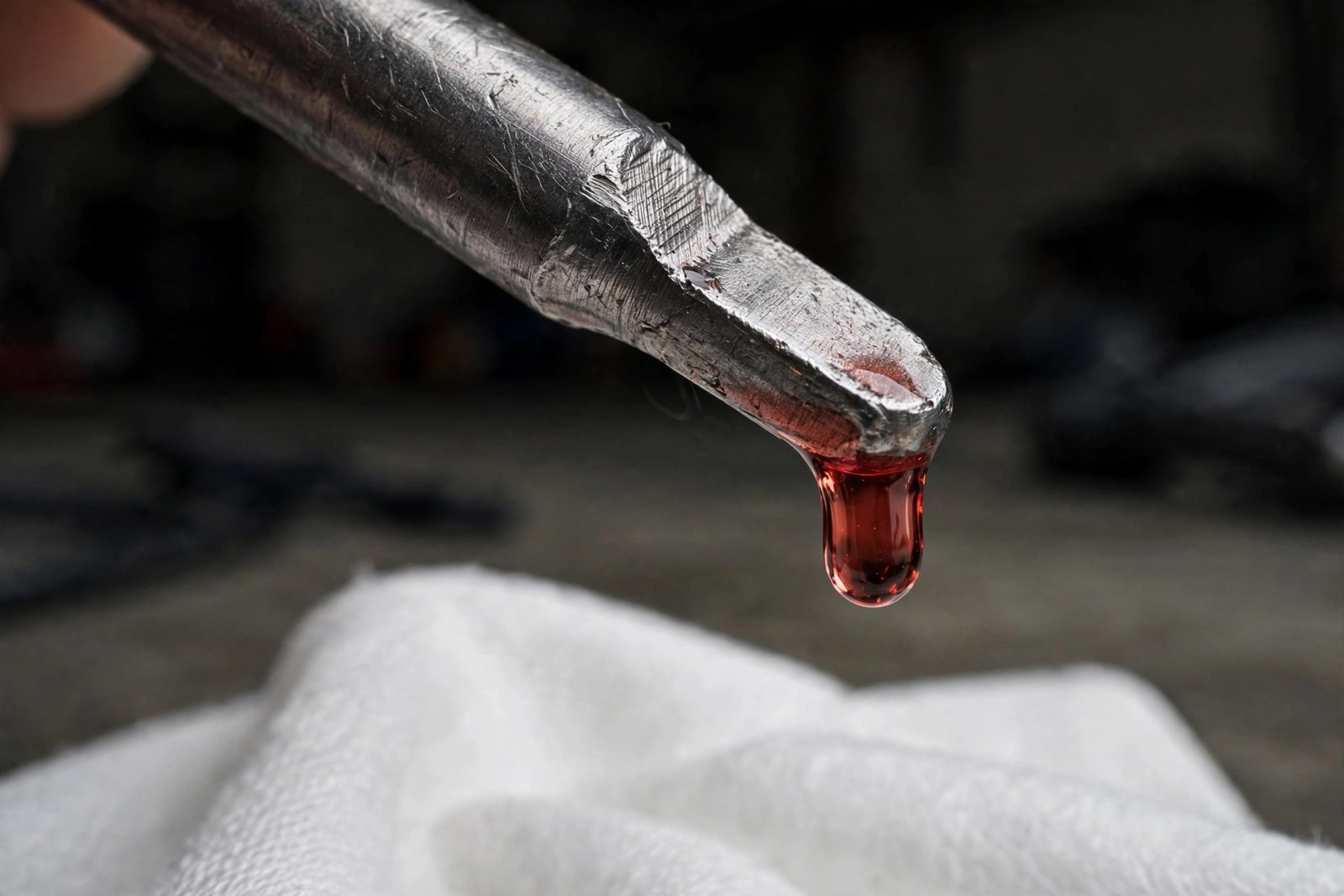
These steps cover the majority of automatic-transmission cars with a dipstick. The whole thing takes a few minutes once you’ve done it once.
Step 1: Warm Up the Engine
Transmission fluid expands as it heats up, so a cold reading looks artificially low. Drive for 5–10 minutes or let the car idle until it reaches normal operating temperature, then park on a flat, level surface. A tilted driveway will skew the reading just as surely as a cold engine.
Step 2: Keep the Engine Running in Park
For most automatic transmissions, leave the engine running with the gear selector in Park while you check. This keeps fluid circulating and gives you the true operating level. One exception: some European makes (certain BMW and VW models, for example) specify the engine off — your owner’s manual settles this in seconds, so check it.
Step 3: Locate the Transmission Dipstick
Open the hood and look toward the back of the engine bay for a dipstick handle — usually red, pink, or yellow, often labeled “TRANS” or “ATF.” On front-wheel-drive cars it’s typically off to the side. Don’t confuse it with the engine oil dipstick. Important: many cars built after 2010 have sealed transmissions with no dipstick at all — I’ll cover those separately below.
Step 4: Pull, Wipe, Reinsert
Pull the dipstick out fully and wipe it clean from tip to handle with a lint-free rag or paper towel. Push it all the way back in until it seats. This step matters because the first pull is never reliable — fluid splashes up the tube while you drive and will give you a false reading.
Step 5: Pull Again and Read Everything
Now pull the dipstick out a second time, hold it horizontally, and check three things: the level, the color, and the smell (details on reading each below). Since the engine is warm, read against the “HOT” marks — the fluid should fall between the MIN and MAX indicators or within the cross-hatched zone. Then reinsert the dipstick firmly and close the hood.
Step 6: Top Up Only With the Correct Fluid
If the level is below the mark, add fluid through the dipstick tube using a funnel — slowly, rechecking as you go. Use only the exact specification your owner’s manual lists, such as Dexron VI, Mercon V, Toyota WS, or Honda ATF-DW1. Mixing incompatible fluid specs can damage seals and clutch packs, so this is not the place to improvise. And never overfill: too much fluid foams under the churning gears, which kills its ability to lubricate and cool, and the extra pressure can force fluid past seals and create new leaks.
Reading the Dipstick: Level, Color, and Smell
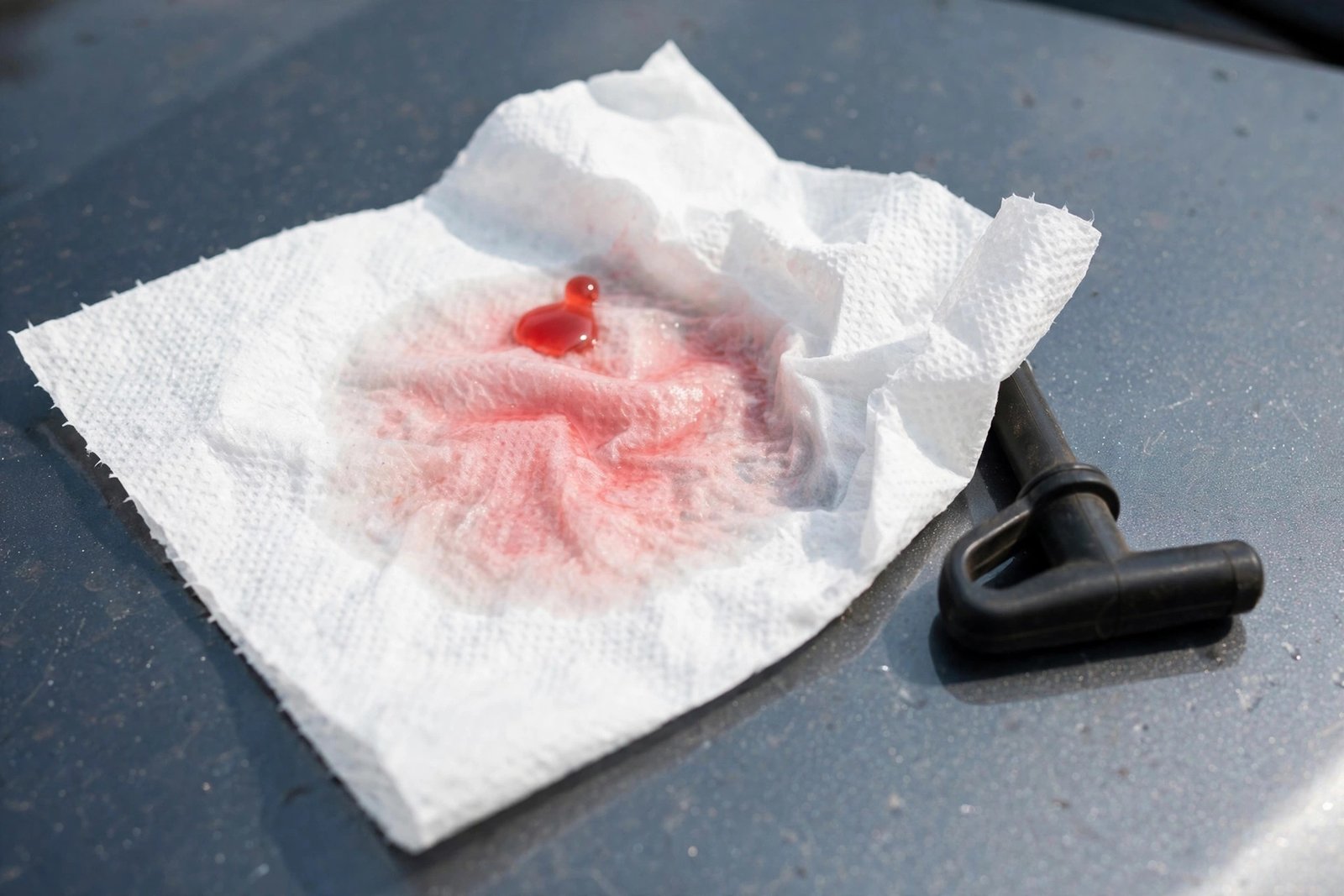
The level tells you how much fluid there is; the color and smell tell you what condition it’s in. You need all three.
Level
- Between the marks (warm): correct — nothing to do except check again at your next service.
- Below the MIN mark: low. Transmission fluid is not “consumed” like engine oil, so a low level almost always means a leak — check for reddish puddles under the car and get the leak found.
- Above the MAX mark: overfilled. Have the excess removed; foaming and seal damage follow otherwise.
- No fluid on the dipstick at all: critical. Don’t drive it — have it towed to a service center.
Color
- Bright red or pink, translucent: healthy, fresh fluid.
- Dark red or light brownish-red: normal aging — still working, but keep an eye on it.
- Light brown or caramel: oxidizing; plan a fluid change soon.
- Dark brown or black: burnt and degraded — change it promptly.
- Milky pink or foamy: coolant is leaking into the transmission. Stop driving and get it repaired immediately; this one doesn’t wait.
A white paper towel makes color judgment much easier — the stain tells the truth the metal dipstick hides. If you want a deeper dive into what transmission fluid color is telling you, it’s worth the read.
Smell
Fresh transmission fluid has a slightly sweet, oily petroleum scent. A sharp, burnt smell — like burnt toast — means the fluid has overheated and broken down. A burnt smell alone is reason enough for a fluid change, even if the color looks acceptable.
How Often Should You Check Transmission Fluid
Check it every 30,000 to 60,000 miles at minimum, or twice a year — whichever comes first. Check it immediately if you notice slipping gears, delayed engagement, rough or jerky shifts, whining or grinding noises, a burning smell from the engine bay, a reddish puddle under the car, or a transmission warning light on the dash.
Checking is not the same as changing. As a rough guide: conventional ATF lasts 30,000–60,000 miles, synthetic ATF (in most modern cars) 60,000–100,000, CVT fluid 30,000–50,000, and manual gearbox oil 30,000–50,000. Severe driving — towing, mountain roads, constant stop-and-go, extreme heat — shortens all of these. Fluid color and smell are honestly more reliable than mileage for deciding when a change is due.
Signs Your Transmission Fluid Needs Attention
Between checks, your car usually drops hints:
- Slipping gears: the engine revs but the car doesn’t accelerate to match.
- Delayed engagement: a pause after shifting into Drive or Reverse before the car actually moves.
- Rough or jerky shifts: clunks or shudders between gears.
- Burning smell: especially after hills or in traffic.
- Reddish fluid under the car: transmission fluid is usually easy to identify by its color.
- Warning light: a transmission or temperature warning on the dashboard.
How to Check Transmission Fluid Without a Dipstick
Many modern cars have sealed transmissions with no owner-accessible dipstick. The level has to be checked through a fill plug on the transmission case, on a lift, often at a specific fluid temperature — that’s a workshop job, not a driveway one. If your car is past 60,000 miles and you’ve never had it inspected, have a shop check it at your next service. Manual transmissions are similar: there’s no dipstick, and the fluid (gear oil, not ATF) is checked by removing the fill plug on the side of the case and confirming the level sits at the bottom edge of the hole. Both are quick jobs for a mechanic and not worth improvising.
When to Let a Mechanic Handle It
Checking the fluid yourself is straightforward when your car has a dipstick — and it’s a good habit to pair with other basic skills every driver should have, like knowing how to change a tire. But hand it over to a professional if your car has a sealed transmission, the fluid is dark or smells burnt, you spot metal flakes in the fluid, the level keeps dropping after a top-up, or the car shows any of the symptoms above even after the fluid looks fine. A burnt-fluid smell on an already-serviced transmission can signal internal wear that no amount of fresh fluid fixes — catching it early is the difference between a service and a major repair bill.
Frequently Asked Questions
Can I check transmission fluid when the car is cold?
You can get a rough reading from the cold marks, but it isn’t reliable — fluid expands significantly when hot, so a cold check reads low even when the level is fine. Warm the car up for 5–10 minutes first.
What happens if I overfill the transmission fluid?
Overfilling is genuinely as damaging as running low. Excess fluid foams from the churning gears, and foamy fluid can’t lubricate or cool properly. The added pressure also forces fluid past seals and gaskets, creating leaks. Have any excess removed.
Can I mix different brands of transmission fluid?
Mixing brands of the same specification (two brands of Dexron VI, say) is generally acceptable for a top-up. Mixing different specifications — Dexron III with Mercon V, for instance — is not, and can cause seal and clutch-pack problems. Always use the spec in your owner’s manual.
Can low transmission fluid stop the car from moving?
Yes. Automatic transmissions need hydraulic pressure from the fluid to engage the clutches. Critically low fluid can cause slipping, failure to engage, or the engine revving while the car doesn’t move — and internal damage is usually already happening at that point.
Final Thoughts
Once you’ve done it once, checking your transmission fluid becomes a five-minute habit — dipstick out, wipe, dipstick in, read the level, glance at the color, take a sniff. It won’t make headlines as car maintenance goes, but it’s the quiet kind of diligence that keeps a transmission out of the shop. Don’t wait for symptoms. Check it early, check it regularly, and trust what the fluid is telling you.