
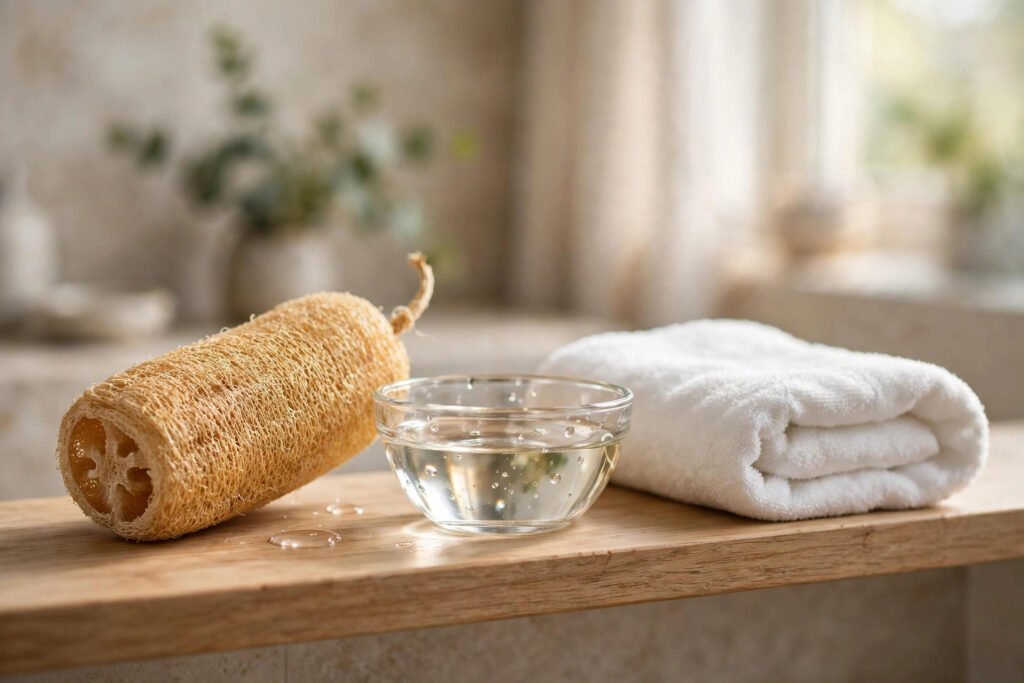
How to Clean a Loofah and Keep It Fresh for Weeks
If your loofah has ever developed that sour, musty smell — the one that hits you right as you squeeze it in the shower — you already know the problem. A loofah is basically a sponge made of tiny hiding places: dead skin cells, soap residue, and moisture get trapped inside its fibers, and your warm, steamy bathroom is the perfect place for bacteria and mold to settle in.
Here’s how to clean a loofah the right way: rinse it under hot water and wring it out after every single use, hang it somewhere airy so it dries completely, and once a week give it a proper deep clean — a vinegar soak, a boil, a dishwasher cycle, or a quick diluted-bleach bath. Below, I’ll walk you through the daily routine, each weekly method step by step, the drying mistake almost everyone makes, and when it’s finally time to throw the thing away.
Why a Dirty Loofah Deserves Your Attention
A loofah’s whole job is mechanical exfoliation — lifting dead skin cells off your body. The flip side is that everything it lifts off stays lodged inside it. Porous fibers plus trapped skin cells plus constant dampness make an ideal home for bacteria such as Pseudomonas aeruginosa and E. coli, along with yeasts and mold. Research on bath sponges has repeatedly confirmed they harbor microbes, which is why a neglected loofah can leave you itchy or break out after shaving nicks get infected.
The good news: a clean loofah is a safe loofah. Five minutes a week of maintenance, plus the drying habit I’ll describe below, keeps it hygienic — and stretches its life so you’re not buying replacements every few weeks. If you’ve been putting it off, learning how to clean a loofah properly takes less effort than you think. Damp, grimy bath tools aren’t doing your skin any favors generally, so if you’re also dealing with stubborn breakouts, our guide to fungal acne may be worth a read alongside this one.
5 Signs It’s Time to Clean Your Loofah
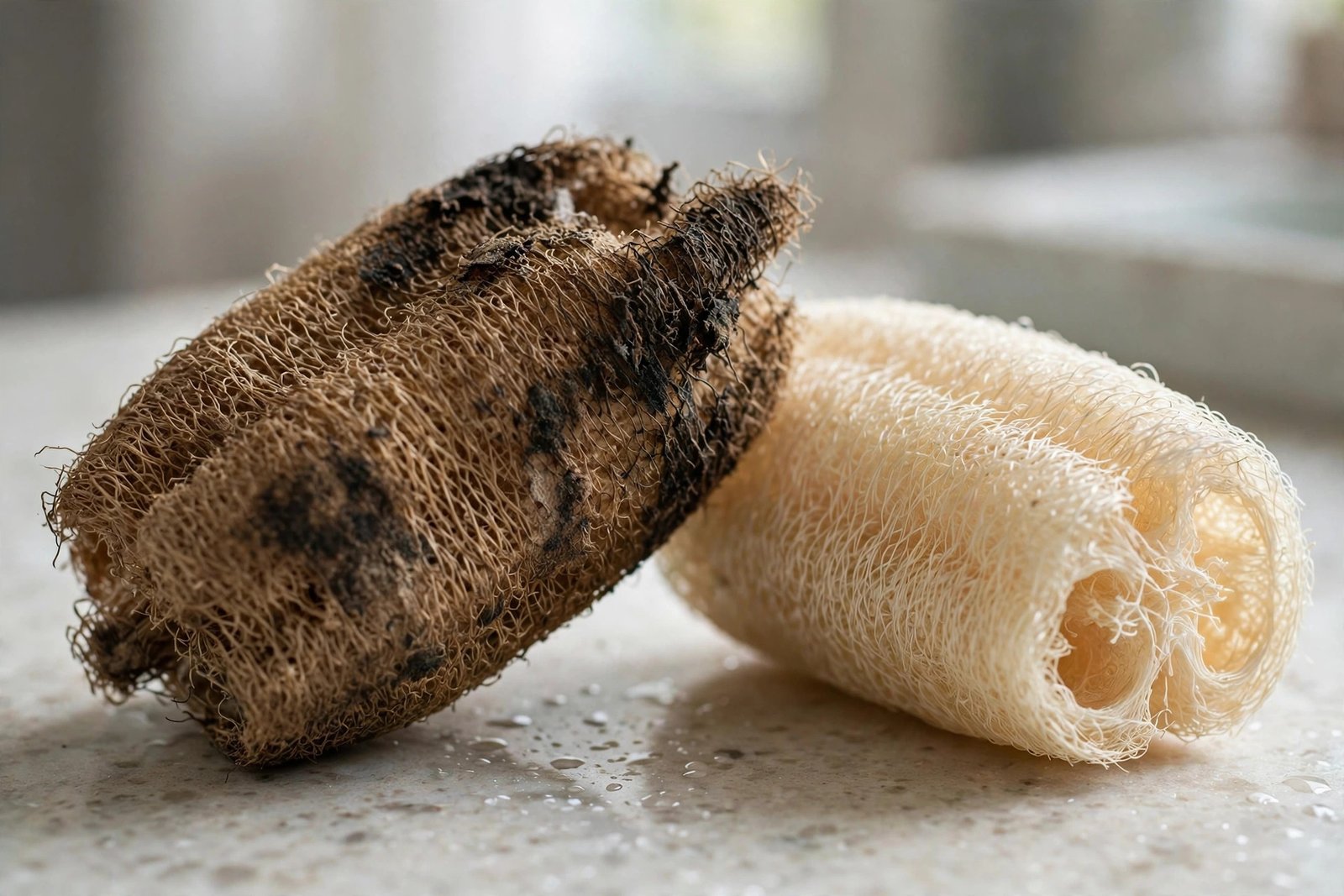
Your loofah usually tells you it’s overdue for attention before you think to ask. Watch for:
- A sour or earthy smell even after it has fully dried.
- Slimy texture when you squeeze it wet.
- Dark spots or visible mildew in the fibers.
- Weak lather and more drag across your skin than usual.
- It looking flattened or gray — fresh natural loofahs are springy and tan-colored.
If you notice two or more of these, don’t just rinse it harder — follow the steps for how to clean a loofah deeply in the methods below, or retire it if it’s past its lifespan (more on that below).
How to Clean a Loofah Every Day (The 60-Second Routine)
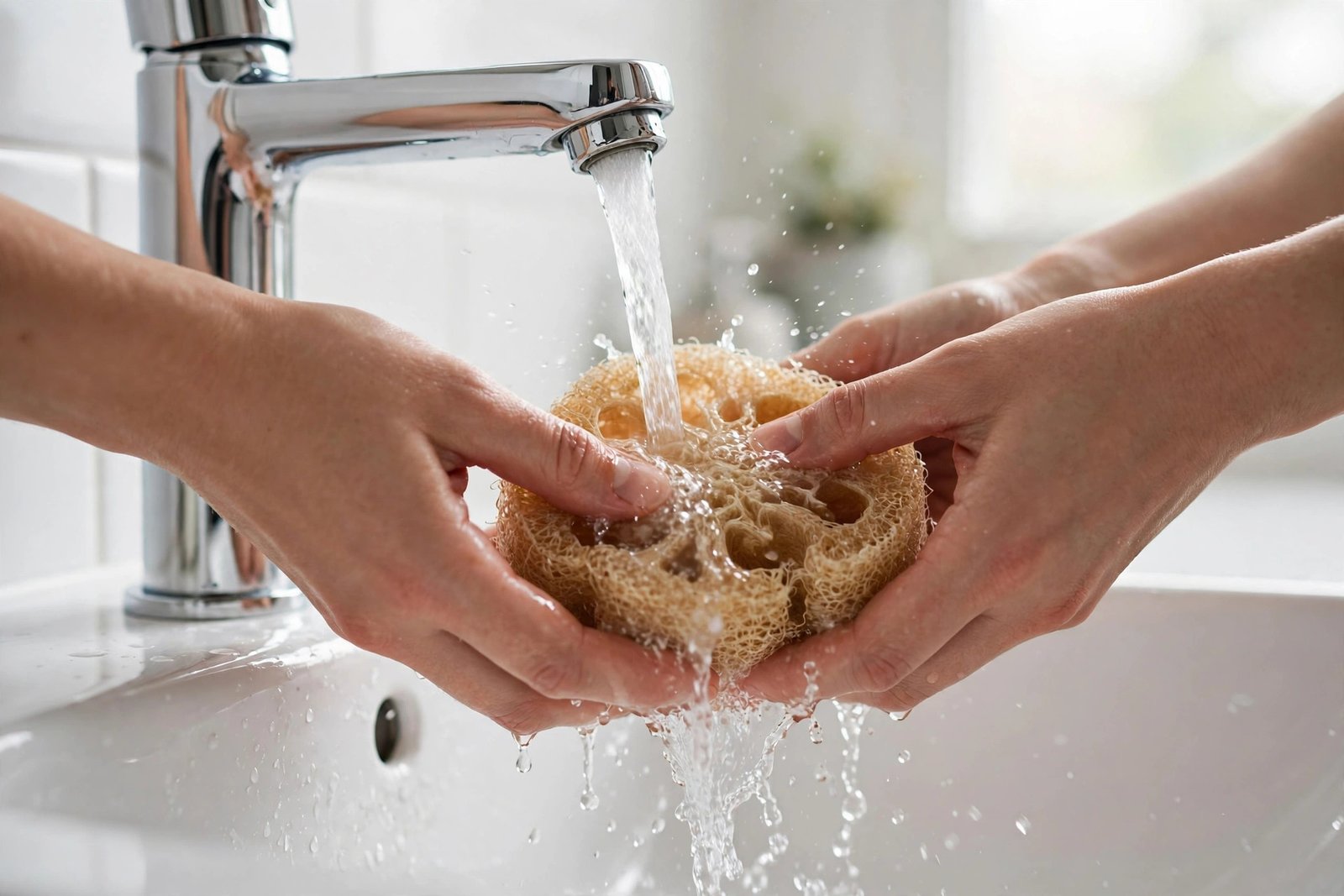
The weekly deep clean only works if you do the basics after every shower:
- Rinse under hot running water for 30–45 seconds, working your fingers through the fibers so the water runs clear.
- Squeeze and wring it out firmly several times, flexing it to push trapped water out of the core.
- Give it a hard shake to fling off the last of the water.
- Hang it somewhere it can actually dry — not in the shower, not in a caddy. A hook on the wall outside the shower or on a towel bar in a ventilated spot works best.
This minute of effort is the single biggest factor in keeping a loofah fresh. Microbes need moisture to grow; a loofah that dries fully between uses starves them of it.
How to Clean a Loofah Weekly: 4 Methods That Work
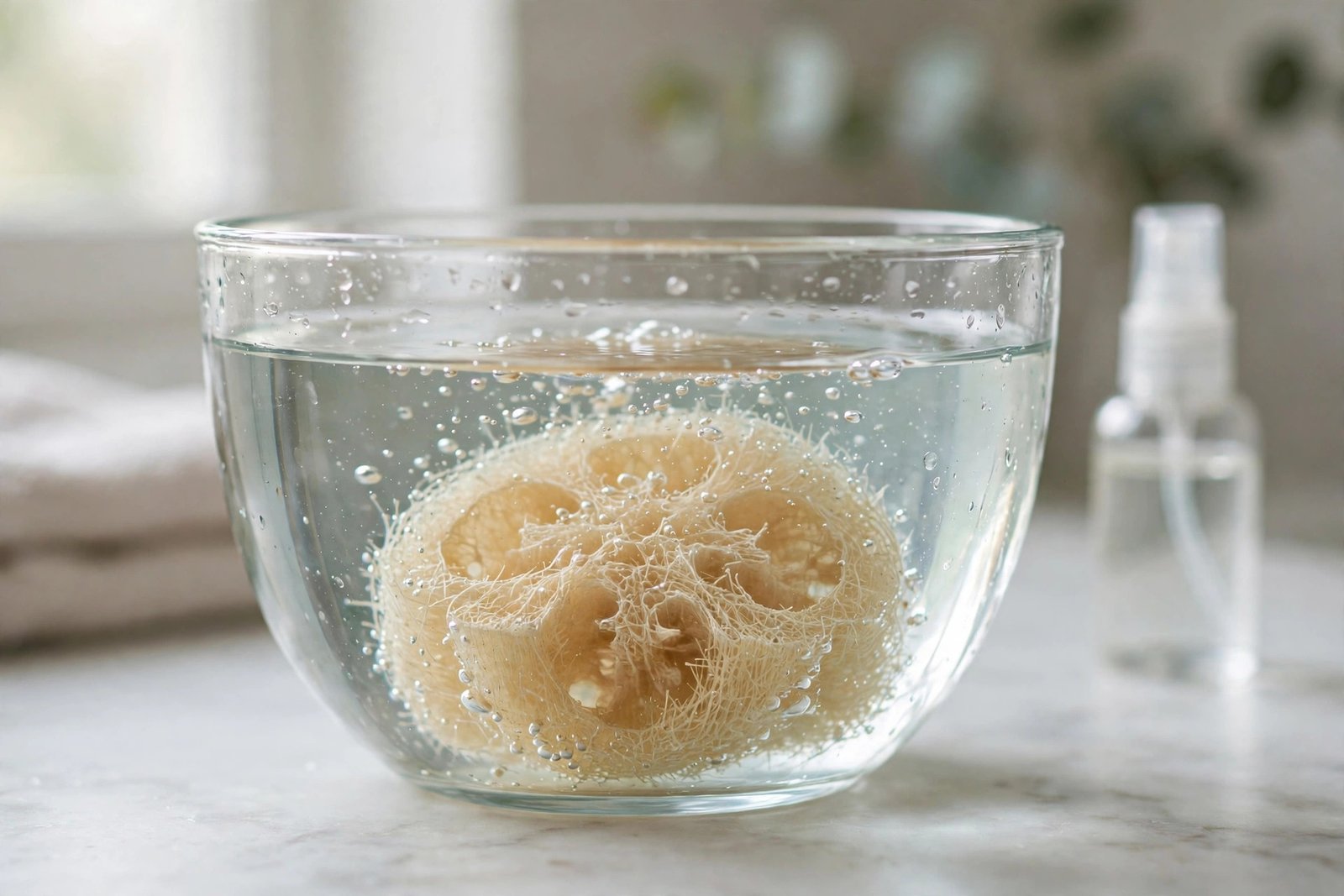
When you’re deciding how to clean a loofah each week, pick whichever method fits your loofah type and your kitchen. All four get the job done — just use each one correctly.
1. Vinegar soak (best all-rounder)
Mix one part white vinegar with two parts water in a basin or sink. Submerge the loofah fully and soak for 15–20 minutes, agitating it every few minutes with your hands. The vinegar dissolves soap scum and neutralizes odors without harsh chemicals. Rinse thoroughly under cool water until the vinegar smell is gone, squeeze it out, and hang to dry completely. Safe for both natural and synthetic loofahs.
2. Boiling water (best for natural loofahs)
Bring a pot of water to a rolling boil and submerge the loofah for 3–5 minutes — no chemicals needed. Use tongs to lift it out, let it cool before squeezing, and dry completely. Expect fibers to feel slightly softer while wet; normal texture returns once dry. Note: don’t boil synthetic mesh loofahs, which can warp.
3. Dishwasher, top rack (easiest for synthetic mesh)
Toss your synthetic mesh loofah on the top rack with your regular load and run the hottest cycle. This is my favorite method for plastic pouf-style loofahs — it sanitizes with heat and detergent while you do nothing. Skip this for natural loofahs, which handle the dishwasher poorly.
4. Diluted bleach soak (deepest clean)
Fill a gallon of cool water and add about a quarter cup of regular bleach for natural loofahs or three-quarters of a cup for synthetic ones. Submerge for at least five minutes, then rinse very thoroughly under running water and dry completely. Use cool — not hot — water so the bleach doesn’t break down, and never mix bleach with vinegar or other cleaners. This is the method supported by the classic studies on loofah disinfection.
Quick tip for between deep cleans: a wet loofah microwaved for 30–60 seconds gets hot enough to knock back surface bacteria — but it must be wet (dry fibers can singe), and treat this as a supplement, not a substitute, for the weekly clean. Don’t rely on microwaving as your main way to clean a loofah — natural fibers can turn brittle if you microwave them too often.
Drying: The Step That Matters Most
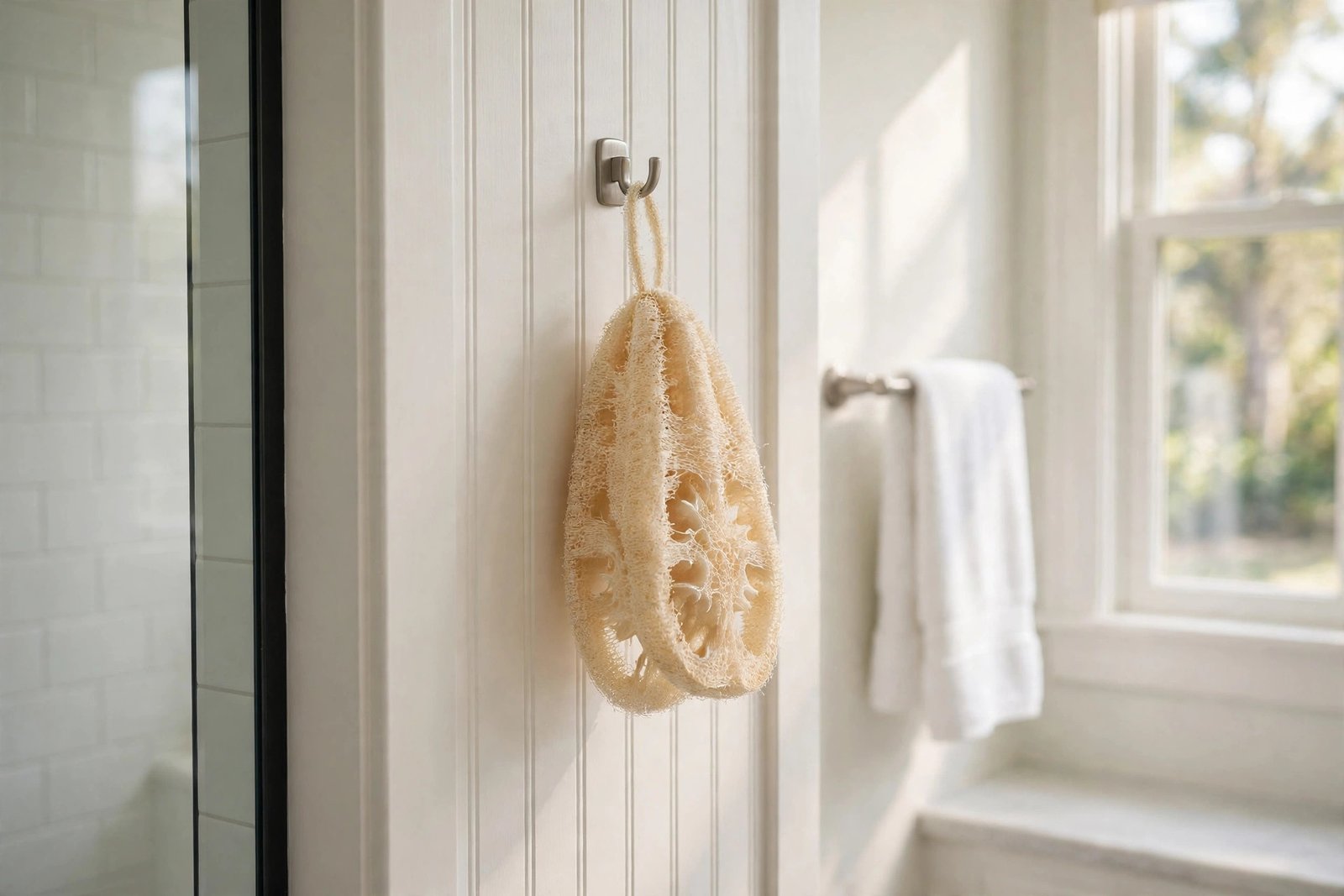
Every cleaning method above ends the same way: the loofah must dry completely before its next use. A loofah left hanging in the shower never truly dries — the humidity keeps the core damp for days. Hang it outside the shower in a ventilated spot, ideally where air circulates around all sides. A small S-hook on a towel bar costs next to nothing and makes a real difference.
Give it 4–6 hours to dry out fully. If your bathroom has no airflow at all, take it to another room after showering. This one habit matters more than which deep-clean method you choose — knowing how to clean a loofah weekly only pays off if it dries completely between uses.
When to Replace Your Loofah (and What to Use Instead)
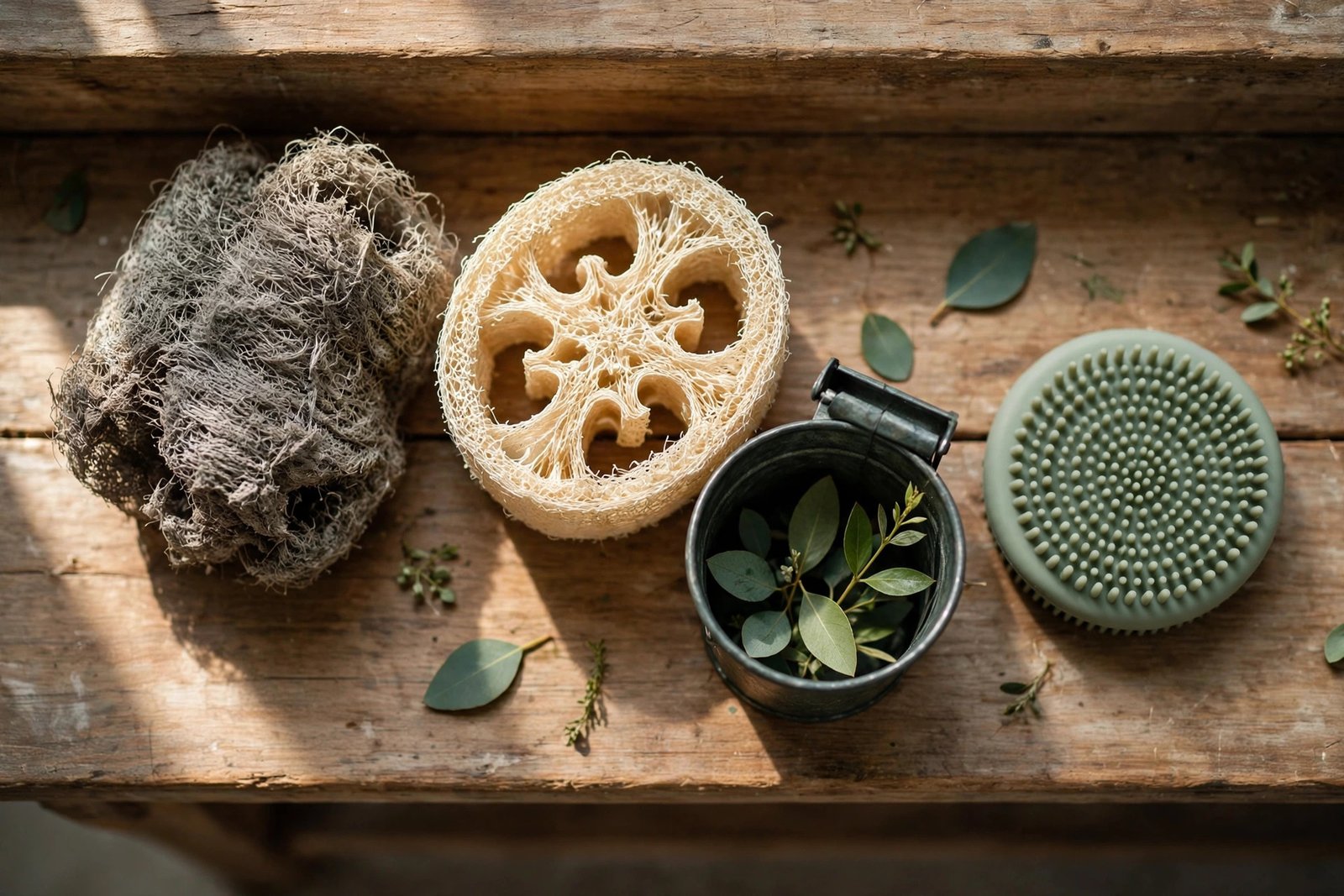
No cleaning routine lasts forever. Replace natural loofahs every 3–4 weeks and synthetic mesh loofahs after about two months — or sooner if you see mold, smell mildew that won’t wash out, or the fibers are falling apart. When in doubt, retire it; a loofah is cheap, a skin infection isn’t.
The silver lining for natural loofahs: they come from the dried interior of the luffa gourd, a plant in the cucumber family, so a spent one is fully biodegradable — toss it in the compost instead of the trash, one of the simplest zero-waste swaps for your bathroom.
If you’d rather avoid the maintenance cycle entirely, consider a silicone body scrubber (non-porous, dries in minutes, and you can just toss it in the dishwasher) or a plain washcloth you launder hot after every use or two. If your skin reacts to aggressive scrubbing at all, see our guide to fungal acne before switching tools.
Loofah Cleaning FAQ
Can I put my loofah in the dishwasher?
Yes — if it’s a synthetic mesh loofah. Top rack, hottest cycle, and let it air-dry afterward. Natural loofahs don’t belong in the dishwasher; boil them or use a vinegar soak instead.
Is it safe to microwave a loofah?
So long as it’s thoroughly wet, 30–60 seconds is fine for synthetic loofahs as a quick sanitize between deep cleans. Don’t microwave a dry loofah, and don’t rely on this as your only method for how to clean a loofah — natural fibers can become brittle with repeated microwaving.
Can I use bleach on a natural loofah?
Yes, with a weaker dilution (about a quarter cup per gallon of cool water) and a thorough rinse afterward. Bleach works, but vinegar is the gentler option when you’re learning how to clean a loofah every week.
Natural or synthetic — which loofah is more hygienic?
Both stay clean with proper care. Synthetic mesh dries a bit faster and tolerates the dishwasher; natural loofahs are gentler and compostable but need replacement more often. The deciding factor isn’t the material — it’s whether you actually follow the routine for how to clean a loofah: dry it fully and deep-clean it weekly.
A clean loofah isn’t a chore — it’s a habit: rinse and wring it out daily, keep it hanging outside the shower, and deep-clean it once a week. Once you know how to clean a loofah properly, keeping it fresh takes almost no effort, and you’ll throw away far fewer of them.