
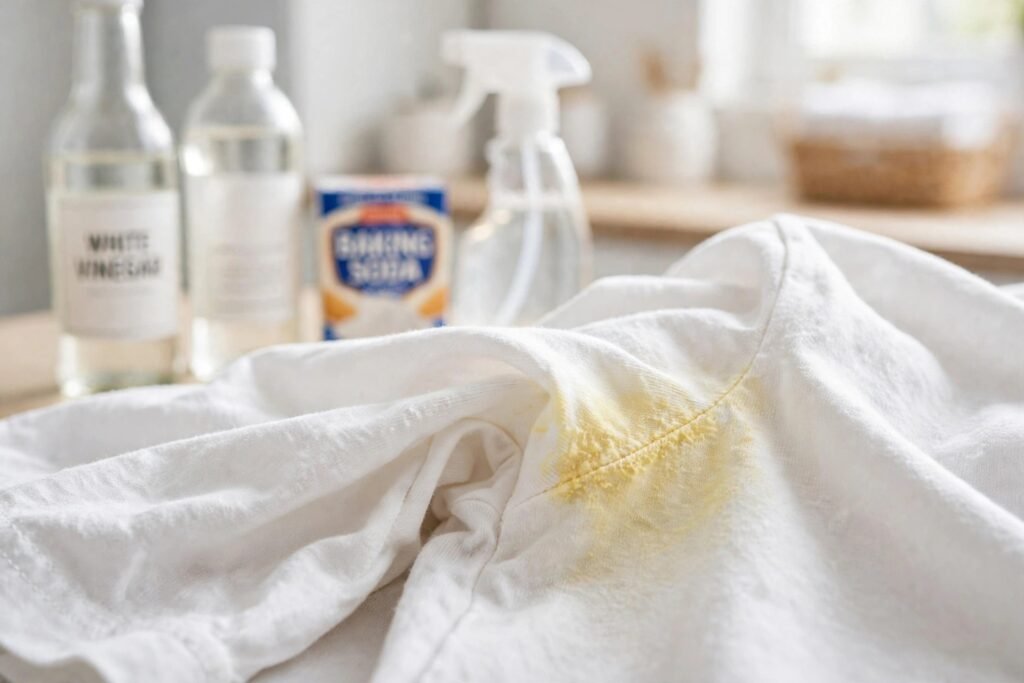
How to Take Off Deodorant Stains: 6 Methods That Actually Work
Quick Answer: The fastest way to take off deodorant stains: soak the stained area in white vinegar for 30–60 minutes, scrub gently with a baking soda paste, then wash as usual. Fresh white marks on dark clothes? Just rub the fabric against itself — most come off dry in seconds. One rule matters most: use cold water, and never put the garment in the dryer until the stain is fully gone — heat sets deodorant stains permanently.
White streaks across your black shirt, five minutes before you need to leave. Yellow armpits slowly ruining your favorite white tee. Deodorant stains are one of the most common clothing problems — and one of the most fixable.
If you’re learning how to take off deodorant stains, here’s what most guides get wrong: they treat every deodorant stain the same. But white marks, yellow stains, and waxy buildup are three different problems, and each responds to a different method. Identify your stain type first (takes ten seconds), then pick the method below. You almost certainly own everything you need already.
Table of Contents
What Kind of Deodorant Stain Is It?
Matching the method to the stain type is the difference between one attempt and five.
White marks / streaks — Fresh deodorant transferred onto fabric, most visible on dark clothes. The easiest type: there’s no real “stain” yet, just product sitting on the surface.
Yellow stains — The tough one. Aluminum compounds in antiperspirant react with sweat and body oils over time, creating yellow discoloration, usually in the armpits of white or light shirts. It builds up gradually with repeated wear and washing.
Waxy buildup — Thick, slightly greasy residue in the underarm area. Common with solid or gel deodorants applied too heavily.
Before You Start: 4 Rules
1. Cold water only — never heat. Hot water and dryer heat permanently set deodorant stains, especially the yellow kind. Don’t tumble-dry the garment until the stain is completely gone — check in natural light first.
2. Test first. Dab your solution on a hidden spot (inside a seam) and wait 10 minutes. If the color holds, proceed.
3. Dab, don’t grind. Rubbing pushes the stain deeper and damages fibers. Work from the outside of the stain toward the center.
4. Check the care label. Silk, wool, and “dry clean only” garments belong at a professional cleaner — home methods can ruin them.
Method 1: White Vinegar Soak (Best All-Rounder)
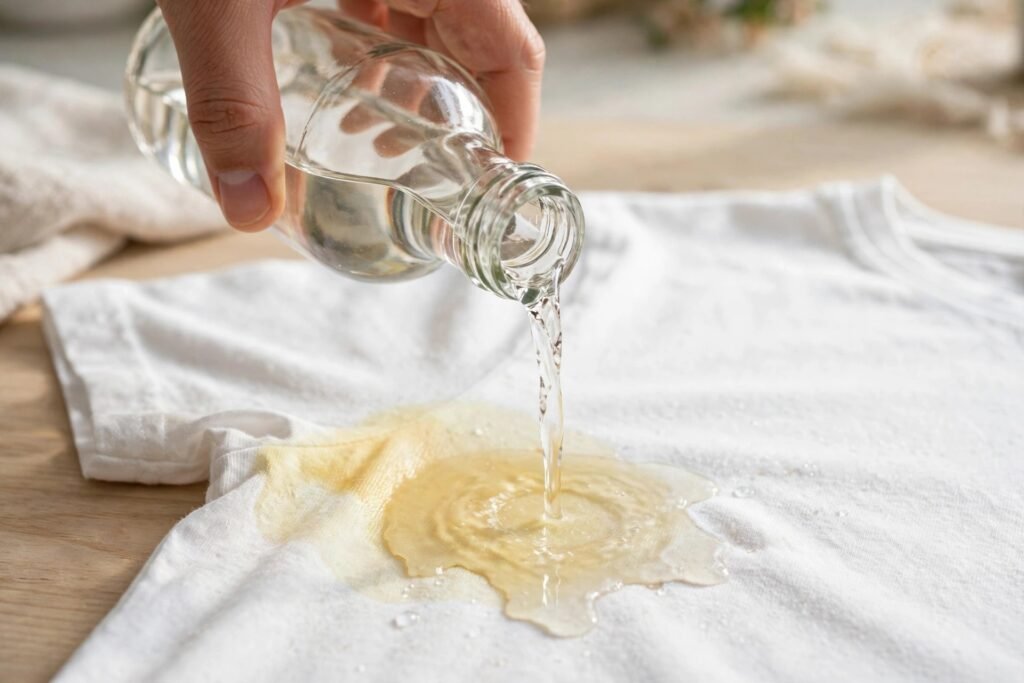
If you want to know how to take off deodorant stains with just one method, make it this one. White vinegar’s mild acidity dissolves the aluminum salts in antiperspirant — the actual cause of most deodorant stains — and it’s safe for both white and colored clothes.
What you need:
- White vinegar
- A basin or bowl
- An old toothbrush or soft brush
Steps:
- Pour undiluted white vinegar directly onto the stain, enough to saturate it — or submerge the stained area in a basin of vinegar.
- Let it soak 30–60 minutes. For set-in yellow stains, go the full hour.
- Gently scrub with a toothbrush, working from the outside inward.
- Rinse with cold water, then wash as usual. Air-dry and check before machine-drying.
Why it works: Acetic acid breaks down aluminum-based compounds without bleaching color — which is why it’s safe for darks too. Vinegar’s mild acidity makes it a handy all-round cleaner — here’s how to clean a loofah with it, too.
Best for: All stain types, all washable fabrics.
Method 2: Baking Soda Paste (Best for Yellow Stains)
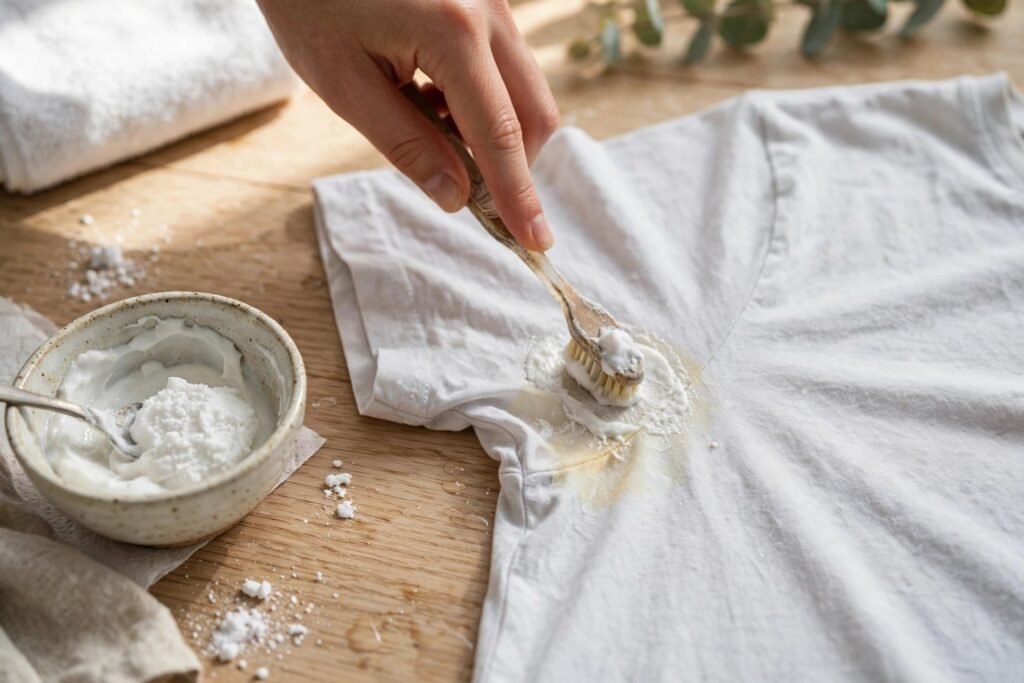
For yellow armpit stains, baking soda is the heavy lifter. It’s mildly alkaline and gently abrasive, so it lifts the built-up residue that vinegar alone sometimes leaves behind.
What you need:
- Baking soda
- Water
- A toothbrush
Steps:
- Mix 4 tablespoons of baking soda with ¼ cup of warm water into a thick paste.
- Spread generously over the stain and work in gently with a toothbrush.
- Let it sit 30 minutes — or overnight for old, set-in stains (cover with a damp cloth so it stays moist).
- Rinse with cold water and wash normally. Repeat if needed — deep yellowing often takes two rounds.
Extra-stubborn yellow? Apply the paste right after the vinegar soak above. The fizzing reaction helps lift residue out of the fibers.
Method 3: Dish Soap (Best for Fresh or Waxy Buildup)
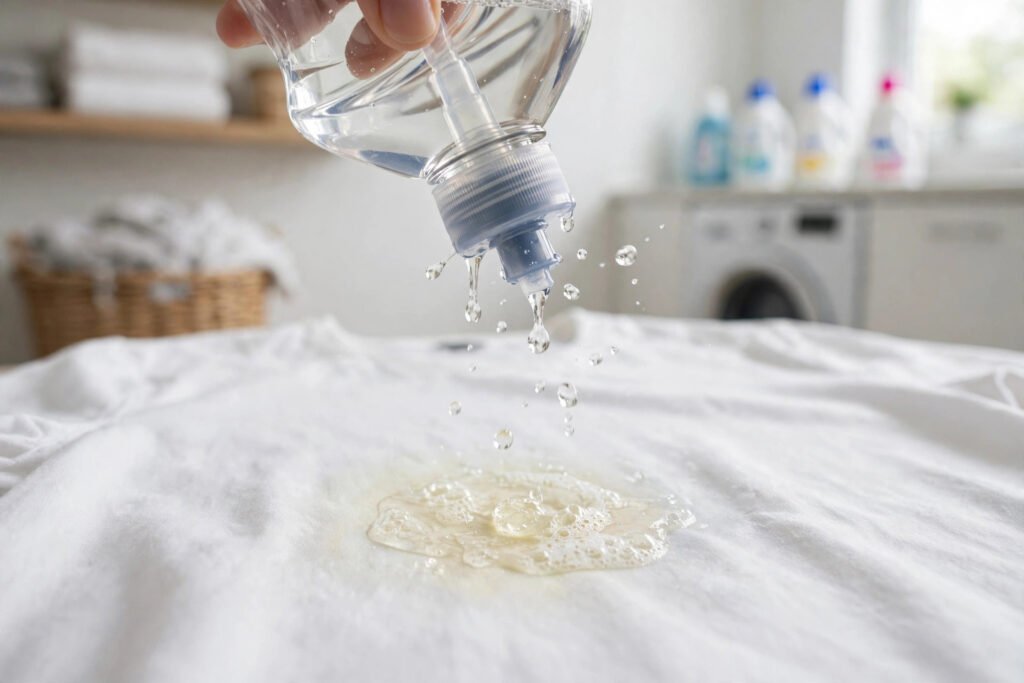
When the stain feels greasy, or you can see actual product caked into the fabric, you need a degreaser. Dish soap is exactly that.
Steps:
- Apply a few drops of plain dish soap directly to the stain.
- Gently work it in with your fingers or a soft brush for 1–2 minutes.
- Rinse under cold running water while lightly rubbing the fabric against itself.
- Wash as usual, air-dry, and check before machine-drying.
Method 4: Lemon Juice + Sunlight (Best for White Clothes)
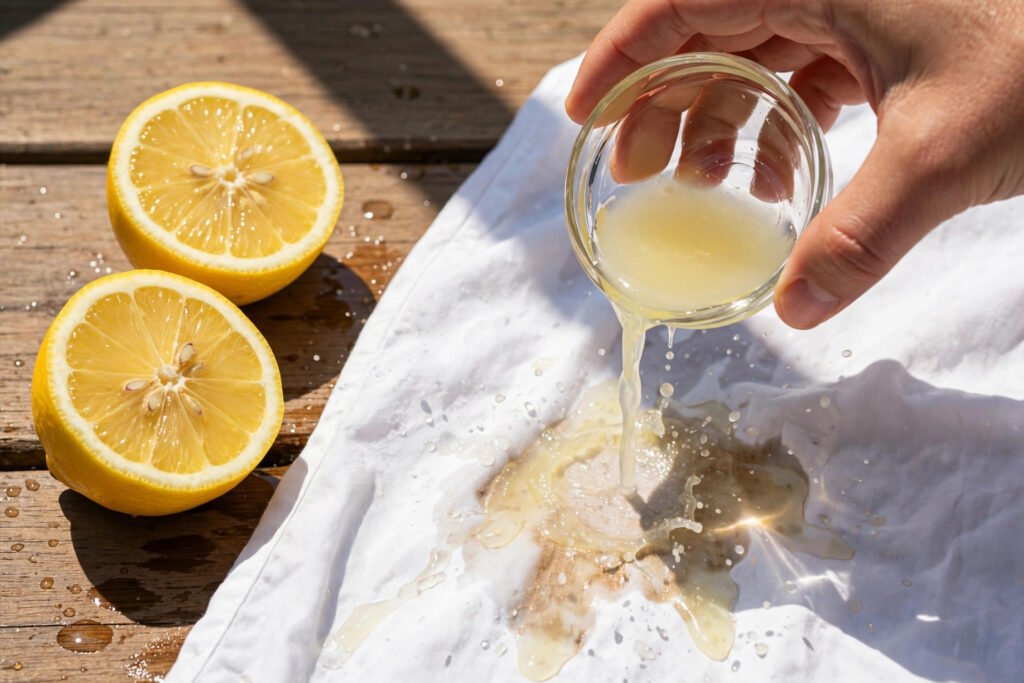
Lemon juice is a natural mild bleach, and sunlight amplifies the effect. Very effective — but strictly for whites.
Steps:
- Mix equal parts lemon juice and water, and pour over the stain.
- Lay the garment in direct sunlight for about an hour.
- Rinse and wash as usual.
Warning: Skip this on dark or colored clothes — it will lighten them. Also avoid on delicate fabrics.
Method 5: Hydrogen Peroxide (Best for Stubborn Yellow on Whites)
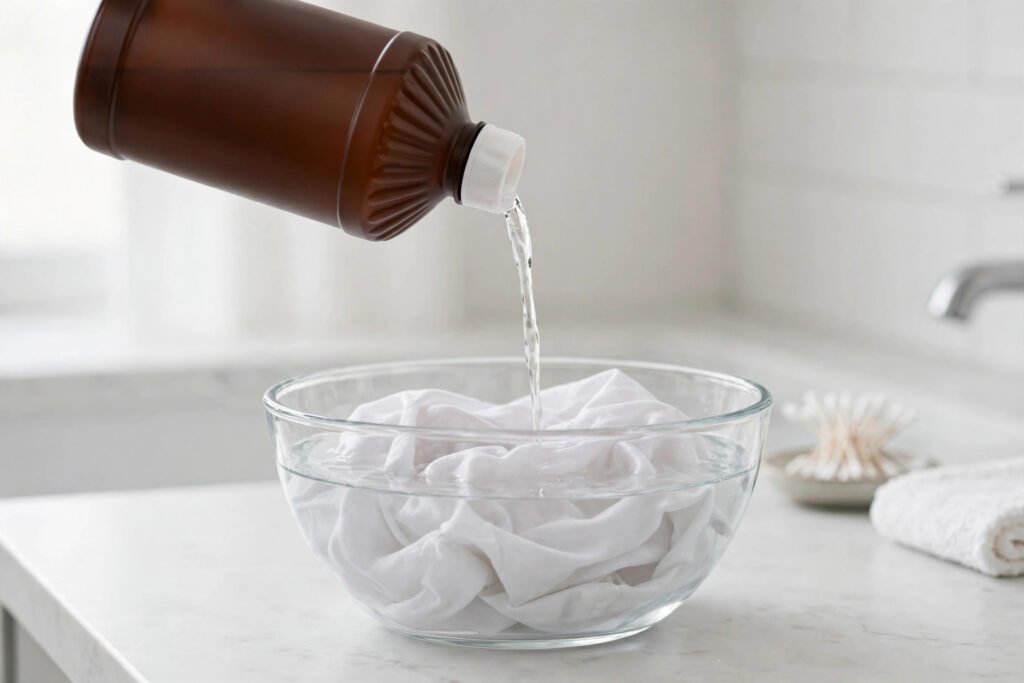
When vinegar and baking soda aren’t enough for deep yellow stains on white shirts, 3% hydrogen peroxide finishes the job.
Steps:
- Mix ½ cup of hydrogen peroxide with 2 cups of cool water.
- Soak the stained area for 30 minutes.
- Rinse with cold water and wash as usual.
Warning: Whites only — it can discolor dark fabrics. Don’t use on silk, wool, or satin, and patch-test first.
Method 6: Aspirin Paste (The Surprising One)
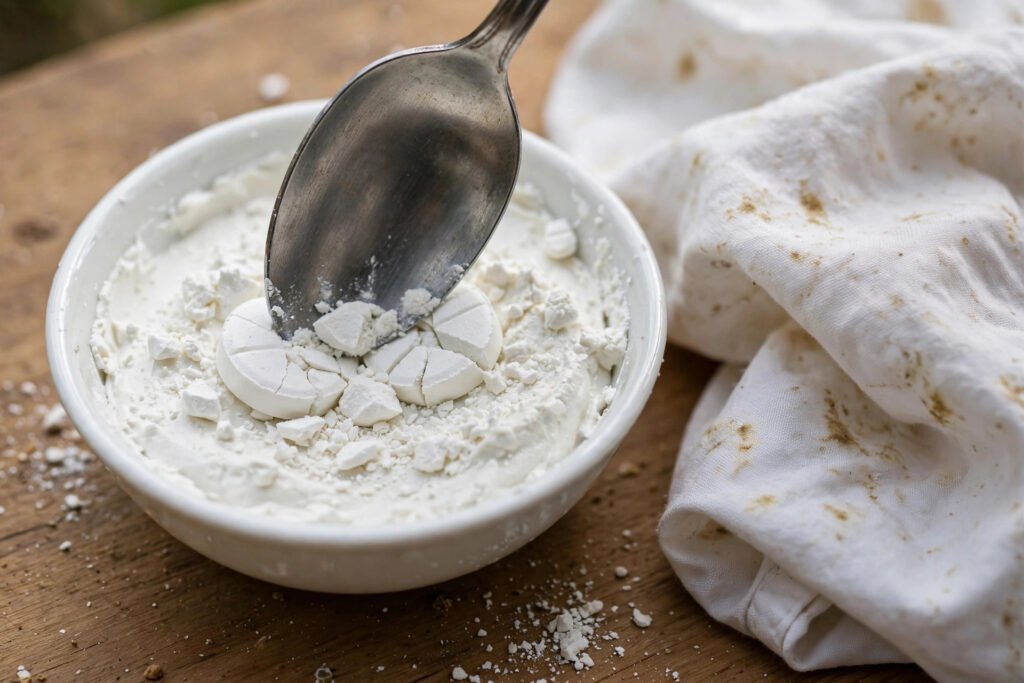
Uncoated aspirin contains salicylic acid, which breaks down the protein-based component of sweat stains. Sounds odd — works well on whites.
Steps:
- Crush 2–3 uncoated white aspirin tablets and mix with a little warm water into a paste.
- Apply to the stain and let it sit 2–3 hours.
- Rinse and wash as usual.
Best for: White cotton shirts with set-in yellow stains.
What NOT to Do
Don’t use hot water first. Heat bonds the aluminum compounds to the fibers, making the stain far harder to remove. Always start cold.
Don’t machine-dry before the stain is gone. Dryer heat sets it permanently. Air-dry and inspect first — every time.
Don’t use chlorine bleach on colored clothes. It can worsen yellow protein-based stains and will fade or damage colors. Oxygen-based bleach is the safer choice.
Don’t iron a stained garment. Heat plus stain chemistry ruins fabric — same reason as the dryer rule.
Don’t scrub delicates aggressively. Silk and wool pill and tear. If the garment says dry-clean-only, take it to a cleaner instead of experimenting. Gentle handling matters for other stuck-on stains too — read our guide on how to get chewing gum out of carpet.
Fabric Guide: What’s Safe for Yours?
| Fabric | Safest methods | Avoid |
|---|---|---|
| White cotton / polyester | All 6 methods | Nothing much — the most forgiving |
| Dark / colored clothes | Vinegar, baking soda, dish soap, aspirin (tested) | Lemon + sun, hydrogen peroxide (bleaching risk) |
| Delicates (silk, wool, dry-clean-only) | Professional cleaner; gentle vinegar dab only if you must | All bleaching agents, aggressive scrubbing, heat |
How to Prevent Deodorant Stains
Removing stains is good; not getting them is better.
- Let deodorant dry before dressing. Wait 2–3 minutes after applying — most white marks happen because the product was still wet.
- Apply a thin layer. More product means more transfer and faster buildup.
- Switch to aluminum-free deodorant if yellow stains keep recurring. No aluminum, no yellow reaction.
- Wear an undershirt with white shirts to keep sweat and product off the outer layer.
Frequently Asked Questions
What is the fastest way to take off deodorant stains?
For fresh white marks on dark clothes, rub the fabric against itself or with a dry cloth — most come off in seconds with no products at all. For set stains, a 30-minute white vinegar soak followed by a baking soda scrub is the fastest reliable method.
Does baking soda remove deodorant stains?
Yes. A paste of 4 tablespoons baking soda plus ¼ cup water, left on the stain for 30 minutes (or overnight for old stains), lifts even set-in yellow armpit stains. It’s mildly alkaline and gently abrasive, which breaks down the residue.
How do you get deodorant stains out of black shirts?
Stick to color-safe methods: white vinegar soak, baking soda paste, or dish soap. Avoid hydrogen peroxide and lemon juice with sunlight — both can bleach dark fabrics. Always patch-test first.
Why do my white shirts turn yellow under the arms?
Aluminum compounds in antiperspirant react with sweat and body oils, forming yellow deposits that build up over time — especially when shirts go through the dryer while stained. Switching to an aluminum-free deodorant prevents it.
Can I use bleach on deodorant stains?
Oxygen-based (color-safe) bleach is fine and effective. Avoid chlorine bleach on colored clothes — it can worsen yellow protein-based stains and damage colors.
Will deodorant stains come out in a normal wash?
Fresh surface marks sometimes do, but set-in stains won’t — and machine-drying a still-stained garment can set the stain permanently with heat. Always pretreat, and air-dry until you’re sure the stain is gone.
How do you remove old, set-in deodorant stains?
Combine methods: vinegar soak for an hour, then baking soda paste overnight. For white shirts, follow with a hydrogen peroxide soak. Expect 2–3 rounds for stains that have survived many wash and dry cycles.
The Bottom Line
To take off deodorant stains, start with the vinegar soak — it handles most of them on its own in about an hour. Match the method to your stain type (white marks: just rub; yellow: baking soda or peroxide; waxy: dish soap), and remember the golden rule: cold water first, and never let a stained garment near the dryer until the mark is completely gone.